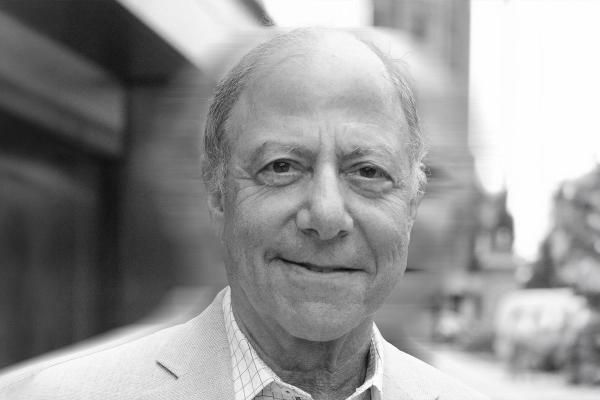
Healing Burnout Through Psychedellics
Dr. Tony Back first came to psychedelic medicine because he was concerned about burning out. Since then, he’s led a clinical trial that demonstrated the benefits of psilocybin-assisted therapy for clinicians suffering from burnout and is now working on a new trial for psilocybin-assisted therapy for people with metastatic cancer in a retreat setting. Topics: Psychedelic-assisted therapy, burnout, mental health issues, end-of-life, cancer, connection, spirituality.

November 16, 2023
Transcript
When I was a sophomore in college, I got a phone call. Those were the days when phones were at the end of every dormitory hallway. I learned that my mother was near death.
It was finals week. I skipped my exams, flew home and sat beside her at her bedside. What I didn’t expect was her presence. It was really beautiful and comforting.
But my thinking mind was going: Was I reaching her? Was I doing the right thing? Was I enough?
It turned out that question would become a theme for me.
Many years later, as an oncologist, it stayed with me: Could I reach them?
I remember one patient who really got to me, a young man with a terrible cancer that never gave him a break. He flew around the country looking for doctors willing to try out-of-the-box treatments. He flew around the world.
I never knew whether I was reaching him. He was so self-contained.
After a long series of treatments that were very technical, complicated and out of the box, treatments we doctors would call heroic, but that were also brutal, he died.
He died leaving me with the sense that I would never know whether I had made contact with him. It really haunted me.
I had reached a point in my career as an oncologist when the question of whether I was reaching people was beginning to feel like a weight around my neck.
I had been through all these trainings, courses and books. I had visited almost every expert in the world and was considered something of an expert myself. Yet I still felt inadequate in the face of what mortality really felt like and looked like.
Then I heard about psilocybin-assisted therapy and how it could reset the way people approached their mortality. I heard that it could enable an experience that gave people an entirely different outlook.
I decided to try it myself. I knew that if a patient asked me, “Should I do this?” I would never be able to look them in the eye and recommend it unless I could say that I had done it myself.
My experience with psilocybin was very physical and somatic. It turned out that I had to shake off all the conditioning stored in my body about what it meant to be a good doctor and what being emotionally objective had left me with. I had to shake all of that off to reach something else.
When I reached that other thing, it was nothing I had expected. It was like energy. It felt infinite, ancient and eternal.
I went into my journey asking what I should be doing to reach other people more effectively. What I learned was that there was something within myself that I wasn’t reaching.
Then came COVID.
I live in Seattle. I look across the lake toward the first nursing home where it appeared.
It was overwhelming. It was a level of suffering and uncertainty that I had never seen before in my career, even as an oncologist.
I read the news today, and my body remembers those feelings of helplessness. But it also remembers that sense of resolve because we were running on instinct at the time. It was a survival instinct.
No one had time to feel. We simply did everything we could.
Yet so much was happening that we couldn’t fully deal with. There was so much caring we couldn’t do because we were insulated from it. There was so much uncertainty about the right thing to do. There was so much injustice that we couldn’t fix.
It was unprecedented.
But emotionally, for me, it was territory I knew quite well.
I thought, “What if I scaled up my own experience with psilocybin into a study?” I’m an academic, after all. That’s what we do.
I designed a study of psilocybin-assisted therapy for doctors, nurses and advanced practice providers who were experiencing depression and burnout from their frontline work. These were clinicians who had witnessed many, many deaths.
When we opened the study website, there were 30 available spots and 3,000 visits.
I thought, “Wow. What happened to me is not an anomaly.”
We are still analyzing the data, so I don’t yet have an official scientific result. But I can tell you about the range of experiences I witnessed.
Some clinicians had experiences that were more within what I would call the psychological arena.
During her first preparation session, one clinician told me, “I feel more disposable than a used COVID swab.”
She said it with such bitterness. It was shocking and incredibly sad.
During her psilocybin experience, she went down into that helplessness, rage and grief. Somehow, she found her way to a place where she could reconnect with what had brought her into the profession in the first place.
Other clinicians had experiences I wasn’t entirely prepared for.
One said, “Unlike my regular processing, which happens in my head, this was like energy flowing through my hands, arms and chest. Powerful waves of energy would end in very clear messages, like, ‘We are one. We are guardians of light and love.’”
I learned how important it was to understand that, at best, I help identify what is distracting someone from what is already within them. I help reconnect them with what they already are.
What I really do is reconnect people with their own healing.
I also learned about my own tendency to be a superhero and to make everything about me. I thought, “It’s interesting that this message is being given to me.”
Hello. Message received.
One more participant said, “I experienced multiple deaths. I became my patient. I had that physical death. I watched myself leave that body and float upward. Then I felt another energy that seemed like a source.”
“I saw the absurdity of the universe and the infinity of it. It was as though there were a pool of source energy that occasionally appeared in manifestations as people, trees or something else. But we are that source energy.”
“Once we disconnect, we become the individual ‘I.’ It is isolating and lonely. We cling to our attachment to the body. But if we can somehow reconnect to that source, or become a conduit for reconnection, the ‘I’ disappears and we become connected again.”
As a doctor and oncologist, I was trained to see the body as a machine. The body was one big chemistry or immunology experiment.
This has created a real shift in my worldview.
Technology, it turns out, does not heal us.
I am not anti-technology. I am grateful for every day I had with my mother that medical technology made possible.
But I have learned that there is a kind of healing that comes from a source larger than the technology humans can build and larger than our culture of the individual self.
One patient in a study I am conducting now, who has metastatic cancer, described their psilocybin experience this way:
“For a period of time, nothing made sense, and it was funny to realize how absurd it was to try to make sense of things. I felt a billion colors. I felt love like I had never felt love before.”
“I objectified my cancer. I wanted to be angry at it, to yell and scream. Then I started laughing at how absurd that was, so I gave it a hug. I loved and forgave.”
“I wrestled with the idea of death, but it didn’t seem possible. It seemed like my body could die, but my feelings could never die.”
“I know this sounds silly, but I realized that death is love.”
Death is love.
For now, I’m calling this a kind of soul work.
Psychedelics may not be the only path, and they may not be right for everyone. But they remind us that mortality, and coming to terms with our mortality, involves a kind of work of the soul.
It is work concerned with how we relate to the part of ourselves that is deeper than our individual identities. It happens through our bodies, through our connections with one another and through our connection to source, nature, the eternal or whatever we choose to call it.
Imagine patients being able to have these experiences while being supported by doctors, nurses, doulas and therapists who could hold those experiences because they had experienced something similar themselves.
It would offer a different way of being with our mortality, our grief, our suffering and the whole shebang.
It could be a way of being with all of that that is sustainable and perhaps even regenerative.
Imagine if reconnecting with our source as a way of coming to terms with mortality could also become a way of regenerating love.
Thank you.
RELATED