Toxic Healthcare Costs
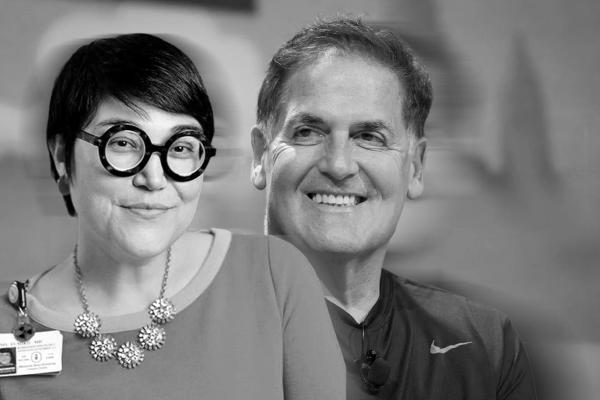
Oncologist and researcher Fumiko Chino knows firsthand the emotional and financial devastation of losing a loved one. A graphic artist when her husband became ill and died, she made the arduous journey to becoming a doctor so she could help change the system from within. Deploying data and story, Fumiko makes a powerful case that it shouldn’t take a life savings to try and save a life.
Take 10 is an experience focused on finding solace, building solidarity and sharing solutions when it comes to serious illness, caregiving and end of life. If there’s one thing we hope you take away from this experience, it's the invitation to create the narrative of your life through to its end. May you find comfort and joy in the process of digging into what it means to embrace the good, the bad, and the messy about the gift of being alive!

January 15, 2021
Transcript
My name is Fumiko Chino, and I’m an oncologist at Memorial Sloan Kettering Cancer Center. Every day, I use advanced radiation techniques to treat people with cancer. I also conduct research on how to make cancer care more affordable.
But here’s the secret: I was never supposed to be a doctor.
On the day of his 27th birthday, my husband, Andrew, started having pain and throwing up. When he was finally diagnosed, we learned that he had an aggressive cancer spreading throughout his body.
We were young and in love. More importantly, we had health insurance. We had done everything right.
We knew we would have to make some sacrifices. Nobody thinks cancer treatment is free. But we had no idea of the financial burden his illness would force upon us.
Within six months, we had maxed out his prescription benefits and had to start paying thousands of dollars out of pocket for his medications. A couple of months later, we reached the lifetime cap. His health insurance simply stopped paying for his care.
Through chemotherapy, hair loss and nausea, Andrew managed to keep working and complete his PhD. He knew that securing a job might be his only chance of getting new health insurance.
Meanwhile, the bills kept coming in like waves.
I cashed in my 401(k). We had family members smuggle medications across the border. We even considered moving to Canada. Nationalized healthcare was looking pretty good.
But moving felt like defeat. It meant Andrew would not be able to complete his degree or begin the promising career he had earned. It meant he would be completely defined by cancer.
Amazingly, Andrew completed his doctoral defense. Later, his coworkers told me that he looked so pale and thin that it was frightening.
He was hospitalized the next day because the tumors in his lungs had progressed.
This is the cruelty of cancer coupled with the cruelty of the healthcare system. Every time we got a little ahead in life, cancer snatched it away from us.
Here is what I now understand as an oncologist about young people with cancer: Their bodies are so healthy that they can withstand incredibly aggressive treatment. Their capacity to absorb setback after setback is remarkably high.
Until suddenly, it isn’t.
Andrew died during a gray winter, leaving me with an empty house, an empty future and a stack of bills.
When he was gone, the debt remained.
I was hounded by debt collectors. One even called me while I was at his funeral. The debt was like a black cloud that followed me everywhere and cast a shadow over my life.
Even today, I receive calls from collectors trying to cash in on his illness.
As a young widow, I struggled to find purpose. Our experience had exposed the gaps in the American healthcare system.
I decided to go to medical school and try to fix it from within. I wanted to prevent this from happening to someone else.
In medical school, I learned the newly coined term “financial toxicity.” It perfectly described what had happened to my husband and me.
The fact is that this is a broken system, one that is financially toxic to patients. Even with health insurance, the high costs of care are leaving families adrift in debt.
Forty percent of Americans deplete their life savings within two years of a cancer diagnosis. Cancer costs drive one in four patients to put their survival at risk by skipping appointments, scans or medications.
I have seen the financial toxicity of cancer in the patients I treat: lost jobs, lost homes and lost independence.
Many patients have to choose between their health and their family’s financial stability. Some ultimately lose both, leaving their families emotionally and financially devastated.
In many ways, I don’t need a research portfolio to prove this. I know it is true because it happened to me.
There are structural flaws in the United States healthcare system.
There is a problem with how health insurance is acquired and maintained. Patients are desperate to keep working despite debilitating side effects because losing their jobs may also mean losing coverage for themselves and their families.
Millions are vulnerable to gaps in coverage because of pandemic-related job loss.
Drug pricing is also disconnected from a drug’s value. The average cost of a new cancer medication is more than $100,000 a year. Eighty percent of cancer drugs are overpriced. We are massively overpaying.
There is also a complete lack of price transparency. People have no idea how much their care will cost until the bill arrives and they struggle to pay it.
These are not abstract concepts to me. I have seen the desperation on my patients’ faces.
After the shock and fear of a diagnosis begin to settle, the next question for many people is, “How am I going to pay for this?”
Thankfully, there are solutions to the affordability crisis.
Improving public health is simply good politics. There are national advocacy efforts spanning both sides of the aisle to strengthen health insurance protections for people with preexisting conditions and improve value in cancer care.
There are local advocacy efforts to support patients during treatment with transportation, parking and lodging. There are also efforts to improve access to clinical trials closer to home.
On a personal level, the goal should always be self-advocacy.
Shared decision-making means that clinicians and patients work together to make decisions based on medical evidence as well as the patient’s preferences and values.
Defining your values means figuring out what matters to you. You can start now.
Talk to the people you love about what you are and are not willing to endure should serious illness strike in the future. Having those conversations without the shadow of cancer can help center decision-making during a crisis.
Sometimes shared decision-making means having difficult conversations about prognosis. That is hard for patients and providers.
As an oncologist, I know that my genuine affection for my patients can make it difficult to broach sensitive topics. There are times when I find myself speaking in aphorisms because saying a poor prognosis aloud is simply too hard.
I worry that it might rob my patients of hope.
I encourage you to speak with your physicians about how treatment decisions can align with your values, including making cost part of the conversation when that matters to you.
Sadly, my husband and I suffered in silence. We bore tremendous costs for his care, yet we never told his physician. We were ashamed that we could not afford his treatment.
The sad thing is that I now know cost conversations work. They can lower the financial burden on patients.
That is why this message is so important to share.
This is our power. Collectively, we can transform healthcare from within the system, but we need open and honest conversations, even when they are difficult.
My husband would not be defined by his cancer, and I will not be defined as a cancer widow.
I am a physician. I am an oncologist. And I am on a mission to improve cancer care in America, to take the lessons I learned and turn them into a brighter future for the next person who walks through my door.
Life can take you to unexpected places.
Death can too.
Ultimately, this is a call to action. We need to improve affordability in healthcare, both nationally and personally, within our own families, so that no one has to choose between their life and their life savings.
The first step is having a conversation with yourself, with the people you love and with your physician.
Thank you.
RELATED