Episode 14 | 10.23.25
Mark Cuban and Dr. Fumiko Chino Try to F-Up Healthcare
Dr. Fumiko Chino and Mark Cuban on using lived experience, transparency and innovation to make healthcare more affordable.


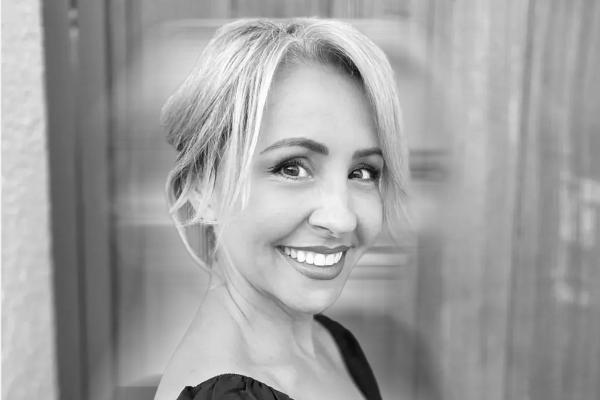
Today’s episode features two people who are shaking up the U.S. healthcare system in very different but deeply humane ways. Dr. Fumiko Chino knows firsthand how devastating medical debt can be. After losing her husband to cancer and being left with overwhelming bills, she went to medical school to become a radiation oncologist and made it her mission to make care more affordable.
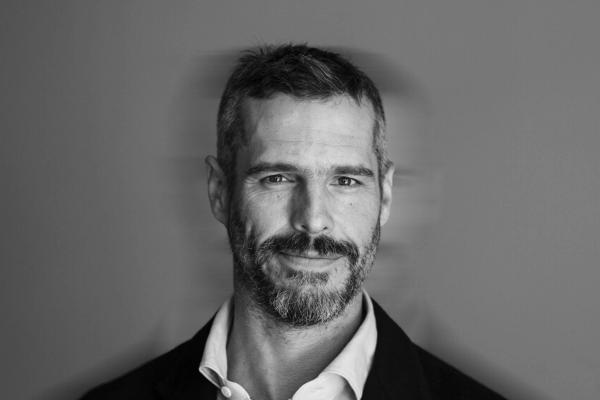
Mark Cuban, best known as one of the “sharks” on Shark Tank, is tackling the same problem from another angle. Through his Cost Plus Drug Company, he’s disrupting the industry with a transparent, direct-to-consumer model that’s already changing — and saving — lives.
Together, Fumiko and Mark offer a hopeful glimpse of what’s possible when empathy meets innovation.
Transcript
Cold Open
When this story began, FuMEEko Chino was in her late 20s.
FuMEEko: I was an art director of an entertainment company and I was dating a very delightful man. We were engaged to be married
The delightful man was named Andrew. He was a PhD grad student in computer science.
FuMEEko: And he started getting cyclically ill, is what I would put it. So every couple of weeks he would have, nausea and vomiting. And I just, I blamed it on the graduate student diet basically. He ate a lot of Taco Bell. But it became clear over time that it wasn't going away and that it was getting worse. And eventually we realized that he had lost like 30 pounds. And, he had endoscopies, they didn't find anything and eventually he got a CT scan and that showed that he had, widely spread, at least lymph node disease. So we knew that he had some type of cancer.
Shoshana: So take me to the conversation where Andrew's doctors told him that he had cancer. What did they say and how did you and Andrew react?
FuMEEko: I'm sure his doctors were very clear but everything after they said cancer in the lymph nodes everything after that was very much like Charlie Brown. W-W-W-W-W. Very hard to actually absorb any hard details.
Shoshana: And so were you immediately worried about the cost of his treatments?
FuMEEko: I didn't think about cost. At all. I was just like, okay, what are we gonna do? How do we treat this? How do we get back to our normal life as 20 somethings early professionals? It didn't even occur to me to think about cost.
Despite Andrew’s illness, he and FuMEEko went ahead with the wedding. But within a year of his diagnosis, Andrew met the lifetime limits on his health insurance. Which meant that no matter what he needed, insurance would not pay for it.
FuMEEko: This was sort of pre-Affordable Care Act and there were – you insurance companies could put limits on their payouts. And so he had multiple limits. He had a limit on his pharmacy benefit and he had a limit on his actual health insurance with the hospital infusions. And we met both, but the first came with his medications. And previous to that, we would just pay our copay. It was, you know, $5 it was $30. Some copays might be up to $50, but it was just a copay. And then when we hit his limit, everything was 100% out of pocket. Meaning that if the medication costs, you know, $35 a pill, which is what his ondansetron costs. That's how much we had to pay per pill.
Ondansetron is prescribed for patients with nausea and vomiting. And for patients like Andrew, it’s not just about easing their discomfort. It’s about making sure their bodies get enough nutrition. But even at that price, Ondansetron doesn’t always work.
FuMEEko: $35 a pill that then he would just throw up and then I would be cleaning up vomit, which was like my full-time job for a while. And to see the pill in there, you know, I was like, that is $35. Even without the money thing, it would've been a horrible experience, but you add the money on top and it's just like, ugh,
Ondasentron was just one of dozens of treatments that Andrew and FuMEEko had to pay for.
FuMEEko: There was sort of two buckets, you know, there was the out-of-pocket expenses that we had to pay to go to the pharmacy, to pick up his pain medication, his nausea medication, the medication he had for his anxiety. And then the other bucket was the cost from his infusions, which came as a bill in the mail. And it's interesting because the bills that would come in the mail would be 10,000, 20,000. $50,000, ultimately over a hundred thousand dollars, $200,000. Right. But it's like the bills that come in the mail are like imaginary money and the money you have to take out of your wallet to get the medication to stop your husband from vomiting, that needs to be paid now.
FuMEEko: And so there was this weird balance of the current financial trauma and then what you knew was the future financial trauma that was sort of like in the ether, but you know, like you need to deal with the immediate problem, which is, I'm in pain, I can't eat. And so, you know, it was just sort of two different problems, both of them bad.
FuMEEko and Andrew tried everything they could think of to cover these costs. Andrew's family even brought some medications over the border from Canada, where they were cheaper.
FuMEEko: What never even occurred to me was to ask, is there an alternative that could be cheaper for us? And quite frankly, we were ashamed to talk about how much this was costing us.
Shoshana: Yeah. Gosh, when my dad got sick, he had stage four pancreatic cancer. We had the best of circumstances, right? In terms of resources and, and access to great doctors. And I knew what questions to ask and we still bumped up against crazy scenarios where his insurance company like wouldn't pay for an FDA approved medication for him. And I had to like, get on the phone and, try to sort those things out and, and it was insanely taxing, emotionally, time-wise, all of it. It's just, and again, like I know all this stuff, it's just the system is, is baffling to me that, that we set people up to fail in these ways.
FuMEEko: You have spoken about with your father. You know, he had a lot of problems eating. And that was very similar to my husband. He had a mass compressing his pancreas, and so the manifestation of that is, is that you basically waste away and every day you see the kind of cumulative burden of that weight loss, and the tiny little quality of life enhancements that he could get from any of these medications, the fact that that itself was such a burden and such a strife and struggle to get, was even more insulting. 'Cause he was already just struggling to just eat an egg sandwich.
FuMEEko and I have talked about all of this many times over the years. She's now working to change the healthcare system from the inside. We'll get into that in a bit. But I asked her to tell me the story again, because I recently got the chance to talk to someone who's trying to change the healthcare industry from the outside.
Mark: My name is Mark Cuban and I'm co-founder of Cost Plus Drug.
You might better recognize Mark as the minority owner of the Dallas Mavericks and, until a couple of months before I spoke with him, one of the main "sharks" on the TV show Shark Tank.
And this seems like a good time to warn you that Mark is a fan of the F-bomb. If you have kids around, you might want to listen to this episode some other time.
Shoshana: I know you're a capitalist. This is about business for you, you've said you're not in it to maximize profit. What's the fire underneath all of this? What drives you to keep pushing when it would be easier not to, and just go sit and watch basketball games and hang out with your family?
Mark: I can't think of anything more fun than fucking up healthcare.
Shoshana: Okay, I'm gonna quote you on that.
Mark: I mean, what could be better? Healthcare sucks. Mark got involved. Healthcare's not bad right now. That to me is like winning a championship.
I’m Dr. Shoshana Ungerleider and this is Before We Go. This season, we’re in conversation with people from all walks of life, exploring how we live alongside mortality.
Today's episode: Mark Cuban and Dr. FuMEEko Chino Try to F-Up Healthcare.
Act I
The story of how Mark Cuban came to be on a mission to disrupt healthcare began in 2018 when he got a cold email from a man named Dr. Alex Oshmyansky.
Mark: Well, the story goes like this. He cold emailed me and he wanted me to invest in a compounding pharmacy called Oshkosh Pharmaceuticals or something to that effect. Manufacturing drugs that were in short supply. You know, I mean, and he went through the whole list, Pitocin and pediatric cancer drugs. And it made like no sense that these things would ever go on short supply. And so I was like, okay, that's awful.
But if you know anything about Mark Cuban, you know that he likes to think big. And Alex's idea wasn't quite big enough for Mark.
Mark: And it was right around the time that the farmer bro was going to jail.
YouTube: Martin Shkreli, the former pharmaceutical executive who became known as a pharma bro, was sentenced to seven years in prison for defrauding investors.
YouTube: Shkreli has been widely condemned for hiking the price of a lifesaving drug from about $13 to $750 when he ran Turing Pharmaceuticals.
YouTube: Senator: Do you think you've done anything wrong? Shkreli: On the advice of counsel I invoke my Fifth Amendment privilege against self-incrimination and respectfully decline to answer your question.
Mark: And so I was like, how can this dude jack up the price of this one drug, a generic drug called daraprim and just start ripping people off? And so we started having this conversation back and forth all via email.
There is a lot to unpack when it comes to the toxic cost of care in the U.S. But like Mark does every time he makes a large investment, he researched the problem and turned himself into an expert.
Mark: It looks like the obvious problem and fundamental issue is that there's no transparency. Nobody knows what anything costs. You go to the doctor and when you need a prescription, they don't say, okay, can you afford it? Or what can you afford? Or you know, they just say, what pharmacy do you use? And that's it.
Shoshana: Just so you know, I'm a doctor. I don't know how much drugs cost. Right. So there's no transparency anywhere, as you know.
Mark: Well, that's why we published our price list Shoshana. But that was a big part of it. Because doctors didn't know, patients didn't know, pharmacists didn't know, nobody knew. And to me as an entrepreneur, that was an obvious calling.
And so Mark went to the internet and purchased the URL: CostPlusDrugs-dot-com.
Mark: And when you go to the site and you put in the name and the medication, the first thing that you're going to see is our actual costs. And then you're gonna see our markup and we, we set that to 15%. Why 15%? Why not? I thought it was fair. It wasn't too egregious. And you know, it also made our prices be relatively, um, inexpensive compared to others. We had a $5 fee for the pharmacist to review and a $5 fee for shipping. That was it. And we launched with 111 drugs on January 19th, 2022.
Cost Plus drugs doesn't spend any money on advertising. Instead, Mark used his personal platform -- as a celebrity entrepreneur - to get the word out.
Mark: And slowly but surely people went and started looking up our prices and realizing. We were cheaper than their co-pay. We were cheaper than their co-insurance. We were cheaper than, you know, they were cash pay patient than what they were paying at their local pharmacy. Slowly but surely, more and more people started to use us. And as we added more and more patients, we were able to add more and more drugs.
And then, the emails started coming in...like the one Mark received from an old college friend, telling him that another friend from college, a guy named Landon, had been paralyzed in an accident.
Mark: And he said that he lost his insurance and he needed a drug called Droxidopa. He said it was gonna cost Landon $10,000 every three months, $10,000 a quarter. And I looked, and this was a couple years ago, we didn't carry Droxidopa. And so I was like, okay, let me check, let me find out if we can get it. Turns out we could, and I think it ended up being just the first pass when we first got it, was like $93 a month. So $279 for three months instead of $10,000. And then over time, as our volumes went up, as people saw the price delta, our cost went down. And whenever our cost goes down, because we're just a straight cost plus 15%, we pass that along to the patient.
Three and a half years after its launch, Cost Plus Drugs now offers more than 2500 medications.
Shoshana: When I heard about it immediately I was like, wait, why aren't more people talking about this? What is this thing? And I started telling everybody I knew, including patients,
Mark: That was the whole point, right? That was the whole idea, right? Because when, when you cut the price of a drug, a drug like Imatinib for cancer, right? If you save money on that medication, first you're telling your family. Then you're telling anybody you know that is in a similar set of circumstances, then you're telling your doctor and just slowly but surely word of mouth started taking over.
Shoshana: And so as you got deeper into this, I know you learned all about pharmacy benefit managers or PBMs. Tell me who are they and what did they do?
Mark: That's a good question. Pharmacy benefit managers, aka PBMs are middlemen that have a variety of different things that they try to do. One of their functions is to act as a claims processor. If they're working with your employer, they might do the pre-authorization process. They might do a step up process, which means we're not gonna just agree with what your doctor said. And I know this is something you probably hate, right?
Shoshana: Yeah.
Mark: We're going to make them try another drug first, which is a step up policy, or we're gonna deny the preauthorization until we can confirm something. And then the next thing they do for generic medications, they'll negotiate a price with the generic manufacturer, and then they'll determine some amount that they'll charge your employer for that medication. And then for brand medications, they don't negotiate price. What they do is they'll talk to the brand manufacturers and they'll say, in order for you to have access to the 150 or 200 million patients, these big PBMs cover, you're gonna have to pay us to be on our formulary. And they do that through something called rebates. And so they'll get, um, a check for 50% of the retail price or list price of the medication, and then they'll charge the employers some amount, so that they're making money on both ends.
Shoshana: So I'm curious, have PBMs tried to stop you or at least slow you down?
Mark: Oh, for sure. So. We don't have, a lot of brand name medications on cost plus drugs. We have every generic, right? But the reason we don't have brand name medications is those big PBMs will tell the brand manufacturers, if you do business with cost plus drugs, we're gonna diminish you or remove you from our formulary, not just for the drug that you do business with cost plus with, but for your entire portfolio. So they're not going to, you know, all of a sudden start doing business with cost plus drugs and in effect lose tens, hundreds of millions of dollars or billions of dollars as a result.
Shoshana: Ugh. So I imagine this work has put you in touch with real people facing real struggles. You've heard from, from folks who can't pay for their medications. What are some of the stories that that have that have really stuck out for you?
Mark: It's a long list for better or worse, like, I mean, I've had people just walk up to me and hug me. People just walk up to me and cry. I got emails. I got one yesterday. I was gonna have to pay thousands of dollars a month for my - I can't even pronounce the name of the drug. And, you know, your price was $164. I was, you know, I'm dying of cancer and I need this medication, but we were gonna have to pay for it on our credit card. And I decided I'd go off the medication you know, since I'm going to die soon anyways, rather than saddling my wife with this debt. But then I went to Cost Plus and it was only $34 and 50 cents a month plus shipping.
I told Mark all about FuMEEko Chino and her husband Andrew and everything they had to do to make sure he got the medications he needed.
Shoshana: How do you react when you hear stories like that?
Mark: Sick to my stomach first of all. But as an entrepreneur, I look for the flow of leverage and what's causing these things to happen. It starts with the insurance company because the insurance company first designs the plans. They're moving towards higher deductible and patient out of pocket. You know, we're seeing deductibles and out of pockets in the thousands of dollars range, right. Two thousand, five thousand, seven thousand, 9,500, you know, for Medicare max out of pocket. But nobody checks the credit of any of those people buying those plans. And so in a country where what, 40% of the people will never save $400 in cash? Well, if you have a thousand dollars deductible and you get sick, you're fucked. You know, sorry to put it in those terms, but, when that happens, it creates a cascading set of circumstances that screws over everybody. So the insurance companies create these plans, knowing that the people won't be able to afford them. Then they go to the hospital, and by contract, more often than not with the insurance plan, the hospital's gotta service them. Right, so now you've got a patient that has a $5,000 deductible for a $10,000 procedure, now you've turned the hospital into a subprime lender.
Shoshana: Hmm.
Mark: Now we're putting mortgages on people's health that they can't afford, and so then hospitals have to make this tough decision and providers do, where it's like you have somebody, you treated them, they can't afford it, do you go after them for collection?
Shoshana: Right.
Mark: So they sell it to a debt collector for pennies on the dollar. That's all the debt collector does is hire people to just go and call, call, call, call, call. Bother, bother, bother, bother at the worst possible time.
And that’s what happened to FuMEEko Chino.
FuMEEko's husband, Andrew, died in 2007. She was 29 years old, and she was a widow.
FuMEEko: The first call I remember actually was when I was actually at my husband's funeral. I got a debt collector call. And I was like, I can't talk to you right now, click.
And that was just the beginning.
Shoshana: How much did he owe at that point?
FuMEEko: I had a binder of, you know, like I was very organized at first, and then eventually when he was getting sicker, then just the bills would just like. We're we're just shoved into the binder and then they were piled on top of the binder. And then there was just, it was a stack that I had just never addressed. So it took me a while to even kind of dig out what happened, but the sum total was something like a quarter of a million dollars. So between 250 and $300,000 was kind of what he owed. And that is something that I thought I owed.
And once Andrew died, the debt collectors started calling FuMEEko and demanding that she start making payments on Andrew’s debt.
FuMEEko: The debt collectors actually have many different ways of, of getting at you. So they're calling your house, they're sending you letters. this is the debt, this is what's owed. You need to start payments now. how much can you pay?
FuMEEko: When you make a payment toward medical debt, extends the amount of time that they can collect on it, interestingly enough, so it medical debt collectors are constantly just trying to get you to pay anything at all, even $5. Because it actually extends the amount of time that they can harass you.
FuMEEko: I stopped picking up the phone. So if it was an unknown number, I would not talk to it. If I picked up the phone and there was that pause from the robo dial, I would hang up at a certain point the only actual phone call I got was from debt collectors.
FuMEEko: I made, good faith efforts in the beginning, but then that those imaginary numbers to $200,000 to $300,000, that was not a number that I could, you know, deal with. And honestly, in the, when Andrew died, I fell apart. I was not a functioning human being and so the idea of organizing any kind of payment plan was just beyond me. And then I got far enough away from it that honestly I was just, I was just mad about it. And so I just sort of ignored it again. Like that binder went in. To a box. That box went under my bed.
And that’s where the binder would have stayed, if not for the thing that FuMEEko decided to do next.
You’re listening to Before We Go. We’ll be right back.
Ad Break:
Act II
When FuMEEko emerged from what she calls her cocoon of grief, her first question wasn't how she was going to pay her late husband’s medical bills. It was… what was she going to do with her life?
And what she decided to do might surprise you. She went to medical school to become a doctor.
FuMEEko: Prior to my husband getting sick, I was the art director of an entertainment company and I was good at it, and I really loved what I did. I always said I, you know, got paid to watch cartoons for a living. But when I emerged from this, I was like, I don't think I can just go back to selling people DVDs.
FuMEEko: My mom is a cancer doctor and actually two of my siblings are as well. They're both cancer doctors. And so I thought, I wanna go into medicine, I wanna help people. At that time I didn't think I was gonna be an oncologist too. I thought I was gonna do something very far away from oncology. But I feel like I can use my experience to help people live better lives.
One day, FuMEEko attended an after school lecture from an expert in "financial toxicity." That’s the term used to refer to the problems a patient has related to the cost of treatment. And when she attended that lecture, it was still a newly emerging field.
FuMEEko: And I heard him talk. He was an oncologist, and I thought, Oh, there's someone who actually does research in this.
After the lecture, FuMEEko reached out to the researcher to see if she could help.
FuMEEko: What can I do? I have no skill. At all. Um, but I am very stubborn and I'm willing to learn.
FuMEEko joined the research team. And the first time one of the papers she worked on was published, she was asked to give an interview. That's when she learned that everything she thought she knew about Andrew's debt was wrong.
FuMEEko: I still thought I owed the money. and then people came out of the woodwork. Lawyers and you know, people who work in health policy and they're like, you know, you actually don't owe that money and that's when I found out, oh, like this. Actually doesn't affect me at all.
FuMEEko: When your partner dies, there is, their estate. And claims can be made against their estate, which in Andrew's case was like a 2003 Toyota Camry and a lot of very bad noise records. And that was kind of the extent of his, like his wealth as a, you know, 20 something computer scientist. So yes, they could have taken the Toyota Camry. They were welcome to it. But we didn't really own any shared assets, so we didn't own a home together. We didn't own any property stocks, anything like that. And so my responsibility for his medical debt ended there.
If FuMEEko and Andrew had owned a home together, or stocks, or a car more valuable than a 2003 Camry, FuMEEko could have been forced to sell those assets in order to pay Andrew’s medical debt. But since Andrew didn’t own anything of value, his debts died with him.
FuMEEko: I'm really glad I didn't make appreciable payments towards his debt. That would've been just literally throwing money in a black hole. But again, when you are the next of kin listed, they are going to try to get money from you. This is how medical debt works,
Shoshana: Oh my gosh. What was it like when you learned that you didn't owe the money?
FuMEEko: I was like, are you kidding me? I had been harmed in many ways from the system, but I felt like I was cheating because I owed this money and I wasn't paying it, and it was gonna get me eventually. It was such a weight that lifted from me. Immediately, I felt like I had a clearer future, right? That I could build the career that I wanted to build, that I wasn't limited, by this, you know, 200,000, $300,000 debt, like a, like a ball around my neck. It was liberating.
Shoshana: So when and how did you first start having conversations with your own patients about the cost of their care? I.
FuMEEko: As soon as I was able to start my own independent practice.
Talking about costs is a priority for FuMEEko, because she remembers what it was like for her and Andrew to try to face these issues alone.
FuMEEko: We didn't think it was the doctor's role to even talk about costs. Now as a physician, I try to have these good cost conversations, which is, you know, like these are the options, these are the benefits and risks of X, Y, or Z. This one's more expensive. It requires less monitoring.
Having cost conversations with patients isn’t easy. It’s something she had to learn through trial and error.
FuMEEko: It's interesting because you would think it's just, oh, let's talk about costs. That's not it. You gotta soften the ground first. We've been told our whole lives that we don't talk about money, right? And certainly not in the context of medical care.
So before launching into these conversations, FuMEEko tries to get to know her patients better.
FuMEEko: I need to know where they live. I need to know how they get here. Do they drive themselves? I need to know who's in the home. What their responsibilities are in the home? These are so important when we think about how affordable cancer care is because even for someone with high income wage, if they have all these caregiving responsibilities, they may, you know, have to make some sacrifices, right?
And sometimes, the things that her patients tell her break her heart.
FuMEEko: I remember distinctly a patient that was like, I'm not gonna bankrupt my family to treat this cancer. And so I would rather. Not start any treatment at all because my family's more important.
FuMEEko tries to remember that cancer isn’t the only stressor in her patients’ lives. It just might be the biggest one.
FuMEEko: At any given time, cancer is like the exploding bomb that you're lobbing at them when they're already juggling a lot. Right.
For FuMEEko, the flaws in our healthcare system go far beyond the price of a prescription. Too often, families are forced INTO impossible choices—keeping a job just for insurance, working through illness, or going without paid leave when caregiving takes over. To her, the real issue isn’t only what drugs cost, but how the system itself leaves people vulnerable
at the very moment they need the most support.
FuMEEko: I think if you think about the fact that we have no guaranteed paid sick leave in our nation. It is just not a thing. You know, you have teachers who are pooling sick days to try to get their colleague through breast cancer treatment. Even again, caregivers. I was a cancer caregiver. I came out of the workforce to care for my husband and I was completely unpaid. So then he didn't have income. I didn't have income. Neither of us had income because he was that sick, right? So, you know, paid caregiver leave, that's a huge benefit that some states are helping to provide. There are so many things that we can do at a policy level that can make things easier for people.
FuMEEko: Every single time cost plus drugs rolls out a new medication, I get excited.
Everyone wins except for I guess the pharmacy benefit managers, which I'm okay with them losing in this situation.
She says a program like this would have made all the difference for her and Andrew.
FuMEEko: The medication that I was paying $35 a pill for, is now available 90 pills for less than $15.
She says the process isn’t flawless…yet. It requires a bit more work on her end to send prescriptions to Cost Plus drugs. And patients have to sign up, which can be a bit of a barrier for some. And then because the margins are so small on the drugs Cost Plus sells, they can sometimes go out of stock.
But FuMEEko says the biggest barrier is the fact that many of her patients have never heard of it.
FuMEEko: A lot of them don't know about it at all. And quite frankly, a lot of oncologists or cancer doctors don't know about it at all. I'm still introducing it, um, to people, through just like having conversations one-on-one, but also giving lectures and talks and, you know, even spreading it on Facebook groups like, Hey, by the way, I hope you know that if you're trying to get people on Dance Tron or this. Nausea medication, that it's cheap. And if you are trying to give Timidar or this oral anti-cancer medication for brain tumors, like it's available on Cost Plus drugs.
FuMEEko: I realized when you told me that you talked to Mark Cuban, I did a little fan girl moment there.
Shoshana: I did the same thing. During his interview. He was like, I'm gonna fuck up healthcare. I was like, okay, dude. Like I love it. Like, alright, let's go.
FuMEEko: Healthcare needs to be fucked up. If there was a way of just burning the whole system down and starting new, that is what I would do. Um. Don't think that that's going to happen. And we're sort of patching and patching helps, right? But if there was a way of completely just again, raze everything, start brand new, that is the best policy in my mind.
Even Mark Cuban doesn’t have the power to raze everything and start brand new. But it sounds like he would, if he could.
Mark: My mom died of cancer a few years ago and it was lung cancer and we took her to hospital and this was a second occurrence. She needed a PET scan to confirm some things and they made her check out of the hospital and go home for three days rather than, and I was just so pissed. I'm like, we're in the motherfucking hospital. Let's do the PET scan now. And they wouldn't let it happen because of insurance reasons. And I mean, usually people kiss my ass and so it was like I was shocked, you know?
Shoshana: Yeah. And, and it just, you know, impacts all of us, right. No matter what background, socioeconomic status we come from. Right.
Mark: Just imagine for the rest of the country, right? You know, it's, it's only gonna be worse for everybody else. ‘Cause if, you know, if it would've been like, mark, we need to charge you X amount more so that we can do it now, I would've done it. Money wasn't the issue. Yeah, just charge me whatever you need to. It was just insane to me. And that. You know, that's just reflective of the entire industry. From the insurance companies to the hospitals, to the PBMs. One shits on the other. The other has to shit on somebody else. And then everybody at some level shits on the patients and doctors.
And so, for his next act, Mark is trying to take the insurance companies out of the equation altogether. He calls that idea Cost Plus Wellness.
Mark: Cost plus wellness is something we haven't released yet. We're just formulating. But you've got to deal with it right at the foundational point, which is where the insurance plans are created. Because the insurance companies, not only will they create plans that they know the patients can't afford, and they also know that if the patient can't pay the out of pocket, they're not gonna pay you. Right, because if they didn't meet the deductible, they have no obligation to pay the provider. Think of it from the insurance company perspective, right? The higher the deductible, the less chance you have to pay anything. That's just so back ass ackwards.
Mark: And so now you know, we're working on a program for my companies and the members that I insure, we're doing direct contracting.
Mark is going directly to doctors, hospitals and clinics and saying, look, we know that the insurance companies are costing you a lot of money. And it’s all the things we’ve talked about – the step-up process for prescriptions and the high deductibles they know their members won’t be able to pay. But it’s also about prior authorization orders, where the insurance company has to approve treatment before the patient receives it.
Mark: We go to the provider, whether it's a doctor or a hospital, clinic. And we say, we know you're getting underpaid. We know you're getting over preauthorized. We know that they're turning you into a prime lender, right? All these things cost you a lot of money, and we also know that any schmo with a credit card can walk off the streets and get a cash price that's cheaper than what you negotiated with. The insurance company and so call me the schmo with a credit card. I want a direct contract with you and I want your cash price or better, and in exchange for that. I'm gonna pay you cash right up front, when the procedure happens, there's no pre-auth. I'm gonna trust you until you gimme a reason not to. And in exchange for all this, I want your cash price or better.
Shoshana: So smart, so I love this.
Mark: We're gonna do all this and we're in the process of doing it, and we've signed up. 4,000 doctors across a bunch of providers and that number will grow. But we're gonna publish all of our contracts, so that include all the pricing, all the contracts. So if you're an employer or you're just somebody who wants to know what it should cost, right? You can take our con, our contracts and use them as a template. It's not on the net yet, but it will be.
Shoshana: And what are your, what are your hopes for it?
Mark: That employers in particular, small to medium sized employers to start, will be able to use our contracts as a template to save a lot of money and individuals will be able to look at our pricing and say, okay, this is a good price or bad price. Or if they have a high deductible plan, let's just say you have an a CA plan and your deductible is $9,500 and you can see you can go to this other hospital down the street. And it's not gonna be $6,000. It's gonna be $3,000.
It’s a bold idea—but it’s worth saying this kind of direct-contracting model won’t fix everything. Most patients will still depend on traditional insurance, and scaling a plan like this across the entire healthcare system could take years.
But there's something else Mark Cuban is doing to try to disrupt healthcare.
It hasn't gotten a lot of attention...yet. But it should.
In November of last year, Mark was tagged on a social media post about a 13-year old girl who needed expensive, life altering treatment. But her insurance company had denied her claim three times.
That post put Mark in contact with a guy named Warris Bohkari.
Mark: And he works with a group that he started called Claimable. What he does is when an insurance company denies a claim. He goes ham on him, he goes nuts.
Claimable uses AI to help patients craft appeal letters to their insurance companies. And when that doesn’t work, Warris publicly shames them, highlighting the most tragic cases in TV and podcast interviews, newspaper articles and social media posts.
Sometimes, Mark says, insurance companies will agree to life saving treatment, but they require patients to pay out of pocket to fly to another hospital. And medical flights are expensive. They can cost tens of thousands of dollars.
Mark: So I work with them where I'll step in and I'll pay for it. Knowing that, you know, if the minute I say publicly that I paid for it, they're gonna look really, really, really, really bad. And it's our way of kind of fighting back against the insurance companies. And he does all the hard work. I just write the checks.
Shoshana: You pay the bills for people off the streets?
Mark: Sometimes. Yeah, I…
Shoshana: Oh my gosh.
Mark: I've paid for heart transplants, I've paid for medications. I've paid for – yeah, I'm not gonna let somebody die. Right. You know, over a check. It's just not. But more often than not, we're able to get that money back because that's the benefit of not just having the money, but having the platform. Because none of them want to hear me go on a talk show or do a podcast and just tear 'em to shreds.
Shoshana: I know that you have said that you're just getting started with all this, so I don't wanna imply in any way that your career is coming to a close. But this podcast and a lot of the work that I do is about thinking about the end of our lives to help inform how we live it every day. , We all will die one day. How do you wanna be remembered?
Mark: He fucked up healthcare. That's all it takes, right? He had a good life and he fucked up healthcare. That's how I want to be remembered.
Mark: From my perspective, it's not so much that it, it's how it makes me feel. I want my, my kids to be proud of me, right? I want my family to be proud of me. And so that's why it's important to me.
Shoshana: Yeah. I imagine they are.
Mark: I don't know, I have 15, 18 to 21.
Shoshana: Okay.
Mark: No, maybe not. Maybe sometime in the future, but.
Shoshana: Yeah, I hear you.
Forward promo
Next time on the show, while her best friend, Molly, was losing her life to cancer, podcaster Nikki Boyer was trying to have a baby. After multiple miscarriages, Nikki turned to IVF. Only to face even more heartbreaking losses.
Nikki: I was so, um, driven, mildly obsessed, with like getting through it. No, rephrase that. I wanted to get over it. And I knew over it just meant let's have another pregnancy. So I couldn't even grieve.
But experts say we need to re-think the way we view – and talk about – miscarriage.
Jessica: One in four pregnancies results in miscarriage, approximately, and why are we being basically groomed, I think, to blame ourselves when we become one of those numbers?
That’s next time on Before We Go.