Living While Dying: A Contingency Plan
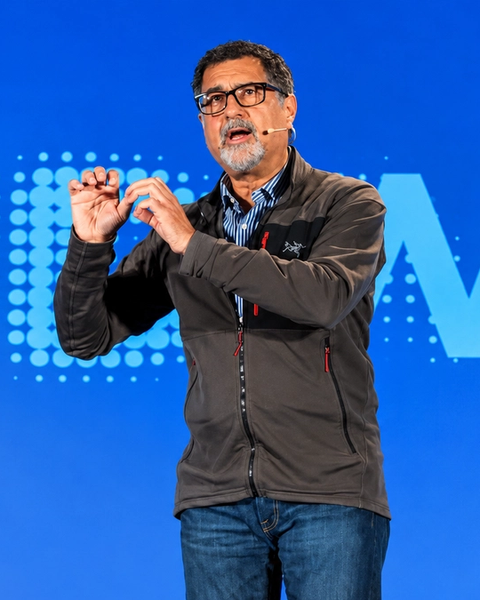
After a diagnosis of glioblastoma, philosopher Adam Hayden began thinking about what it means to be living in a provisional space both created and held open by medical breakthroughs. Join Adam as he shares tools, concepts and stories he believes might provide much-needed context for patients and providers as they navigate and define the uncharted territory of personalized medicine and individualized care.

December 5, 2019
Transcript
Now listen, the timer is going, so I appreciate the applause, but we have to get down to business.
The right drug for the right patient at the right time. That is the mantra of precision medicine.
Optimistic predictions stemming from the Human Genome Project in the late 1990s forecast that within 15 to 20 years, medicine would be revolutionized by connecting DNA to disease, improving treatment and ultimately prolonging life. Here we stand on the precipice of 2020, and despite the hype, those results have largely not yet come to fruition.
Take the disease I am living with, the aggressive brain cancer glioblastoma. It was the first cancer sequenced by The Cancer Genome Atlas in 2006. We have a wealth of genomic data available, yet not a single new drug has been approved for the treatment of glioblastoma in more than 30 years.
This is not to suggest that we should abandon the project. It is important work that must continue. But maybe we should look at medicine and think about the next 15 to 20 years. What would we like medicine to become? What should medicine look like then?
Precision medicine is a tool in the toolkit of industrialized healthcare, which physician, author and activist Victor Montori criticizes for standardizing practices for patients like this, but failing to care for this patient.
Now, that is Dr. Montori’s line, so if you tweet it, tag him.
As computational biologists and bench researchers continue the pursuit of cures, I would like to remind us about another of medicine’s aims: to care.
In that aim, we offer another form of precision medicine: storytelling.
Medical sociologist Arthur Frank says thinking with stories is a sedimentation of personal experience.
That resonates with me.
It was May 28, 2016. I lay in a hospital bed on the recovery ward of my treating hospital, just days after brain surgery. It had been an awake craniotomy, during which I remained alert and responsive to my surgeon’s commands as he resected a 71-millimeter primary brain tumor from my right parietal lobe.
Seventy-one millimeters is seven centimeters, roughly the diameter of a baseball. The parietal lobe is a functional area of the brain responsible for sensory and motor input and control for the opposite side of the body.
A few hours into the procedure, my surgeon said, “Adam, I have removed the majority of your brain tumor. I can continue to resect more tumor and be more aggressive, but that comes with the risk of permanent left-sided paralysis. Or we can stop the procedure now, protecting most of your motor function but leaving residual tumor in the margins of the surgical cavity. Adam, what do you want to do?”
Thinking with stories.
This is a cliffhanger.
I spent a few days in the neurological intensive care unit before being transferred to the hospital floor, where I tapped out an email on my phone to a friend who was a professor in the Medical Humanities and Health Studies program at my university.
In the subject line, I wrote: “A unique personal experience.”
Thinking with stories, we reconstruct our past in an effort to make sense of the present moment. Telling our stories creates a narrative arc that we apply to our lives to make sense of and give value to the present, because the present moment is what we have.
We imagine ourselves into the future, a future filled with dreams and aspirations. When we face serious illness, loss or unwanted change, it may become a future we fear.
But one thing is certain. Our future ultimately includes the conclusion of our mortal journey.
This is the story of living while dying. It is my story as a young man facing an incurable brain cancer, but it is also our story. Every one of us in this room is living while dying.
It is a sedimentation of personal experience. It is my unique personal experience.
I tell my story because we must restore the patient’s voice in medicine.
Storytelling is a pathway toward a meaningful life. But more than that, when clinicians listen to our stories, when they press a healthcare system bent on profit margins to make room for storytelling and hold space for it, the morally injured clinician stands to gain just as much as, or perhaps more than, the patients whose stories they hear.
The stories have gone silent in healthcare, my friends.
We are rich with data and short on humanity. There is too much focus on what we cure and not enough on why we care.
Illness and the medical interventions used to treat disease pull our experiences apart from a model that conceives of our bodies as objects to be tested, diagnosed, treated, charted, rounded on and autopsied.
Serious illness is an existential crisis. It attacks our meaning, our morals and our purpose. Illness questions what our lives are about.
Thinking with stories, we are forced to shift the narrative. We are forced to write and tell new stories. We have to reconcile the imagined plan for our lives with the very real interruption of serious illness.
Yet the medical model we have now does not address that existential distress. It favors a model of bodies as objects, treating a patient only as a disease rather than as a person.
That is detrimental to clinical care, and it also harms clinicians. Medical practitioners were drawn to medicine to do the good work of healing, and healing may not include curing.
Physicians are burning out because profit-driven administrators and payers have erected obstacles to patient care. It is no surprise that obstacles to patient care result in physician burnout.
Treating patients as people is supported by a long history of medical education.
How long, you might ask?
In a quote attributed to Hippocrates, he said, “It is far more important to know what person the disease has than what disease the person has.”
I’m sorry, Hippocrates. I may have butchered the quote, but that’s okay. It’s all Greek to me.
At the turn of the 20th century, medical educator William Osler said, “The good physician treats the disease. The great physician treats the patient who has the disease.”
Contemporary biomedicine touts sophisticated diagnostic protocols, increasing success in identifying molecular biomarkers and improved prognostication using machine learning.
The mechanisms of disease exist within the biological details. But the experience of illness is not detectable through lab work, light microscopy or magnetic resonance imaging.
It is only through the perspective of the patient, the subject of the experience, that we can understand illness in all its nuances, including its social impact, trauma and threats to personal identity.
Listen, I was 34 years old, a recent graduate with a master’s degree in philosophy, married to my very best friend, with three beautiful children at home. They were four years old, two years old and eight months old.
For a year, I experienced episodic weakness, dizziness and lightheadedness. With the inertia of a moving train, those episodes increased in frequency, duration and intensity.
I treated myself as my own case study, an N of one, and began gathering data. I jumped up and down, stretched, contorted my body and shook my head, doing anything I could to bring on or dissipate the episodes.
Because I lacked the proper clinical terminology, specialists listened to my descriptions but dismissed my reports. They heard hoofbeats and assumed horses, not zebras.
One physician told me, “If there were something seriously wrong with you, you would be in much worse shape.”
It turned out that I was in much worse shape.
A robust understanding of the illness experience cannot be reduced to a simple set of criteria. It is not merely the presenting symptoms. It is the lifeworld in which those symptoms present.
Standardized practices, screening and early detection are important. But this is not to diminish the art of healing, which pays no mind to biomarkers and asks only that a clinician grasp a person’s hands and offer presence and attention.
What I call us toward today is a project of reconciliation, one in which we close the gap between the scientific description of disease offered by the biomedical model and the rich characterization of serious illness offered by authentic, human-centered care, the kind of care that many of you in this room provide.
We must close the gap between treating disease and addressing illness.
Yet continued innovation in medicine can drive a deeper wedge between clinicians and patients. In my case, and cases like mine, we ultimately generate radiographic data, immunohistochemistry, next-generation sequencing, cell-free DNA, organoids, mathematical algorithms and computerized models.
We can learn so much without ever touching a patient. We can learn so much about a patient without ever getting to know the person.
Personalized medicine, my friends, is still far from personalized.
We need to criticize medicine while uplifting its practitioners. That is an act of rebellion.
In the words of my good friend Lynn Sammy, we are bringing punk rock to healthcare.
We are going to embrace illness with grace, honesty and vulnerability. We will incorporate illness into our stories, not to abandon our values and goals, but to realign them in light of a serious, debilitating and life-threatening illness.
Do not fear the path forward.
“I do not want to be back here in a year regretting the decision I make today,” I told my surgeon.
He said, “You cannot think about what might be the case. Make your decision based on your life today.”
Thinking of my children and my wife, I said, “Let’s conclude the procedure now.”
That was a decision based on my quality of life, not a decision based only on pathology or biostatistics.
Only through the patient’s voice can we understand that decision. We cannot recreate it in a laboratory.
So that even while dying, I might continue living.
Thank you.
RELATED