The Power of Telling Our Stories
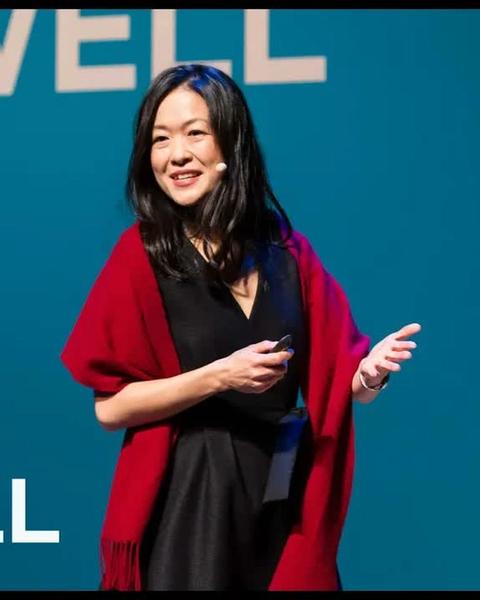
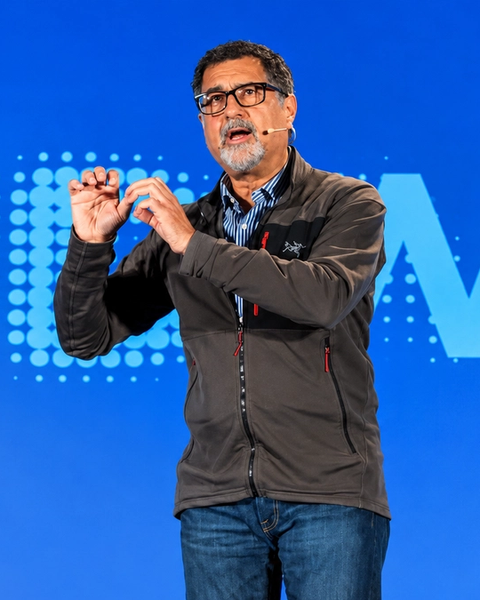
What does a beautiful death look like to you, asks Torrie Fields. She shares why her grandmother's death set the gold standard of a beautiful death, and reminds all of us that to create more beautiful deaths, those in the community must be courageous enough to share their stories.

December 6, 2018
Transcript
I am so overwhelmed and inspired by the voices and stories we’ve heard onstage today, and by how much change such a small number of dedicated individuals can create in the world.
We heard how people take their stories and apply them to their everyday lives. Now, how do you apply them to your everyday life?
I’ve heard from some of you during the breaks today. Some of you are wondering, “I don’t want to start a movement. How do I contribute? This seems a little big. These people are making enormous changes.”
With that, I want to offer a little parting advice from someone who has a story, someone who had a dream and someone who found her calling in life. I’m a young person who found her calling.
Start where you are. Start with what you know.
Last year, I was fortunate enough to tell my story for the first time. I had never told anyone about the first time I was diagnosed with cancer. Anyone.
There were people in that room whom I had known for years who had no idea I’d had cancer.
Step one: Tell your story, whatever it is.
We are all in this room, and now we know something more than we did before. We are responsible. Knowledge is power, and you are all required to share it where you are.
So how do we start where we are?
First, I’m going to talk about identity. I’m going to ask you to do a little check-in, a small exercise, before you go out into the world and share what you know.
My friend Jethro Heiko, who runs an organization called Common Practice, gave me a wonderful piece of advice. We were setting up a public gameplay event to have advance care planning conversations with the public. It succeeded, I’ll tell you.
The first instruction he gave people when they walked through the door was, “Check your license at the door.”
You are sitting here as human beings. We are all human. We are all the same on that level.
We become overwhelmed by labels.
“I am a…” Fill in the blank.
I have a lot of labels. Last year, I was a two-time cancer survivor. Most of the time, I am the senior manager of advanced illness and palliative care at Blue Shield of California. That is my narrow area of expertise. I know a lot about what I do.
Now I’m going to ask you to think for a moment about your labels.
Fill in the blank: “I am a…”
What comes to mind?
I am a physician. I am a mother. I am a child. I am a caregiver.
For me, today, I am a granddaughter. I want to tell you why I’m starting there.
Twenty years ago, I experienced five traumatic deaths of people my age. I experienced suicide, motor vehicle accidents and shootings. I came from a community rocked by tragic endings.
I was grieving. I was lost. I was trying to figure out how to make my way in the world.
Fast-forward five years, when I was able to experience what I would call the gold standard of death.
My grandmother, Neva Pauline Fields, was a 93-year-old, independent, stubborn German woman. I look in the mirror and still see her in me. That’s a little scary, but it is also my favorite thing about myself.
My grandmother orchestrated her own death.
She lived independently until she was 93. One day, she fell in the shower, and her life changed. She went to the hospital, immediately wanted to leave and moved in with my aunt.
She sat our family down and said, “Look, I’m going to die, and here’s how it’s going to go. I’m never going to the hospital again. I’m going to move in with Helen, and you’re all going to take care of me.”
“Okay, Grandma. That sounds fine.”
Over the next eight months, with the help of a wonderful home hospice team, my grandmother scheduled time with everyone in the family, her 11 children and 93 grandchildren, and gave away her belongings one by one.
Because I’m the youngest grandchild, I went last.
What I learned from that experience was that you can do it right.
The day after my grandmother gave me the special gifts she had willed to me, she died. She was done.
I sat in the room with my grandmother and the rest of my family as she took her final breaths. Her last word was my grandfather’s name. He had died in 1974.
What I witnessed was something Dr. Ira Byock describes in my favorite book. My grandmother intrinsically shared the four things that matter most.
She asked for forgiveness. She offered forgiveness. She said thank you. She told all of us how much she loved us.
Then she left.
That was a beautiful death.
I knew the difference, and I knew I had a role to play in creating better memories for people.
I am in the business of making memories, and you can be too.
Start where you are. Start at home. Start by talking to your parents, your caregiver and your friends.
I have played the game I mentioned, Hello. It is a wonderful game on first dates. I ask every first date whether they have an advance directive. When they don’t, we talk about it a little more.
That translates into community.
As human beings, we begin with ourselves. Look at your biases. Look at how you interact with the world.
When you go to work, spend time with your family, enter your community or go to church, remember what you know about yourself and others.
Listen more, and then share.
Tell your story.
A collection of stories begins a movement. And do you know what movements do? They change policy.
I have the opportunity to listen to stories all day and then do something about them. I hear that someone cannot access services, and I am in a unique position to help them gain access.
But each of you is also in a unique position.
Think about what you will commit to. How will you contribute to this movement? How will you help design a better end-of-life experience?
Now, go out and share your story.
RELATED