Survivor Guilt: Teen Cancer Survivors
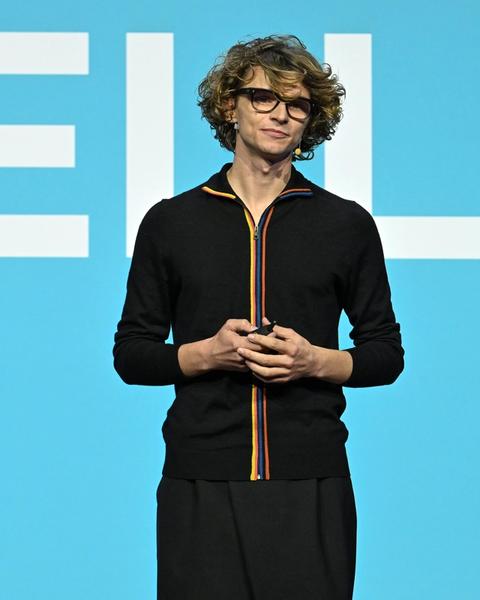
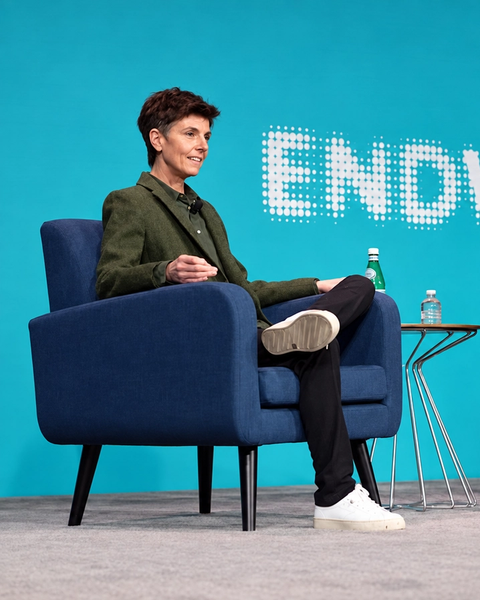
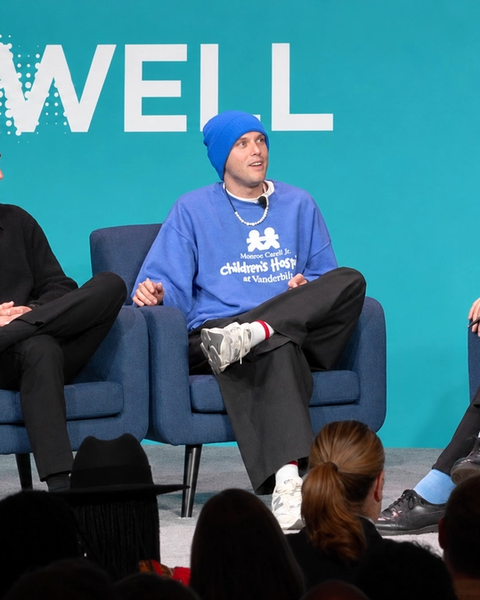
For young people with cancer, the support of others with the disease is often the lifeline that keeps them going. Yet the painful reality is that some of the friends they made during treatment don’t survive. Actor, director and producer Justin Baldoni talks with three young adults who have lived with cancer, Prince Aidoo, Stephen Heaviside and Angeliki Pelehrinis, about surviving survivorship and honoring those they lost along the way.
Take 10 is an experience focused on finding solace, building solidarity and sharing solutions when it comes to serious illness, caregiving and end of life. If there’s one thing we hope you take away from this experience, it's the invitation to create the narrative of your life through to its end. May you find comfort and joy in the process of digging into what it means to embrace the good, the bad, and the messy about the gift of being alive!


January 15, 2021
Transcript
Justin Baldoni: Thank you so much for having us, End Well. I’m here with some incredible people: Angeliki, Stephen and Prince. I want to thank all of you for your vulnerability, your transparency and your willingness to have this conversation about what it’s like to be diagnosed with cancer as a young person, to fight it and then face some of the things that happen afterward as you grow older.
Prince, my man, you’re in London. You were the youngest person here when you were diagnosed with cancer. You were only 14, right?
Prince Aidoo: Yes.
Justin Baldoni: What was that like? What goes through the mind of a 14-year-old? You’re becoming an adult. You have different needs, wants and desires, and then you’re diagnosed with cancer. Can you talk a little about that?
Prince Aidoo: I was completely blindsided. I was very active, so there was a lot of confusion in the beginning and a lot of fear as well.
Discovering what the illness actually was gave me some kind of closure and gratitude. At least it gave me a purpose and helped me understand what the goal was and what I had to overcome.
Justin Baldoni: What was it like interacting with other people your age while you were going through cancer treatment? When I was a 14-year-old boy, I just wanted to be accepted by the other kids. I wanted to be liked, have friends, go to parties and hang out.
I imagine cancer makes you grow up much faster at 14.
Prince Aidoo: Absolutely. That was probably one of the hardest parts, especially in the beginning. I wouldn’t say I was ostracized, but I was separated from the group I had grown up with. That was a huge weight to bear.
Meeting other people like me, people going through what I was going through, allowed me to really open up and speak about my struggles.
Justin Baldoni: Thank you, Prince.
Angeliki, you were 19 when you were diagnosed. Piggybacking on what Prince said, when you’re receiving cancer treatment in a hospital, you can feel like you’re constantly surrounded by doctors, nurses and people who aren’t your age.
How important is it for a young person, even at 19, to be surrounded by people their own age?
Angeliki Pelehrinis: I think it’s really important. I was diagnosed in college, so my whole world had been about being surrounded by friends all day, every day. Then I had to leave that and go to the hospital.
Like Prince said, it was difficult for friends and family to fully understand everything I was going through. It wasn’t because they didn’t try. It just wasn’t something they had personal experience with.
When I met other young adults with cancer, we instantly connected over those shared experiences. It was really important to meet people who could understand on that level.
Justin Baldoni: I can imagine it’s lonely. Can you talk about that a little?
Having made documentaries and having so many friends who are living with cancer, or who have died from it, I know one common thread is how hard it can be to feel normal. People are afraid of their own mortality, so they don’t want to talk about it and don’t know how to talk about it with you.
Angeliki Pelehrinis: It was definitely an isolating time. All my friends from school seemed to be moving forward, moving on and continuing with their lives. I had been pulled out of that and felt stuck, like I wasn’t moving anywhere.
Meeting other young adult cancer patients brought back a sense of normalcy because what was normal for me was also normal for them.
Justin Baldoni: Stephen, how important is it for family and friends to show up emotionally for someone going through cancer?
There isn’t a rulebook. No one gives a family, brother, sister or parent a manual when someone they love is diagnosed.
Stephen Heaviside: The first thing is simply to show up. Even if you don’t know what to say, that’s totally fine. We don’t know what to do or say either as people who have been diagnosed with cancer. We’re dealing with it one day at a time too.
When someone shows up and says, “I don’t know what to say to you,” that’s completely valid. At least you’re there, hanging out with me, watching movies and talking about serious things or fun things, whatever it is.
Justin Baldoni: I want to take it a step deeper.
Inevitably, when you’re going through cancer treatment, spending time in the hospital, receiving chemotherapy or recovering from surgery, you make friends and meet people who might not be as fortunate as you and who may die.
What can friends and family do or say to help a cancer patient cope with losing someone they met during treatment? That isn’t something we often think about, and I don’t believe people are prepared for it.
Stephen Heaviside: When you’re young, you have this linear idea of what life is going to be. You think, “I’m going to school, get a job, get married, have children and not have to worry about my friends dying until I’m at least middle-aged or older.”
This experience speeds everything up. It ages you in a strange way because you’re losing friends in your 20s and 30s. When you were a child, you didn’t know that was something you would have to confront so early in life.
You’re grieving your own life, your dreams for it and what you wish you were doing with that time. At the same time, you’re experiencing grief because people around you are dying.
That’s a lot. You’re rewriting many of your old ideas about what life is supposed to be.
Justin Baldoni: Prince, I know you’ve experienced quite a few losses since you were 14. How did you deal with that? Did anyone at the hospital prepare you emotionally?
Prince Aidoo: I don’t think it’s something even the hospital staff are prepared for. A lot of them become deeply invested in the well-being of the children, especially on the Teenage Cancer Trust units.
None of us are ever really prepared to lose someone we’ve gotten to know. It’s a very tricky question. I wouldn’t say I dealt with it in one particular way or that any one approach was more effective than another.
What I can say is that it’s really important to remember these people because of the impact they had on me personally. I’ve done everything I possibly can to make sure they are remembered.
Justin Baldoni: Angeliki, you’ve written quite a bit about the complexities of losing people you care about while going through cancer yourself.
Angeliki Pelehrinis: Survivor’s guilt was a big part of survivorship for me. I think survivorship as a whole is often overlooked within the cancer timeline.
I was asking questions like, “Why did my treatment work when my friends’ treatments didn’t? Why am I alive when my friends aren’t? Why did I lose my friends at such a young age?”
Those questions don’t really have answers.
I tried to reframe what felt like survivor’s guilt into survivor’s responsibility. Since they aren’t here and I am, it becomes my responsibility to contribute to the world in some of the ways they would have and to apply the lessons they taught me.
I don’t think there’s a universal way to work through grief, but this helped me and gave me comfort. When I lost them, it felt as though I had lost my purpose in some ways, including my role as their friend.
Thinking of it as survivor’s responsibility brought back that purpose and my role as their friend. It’s my way of keeping their memories alive.
Justin Baldoni: Thank you.
Stephen, some people have suggested that patients might be better off if they didn’t engage with one another or form relationships in hospitals because it could complicate things. What do you think about that?
Stephen Heaviside: I think that’s shortsighted.
When I was first given resources for young adult cancer communities, I wasn’t ready to use them. In retrospect, I wish I had joined them earlier because I was flailing and searching for help and support.
Even in the best-case scenario, when you have a great support system, an amazing immediate family and cool friends, you still need people who genuinely understand what you’re experiencing.
When I first went through chemotherapy, I used to say that I felt like an astronaut who had gone to the moon. It was this crazy life experience that gave me a new perspective on my life and the world.
The problem with being an astronaut who has gone to the moon is that there are only about a dozen other people who know what that experience is like. When they don’t talk to one another, they probably sound like crazy people to everyone else.
That’s how I started to feel, even with close friends and family members.
Justin Baldoni: What can doctors and nurses do specifically to help young people deal with loss and prepare for it, rather than removing them from the situation or preventing them from seeing one another?
Stephen Heaviside: Clinicians are usually so focused on the patient and getting them through cancer that they don’t want to add another burden or more anxiety.
I know some communities are more underserved than others, but hospitals need survivorship programs and young adult cancer programs. They need social workers who can come in and say, “There’s Teen Cancer America. There’s Stupid Cancer.” They can provide a list of organizations where young people can connect with others.
Justin Baldoni: Prince, as we begin to wrap up, what would you tell someone in high school or college who has a friend or even an acquaintance with cancer but doesn’t know what to say?
Prince Aidoo: Whatever you’re feeling, the person going through it is probably feeling it a hundred times more. That fear, anxiety and uncertainty you feel is something the patient is experiencing much more intensely.
Like everyone has said, just be there. Be an ear. Be a presence. Be a hug. Be a friend.
That is literally all that’s needed.
I have a good friend named Raphael Pierre, whom I met at an event held by Teenage Cancer Trust UK. He’s older than me, but he had cancer when he was younger.
I met him when I was about 15, and I relapsed at 17 and a half. This guy slept in my hospital ward for six months straight. He would go to work, come back and sleep over. He was simply there.
You just have to be present.
Justin Baldoni: That made me tear up. It gives me hope. That’s beautiful. Thank you for sharing it, Prince.
Angeliki, you’ve talked about turning survivor’s guilt into survivor’s responsibility. Can you close by explaining what that means?
Angeliki Pelehrinis: It means finding ways to keep their memories alive, whether that’s doing things they would have loved or applying lessons they taught me.
It means being thankful, giving to others and showing up for people even when you’re going through a difficult time yourself. It means taking each day and truly living it.
Justin Baldoni: Would you say the names of any friends you’re thinking about right now so we can send them some love too?
Angeliki Pelehrinis: Diego Alcala and Moises Alvarez.
Justin Baldoni: Prince, could you share a couple of names too, so we can all send them some love right now?
Prince Aidoo: Mason Gibbs and Emily Begg. They’re a couple of my favorites. I have some of the best memories with them.
Justin Baldoni: Stephen, would you share the names of some people who have died and meant a great deal to you?
Stephen Heaviside: Jessica McNamara was one of the first cancer friends I met. Unfortunately, we lost her a few years ago.
There’s also my friend Luke Quigley Schneider from Chicago, who died earlier this year. He was a hilarious guy. It’s tragic that I won’t be able to grab a beer and joke with him at the next cancer conference I attend, but he’ll be in my thoughts forever.
Justin Baldoni: Thank you all so much for being here. My heart goes out to each of you.
Keep fighting and keep spreading the word, because you’re changing the world one person at a time.
Thank you. Bye, guys.
Voice
RELATED