It’s Personal
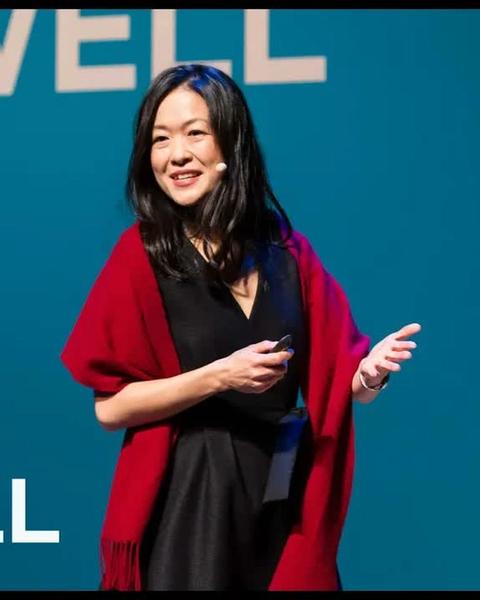
Torrie Fields’s experience as a young uninsured person with cancer taught her firsthand how policy decisions can profoundly impact people’s lives. She now works to align social, political and medical systems to support person-centered care for individuals with life-limiting illnesses or at end of life. Torrie’s ability to combine data, messaging and passion makes her a powerful force in the movement to extend palliative care earlier and to all in need.

December 7, 2017
Transcript
“Neither the life of an individual nor the history of a society can be understood without understanding both.”
It was 2005 when those words first resonated with me. I had studied sociology and was deeply rooted in the sociological imagination, where this idea comes from, but I couldn’t fully understand the intersection it described between the individual and society until 2005.
I was newly married to my best friend, who had somehow just signed a major record deal. I married a rock star.
I had a great job managing quality improvement at a leading healthcare system, and I finally knew what I wanted to do with my life. I wanted to dedicate myself to suicide prevention, helping people through grief and supporting survivors of loss.
My sister had just reached the third trimester of pregnancy after a years-long battle with uterine cancer. We were going to move to the Pacific Northwest to be closer to her and pursue our dreams, me in medical school and my husband on tour.
We had big dreams.
But I had a secret.
As we were packing our final boxes, after we had quit our jobs, I received a call with my test results. I had been diagnosed with cervical cancer.
I had been battling complications from HPV for more than five years. At the time, we knew much less about HPV than we do now. We knew it was a sexually transmitted infection, so it felt like my fault. It was one letter away from HIV. There was no treatment. We also knew it could cause cervical cancer.
My number was up. I won.
I was diagnosed with cancer the day I lost my health insurance.
We had already packed our boxes and made our plans. The drive was supposed to take us toward our new life together as newlyweds and young professionals who had figured out what they wanted.
Instead, it became a winding road filled with questions and very few answers.
How long had I had cancer? Was I dying? Was it my fault?
As a healthcare administrator, you learn two things. First, healthcare is exorbitantly expensive, and there is no way to access it without health insurance, which I did not have. Second, most health systems offer services for people who cannot afford care.
I found my local breast and cervical cancer program. I knew those programs existed because I had established one at my previous health system. Most academic medical centers had a free clinic that could screen people for breast or cervical cancer and then provide treatment.
About a month after we settled into our new home, I went to the free clinic and presented my case.
“Hi, I’m Tori. I’ve been diagnosed with cervical cancer. I don’t have a job anymore, and I need treatment.”
The social worker sat me down and explained that, because of the way the law had been implemented, they could not provide treatment to everyone who was unemployed or unable to afford it. Only people who had been diagnosed with cervical cancer through that specific program were eligible for treatment.
I didn’t qualify.
I’m a planner, and I had no plan for this.
I panicked. I thought I would be able to walk in, receive treatment and be done. We had dreams. This wasn’t part of the plan.
So I became practical. I withdrew my medical school application and got a job. It took about three months, and I began teaching tax law for the federal government.
It was not medical school. It was teaching tax law.
I learned a lot about economics in the process, but I had to lie to get that job. Let’s be clear: I didn’t know how to teach tax law.
But I knew that when you get a job with the federal government, you receive health insurance on your first day. That was all that mattered. I had cancer, and I needed treatment.
It took another four months to find a doctor, get an appointment, receive a diagnosis and finally be staged so I could learn how serious the cancer was.
I was diagnosed with stage 2B cervical cancer. It had spread beyond my cervix but was still localized enough that something could be done.
When I learned I had stage 2B cancer, I also learned that my surgery was scheduled for the following Wednesday. It had simply been scheduled.
I still had many questions. There were a lot of statistics thrown at me, including that I had a 57 percent chance of surviving five years. That made absolutely no sense to me.
To be honest, it still doesn’t entirely make sense to me how those statistics are calculated.
I had no understanding of my treatment options or prognosis. I still had no answer to whether I was going to die.
But it had been a year since my diagnosis, and someone had finally presented me with an option. I had many questions, but I thought asking them would interfere with my treatment.
I had already spent a year waiting, and my husband had spent a year in agony with me. I could catch up later. I could ask questions later.
I met with the surgeon and had my operation the following Wednesday. I believed everything would be fine after that first surgery.
Instead, I was placed on a medical conveyor belt that lasted seven surgeries over three years.
We hadn’t planned for this. My husband broke his record deal and gave up touring so he could become my caregiver. I never went to medical school.
I placed myself entirely inside the body of the patient and didn’t think about anything else. I needed the cancer gone.
At my final appointment, my oncologist told me that my margins were finally clear and that my laboratory results showed I was responding to treatment. She also told me that I could no longer have children.
Children had been a major part of the future my husband and I imagined together. Ultimately, it ended our marriage. My husband had plans too, and this was not the future he had dreamed of either.
Our dreams changed.
I had to step out of the role of patient and become a person again. He had to step out of the role of caregiver and become a husband again.
I felt deceived by my physician. I wished she had told me earlier about all the possible consequences of these choices.
I felt deceived by my body. I had lost my dreams, and I didn’t know what my future held.
So I quit my job. Clearly, I wasn’t going to spend the rest of my life teaching tax law. That job had served me well, and I was very happy to say goodbye to it.
I applied to a public health program because I wanted to understand what kinds of change were possible. What levers could be pulled to make this experience better for people so they would not be surprised by their outcomes?
I had just had my dreams taken from me. I didn’t want that to happen to anyone else.
When I learned that systems could be improved, that there were concepts like continuous quality improvement, the Triple Aim and patient-centered care, I woke up.
That was not the treatment I had received. I had just discovered that my experience could have been better.
I became angry.
There had to be a better way. Other people should not be blindsided the way I was.
I eventually got a job at the same place where I had received treatment because I was deeply interested in changing it.
I sent an internal email to Dr. Berlin, the director of the breast and cervical cancer program, the same program that had turned me away four years earlier.
I was now her colleague. I was no longer a patient, and I had a story she needed to hear.
We sat down, and, surprisingly, she had no idea about the program’s eligibility requirements.
She was as angry as I was.
There had to be a better way.
We reached out and organized. For the first time in my life, I met more people like me. I met young people who had survived cervical cancer and other HPV-related cancers.
There were a lot of us.
We went to Congress, and we changed the law.
That was when I found my voice, and the voices of others too.
What I discovered through that process is that policymakers generally mean well. For the most part, they want to implement ideas that will improve people’s lives.
But the devil is in the details. It is during the implementation of policies that things go wrong and people like me become trapped in the process.
And I knew more than most people. I had been a healthcare administrator.
I began implementing large-scale programs. I changed the system, and I patted myself on the back.
I thought I was done.
Good job, Tori. You changed things.
I became complacent. I thought I was a success, still in my 20s.
Luckily, I was given a second chance to wake up.
On March 1, 2015, I was diagnosed with cervical cancer again. This time, I needed much more treatment and care, and I was alone. I no longer had my rock-star husband to lean on.
I returned to the same cancer center. I had the same oncologist and the same nurse. The nurse was really the only reason I went back because she treated me like a person rather than a patient. She sat down and talked with me.
Nothing else in the process had changed. Nothing in that system had changed.
The day I learned I had stage three cancer and that it had spread to my lymph nodes, I was scheduled for surgery.
Nothing had changed except me.
I knew there was a better way.
I asked for a palliative care consultation. I told someone what my goals were for my life. I learned that I was not going to die and that there were treatment options.
Together, we made decisions that were right for me, my future and my life.
I received what I wanted, even though it was never offered to me.
As a survivor, administrator and policymaker, I have a responsibility.
Cancer was the best thing that ever happened to me. It changed my life and gave me a new dream.
That dream is to create a system that responds to my future needs and to the needs of others.
Does your system reflect your needs, your neighbors’ needs and your parents’ needs?
Let’s design a system with patients, survivors and caregivers, not simply for them.
Let’s design a better experience, a better system and a better ending.
Thank you.
RELATED