The Beauty of Care for the Dying
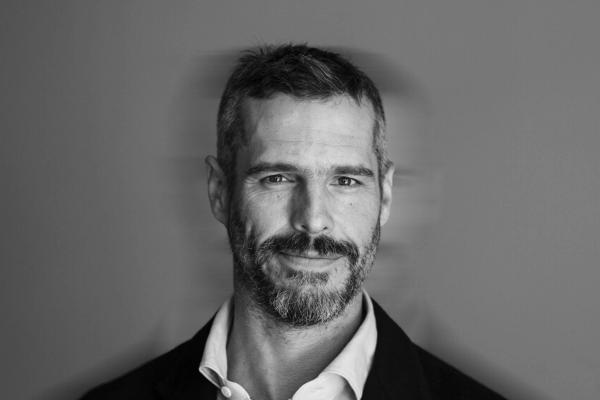
Dedicated defender of the beauty of humanity, the senses and of a life well lived to the end, palliative care physician and activist BJ Miller brings his expansive vision to bear on the state of the end of life experience. BJ shares his take on the current situation and offers possible routes for how we might close the gap between intention and action in our search for generative solutions that reshape how we think about illness, dying and caregiving.

December 5, 2019
Transcript
I don’t know. These are weird times.
I don’t know whether optimism is called for or pessimism. I don’t know whether I should be feeling wonderful or horrible.
So I guess we need to do both.
I mean, that seems to be what adulthood summons. More particularly, it seems to be what our subject matter demands.
One of my favorites from Frank Ostaseski’s The Five Invitations is the admonition, “Push away nothing.”
I find that the most compelling. It’s what death does for us. Everything is invited. Everything must come to account at the end of life.
To me, that is its singular, greatest charm and where we have the most to learn.
So we have this inclusion. We have to include everything, right?
But to date, as big as this subject is, it has been pushed through the medical lens almost by default. Medicine has been the arbiter of death for a while now.
Medicine is a beautiful and wonderful thing. It just can’t be everything.
So here we are, mixing and mingling other disciplines. That’s so beautiful.
This subject touches everybody. Everyone has something to bring to it. Every discipline has something to bring to it.
I will say, though, that working across disciplines is actually really hard. I think one reason it doesn’t happen more often is that, even though it sounds wonderful and exciting, we have different vernaculars, habits, and customs.
Reading the signs in one discipline can be tricky from another.
So one lesson is that we need massive respect across these aisles. We also shouldn’t necessarily take things at face value. We have a lot to learn from one another, and that includes asking questions.
For the last four years or so, I’ve been out in the world, mostly interacting with the public through speaking and, more recently, through a book.
It’s been really wonderful.
I hope I’ve been listening. I’ve been gabbing a lot, but I think I’ve also been listening.
What I’ve been hearing is that there’s an unmet need you can almost feel dripping from the walls of this country.
There’s a lot of talk about denial, that no one wants to look at death. Yet here we are, all together, looking at it on some level.
So yes, denial is real.
But I think something else is going on too. There’s this pent-up interest in the subject.
What I hear from people is a basic need to connect.
Isolation is a problem. It’s particularly galling when you’re isolated in relation to a subject that affects everyone, a subject that is so inclusive. There’s a kind of perversion in that.
There is also a tremendous need for help. There’s a tonnage of need, and with our aging population, that tonnage is only going up.
On one hand, that’s dispiriting because there is so much unmet need.
On the other hand, or the same hand, as the joke goes, that need means this subject is coming for us one way or another.
This is not going to remain a recreational pursuit, something we engage with only because we’re intellectually curious or interested.
It’s coming for us, in the best way or the hardest way.
We’re going to get there.
Out in the world, I’ve also noticed that there is often a schism between medicine and the public it’s trying to serve.
It’s easy to bash doctors, and I fall into that too, sort of.
But one thing I’ve noticed is that there isn’t a huge difference between audiences filled with healthcare professionals and audiences of laypeople.
Everyone is hurting in the system we have now. Maybe especially the providers.
You bring these ideals into the work, but the reality of practicing medicine, nursing, or anything else can be so brutal.
That pain is diffused throughout the system. In a way, everyone is ready for change.
Basically, I think we’ve been part of a provocation. We’ve been helping one another think and feel.
And that’s been great. It’s been useful.
But now we need to move toward action.
At some point, we could lose ourselves and our audience if we stay in provocation. We need to do some stuff.
So that’s the gist of my talk: How do we move toward more action?
I don’t have answers, but I have something of a framework that may help us approach it.
I’ll say one more thing.
The word that has resonated with people out in the world, in big and small towns, rural places, red places, blue places, is “activist.”
I’ve been surprised by that.
But I think it’s an important word. It’s an engaging word. It’s a mobilizing word.
And I think it’s useful for us because we are pushing a bunch of rocks uphill. We need to acknowledge that.
Caring is activism.
Daring to talk about this subject is activism.
Sitting with someone you cannot fix is activism.
It’s all over this work.
It’s important to acknowledge that and give ourselves a little credit. It also allows us to forgive ourselves for not fixing everything or making everything better overnight.
So I think it’s a useful word.
But to what end, right?
What is all this activism moving toward?
Is this a movement? And if it is a movement, what is its goal?
A good death? I don’t know whether we can mandate that. I don’t know whether we could even agree on what that means.
Is it healthcare reform? What is it exactly?
I don’t have an answer to that question, but I think it’s a useful one for all of us to consider.
For me, I think it has something to do with crafting a sense of reality big enough to include everyone and everything that happens to us, a reality that isn’t overly reduced.
Our systems should be responsible to a reality that affects all of us and that jibes with our actual experience.
On a more personal level, I think it has something to do with finding a way not to be ashamed of being natural creatures.
One of the saddest things I see in the clinic is when people are ashamed or embarrassed to be sick.
You already have to feel crappy, and then you have to be embarrassed about feeling crappy.
That’s really lame.
And it’s unnecessary.
Whatever end we’re working toward, I think it’s useful to revisit why we’re doing it.
Viktor Frankl has a lovely quote. A person is not ruined by pain, but by pain without meaning.
I’m paraphrasing, but it’s something like that.
So let’s think about some imperatives. You may have others, but here are a handful.
One is the ethical imperative, perhaps the greatest one. The moral imperative.
What is the relationship between ourselves and others?
This lights up a lot in this room. I think we all know that the line between ourselves and others is very porous.
But that isn’t reflected in our structures or our language.
I think it’s time to revisit the social contract.
I’m not sure what the social contract is anymore.
What can we expect from one another? What do we owe one another? What do we owe ourselves?
That’s a big question. I think answering it would take us a long way.
A second is the financial imperative.
Never mind healthcare’s woes. Social Security and our other safety nets are moving toward insolvency. Long-term care insurance is increasingly becoming a nonviable product.
We have some really big problems.
The number one concern among people facing the end of life is whether they’re going to become a financial burden.
That’s what they’re worried about.
A lot of people want to hasten their deaths, not because they’re ready to die, but because it’s too expensive to live and they don’t want to leave their loved ones with debt.
The number one cause of bankruptcy in this country is healthcare costs. Seventy percent of the people who go bankrupt have insurance.
So the old idea that this is about insured people versus uninsured people isn’t real anymore.
Then there is the consumer imperative.
Human-centered design is a beautiful concept, but it hasn’t really taken root in this space yet.
Why aren’t patients and caregivers in direct contact with the designers?
Think about orthopedic shoes. If someone doesn’t like your shoes, you might say, “Nice orthopedic shoes.”
It’s an insult.
You can tell when you see adaptive equipment. One of the tells is that it’s ugly.
Ostensibly, if you need it, no one is going to put effort into the aesthetics or make you actually want it. They can take for granted that you need it.
I’ve watched that shift over time with prosthetics.
There’s no reason we shouldn’t love our orthopedic shoes.
If we’re trying to draw attention to what we have to live with, I love my legs. It took me a while to get there, but I love them.
They’re not ugly substitutions for things I lost. I think they’re beautiful for what they are.
And they’ve been therapeutic for me on an aesthetic level.
There’s something to that.
There’s also something to designing for the proportions and needs among us.
Access is a huge issue.
We’ll design a beautiful building, and then, to make it accessible, we tack a ramp onto the side.
Why not integrate that ramp into the design? That feels very different from the consumer’s side.
Another imperative is technological and scientific.
Sometimes it feels as though we keep producing new technologies that are supposed to serve us, but in the end, we serve them.
That’s really problematic. It’s insidious, and it happens a lot.
I think there’s an imperative to reverse that.
One of the seven blunders of the world is “science without humanity.” I think we can feel that.
Then there is the cultural, social, and political imperative.
This is the society in which we live. I think it’s time to reground ourselves in a shared reality.
Death can do that for us.
We are all mortal beings, and we all have to deal with the knowledge of our mortality.
That’s a great bond. It’s something we all face, young, old, skinny, fat, whatever. It doesn’t much matter.
So let’s reground ourselves in that shared reality.
Swirling around and underneath all of this are individual and aesthetic imperatives.
We are sentient creatures.
I love my body. I’ll be sad to lose my body because it feels things. It eats chocolate. I like it. It moves me around. I get to sense things.
There’s something to this aesthetic imperative.
It isn’t about being pretty. It’s about something much more elemental than that.
All right, so there are some imperatives, some reasons to do what we’re doing.
Now let’s quickly move to some ways we might structure our action.
I think there are four broad areas.
One is education and training.
In healthcare, we don’t have enough palliative care professionals. We don’t have enough primary care professionals or geriatricians.
We need to work on training doctors, nurses, social workers, chaplains, home healthcare aides, and the direct-care workforce. You name it.
We also need to revisit the world of informal caregiving.
As one of our speakers pointed out, there are 45 million informal caregivers in this country doing $500 billion worth of work they aren’t being paid for, often while trying to hold down a job.
So what about our human resources professionals?
What about companies competing for talent by offering family and caregiving benefit packages?
We’re all going to be caring for one another. How about some basic training? How about generous, reasonable medical leave?
And teachers can start this very young.
Some of our speakers talk to schoolchildren about death and its realities at a very young age.
That’s beautiful.
Those children will age differently.
We can teach the cycles of life. We can learn to relate to nature again.
Policy is another major way to act.
We can lobby our members of Congress.
Some of you here, why don’t you run for Congress on a platform of health and justice around aging well and dying well?
That would be a beautiful platform. I can’t wait to see someone do it.
Policy professionals, when you’re drafting policy, make sure you translate it back into reality. Look at illness as an experience, not as a series of transactions.
Researchers, let’s move beyond the hegemony of randomized controlled trials. Let’s embrace social science, qualitative research, and other forms of knowledge.
The third area is infrastructure. The material world.
Help us build things and spaces where we feel safe enough to fall apart. Help us gain access to what is possible.
Patients don’t get mad at me because I can’t cure cancer.
They get mad at me for abandoning them.
And they get mad when there is a medicine down the hall that they simply cannot access.
If something exists and is knowable, let’s make it known.
And if it doesn’t exist, let’s create space for it to remain an interesting mystery.
Then there is the social world, the way we relate to one another.
Musicians, media professionals, language, love, art. You name it.
This is where we come alive. Help us feel seen.
This is where the Golden Rule can play out.
This is where it’s so important to distinguish between pity and empathy.
One hard part of being disabled is not only the physical pain I have to deal with. It’s also the projections I have to deal with from the public.
I don’t think my experience is unusual.
For me, the answer to my own question about what to do, instead of simply talking and talking, is something my partner Sonya Dolan and I are starting called the Center for Dying and Living.
The purpose is to gather a ton of stories directly from patients and caregivers, people describing their experiences in their own words.
That way, I don’t substitute my voice for the voices of my patients, which happens all the time.
If we truly want to move toward a patient-centered or person-centered system, then we need to hear directly from patients and caregivers.
That’s what we’re trying to create, a kind of latticework where those stories can live.
Then, around those narratives, we’ll build a body of curated knowledge so that people aren’t left to Google their disease and sift through a bunch of junk.
Anyway, that’s the quick version of what we’re trying to do.
But I would invite everyone here to think about why you’re here and how you can move what you’re already doing through some of these angles and toward action.
That’s all.
Thank you very much.
RELATED