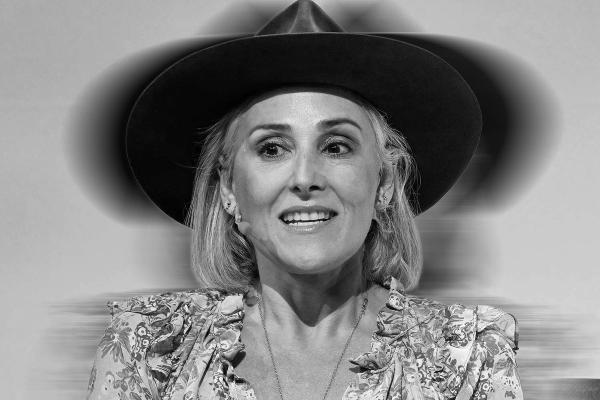
Ricki Lake and Alua Arthur Talk About Death, Life, Grief and Joy
Pop culture icon Ricki Lake is a multi-hyphenate entertainer with storytelling at her core. Whether through acting, producing, writing, dancing, or simply sharing her own experiences, Ricki’s passionate heart and signature transparency have connected her to fans and cemented her place in the cultural zeitgeist for almost four decades.
Alua Arthur is is the most visible death doula in America today. and the author of BRIEFLY PERFECTLY HUMAN: Making an Authentic Life by Getting Real About the End. She is a recovering attorney and the founder of Going with Grace, a death doula training and end-of-life planning organization.


November 22, 2024
Transcript
Alua Arthur: Hi, y’all. I want to say, though, I never, ever could have predicted in all of my years that I would be interviewing you, Ricki Lake. But life is just full of plot twists and turns, and then we find ourselves on this stage together.
Ricki Lake: Absolutely. And I’m such a fan, Alua, of your work, your book. Come on, her book! The work you do. I was a fan from the get-go, so it’s a pleasure. You can ask me anything. I’m an open book.
Alua: Thank God, because here we go. We just have to remember that people are listening to us, so we’re going to do our best.
Ricki: I’m willing to share it all.
Alua: The conversations we’ve had lately have been really juicy, ranging from grief to death to psychedelics to pop culture to periods to birth. All of it, in a very short amount of time. What a treat.
Ricki: What a treat. Absolutely.
Alua: Um, it’s famously said, or we hear that you’ve said, that you did not want to die being known for doing “baby mama” DNA tests on your show.
Ricki: Did I say that?
Alua: Did you?
Ricki: I think maybe I did. It sounds familiar.
Alua: What did you intend to do with that massive platform you created, one that supported so many of us?
Ricki: I mean, the truth is, you guys, I went on the air when I was 24 years old. I was the youngest talk show host, and I didn’t know who I was.
The idea that I was giving advice or, you know, moderating a panel of very dysfunctional people at times, I mean, it was kind of presumptuous.
But I think I found myself later in life, and really through 9/11. I was talking to David earlier about my experience on September 11 in New York City. I had a two-month-old and a four-year-old, and I witnessed firsthand the plane hitting the building.
That really changed the trajectory of my entire life. I felt like, at that moment, I was going to die, and I was going to die with this talk show being what I was known for.
I really soul-searched after that experience and thought, where can I be more impactful? What do I care about? Where can I make a difference?
It was then that I chose to leave my job and my talk show. I left my marriage, and I left New York City, where I had lived for a long time. I started soul-searching.
I realized that I wanted to focus on my birth experience and shed light on normal birth and out-of-hospital birth. That became the documentary The Business of Being Born.
Thank you. It’s the thing I’m most proud of in my career. I’ve been around for a very long time. You all know me from Hairspray when I was 18, but it was really The Business of Being Born where I feel like I came into my own. I found my voice.
That film is making a difference. It’s 17 years old, and it’s just as relevant today as it was when it came out.
Alua: Absolutely. Are you all familiar with the documentary The Business of Being Born?
I feel like it shifted how I view birth, certainly. And one thing I’ve really been appreciating lately is noticing how the change you helped create in the way we view birth is now starting to happen in the way we view death.
Do you see similarities between the two movements?
Ricki: Absolutely. I mean, they’re rites of passage. We don’t all become mothers or parents, but we’re definitely all going to die.
I think it’s about having reverence for the experience, being connected to the experience, and not being numbed.
I can’t really focus on death because that’s not my wheelhouse. But as far as birth, for me, I really wanted to be an active participant in the experience of becoming a mother and giving birth.
I got to have that more with my second child than with my first. With my first, I was given, you know, the cascade of interventions. And there’s nothing wrong with that. Becoming a mother in whatever way is magical and sacred.
But for me, a woman can really come into that primal power. I look back on the day I had my baby, which, if you watch the movie, you see me giving birth in my bathtub in my New York City apartment.
I get such strength from that, especially through the things I suffered later, losing my partner to suicide and getting through that. The whole journey I’ve been on.
I go back and tap into my primal power from that experience.
Alua: Thank you so much for sharing that. I think those of us who haven’t given birth are certainly curious about the experience and what it creates within somebody.
I notice time and again how often people who have given birth talk about how a part of you has to die in order for that to come to pass. Would you agree?
Ricki: I do agree with that. Yeah. You shed. You become a different you.
And in that experience, for me, being fully present and not numbed in any way, I was tapped into all of it. The agony and the ecstasy.
It’s like death. They go hand in hand. You can’t have the ecstasy without having the agony.
And, um, I’m so grateful. That goes for all of my life experiences. I’ve had a lot of trauma, a lot of things that have been super challenging for me, and a lot of it has happened in the public eye because I’ve been a public figure since I was 18.
But I wouldn’t change any of it because it’s made me the best version of myself I’ve ever been.
Losing my husband almost eight years ago taught me so much. It taught me about love, self-love, self-acceptance, and appreciating simply being alive.
Alua: What a gift.
Ricki: Yes. All of it.
Alua: Can we talk about Christian?
Ricki: Yes.
Alua: So, I met you through my very good friend and one of my deathy besties, Claire Bidwell Smith. Where is Claire? She’s somewhere here today.
And thank you for connecting us, Claire.
Ricki: Claire says she had three natural births because of me. Thank you. That means so much to me.
Alua: It’s an absolute treat. In the time since Claire connected us, I’ve learned so much about your life story. Can you tell me how Claire came into your life?
Ricki: Yeah. I believe I did her podcast, her podcast about grief. She’s such a beautiful writer, and I’m such a huge fan of her work. All of you are, like, über-fans, right?
So I was a guest, and we became friends. We had a really beautiful talk, and I invited her over. She said yes, and she came to my house in Malibu.
I shared more about my experience with my beloved Christian, and it was immediate. We were just like soul sisters.
And I feel the same way about you. That doesn’t happen. Well, it happens a lot to me, I will admit. I do bond and fall in love with people very quickly. But you two are extra special.
Alua: Well, we all fell in love with you 20-something years ago, so it’s only fair.
What about Christian? How did your experience of grieving Christian shape who you are today?
Ricki: So, Christian Evans was my second husband. I was married to my first husband, the father of my children, from the time I was 25 until I was 35.
I met Christian in my early 40s, and I never thought I’d get married again. I had a very contentious divorce, and I just thought, I don’t need that anymore.
I’m on my third marriage now, and it turns out I’m the marrying kind.
Alua: We love love.
Ricki: We love love.
Christian was super special. He was, um, he was an alien. I mean, that’s the best way to put it. He would describe himself that way.
He had bipolar disorder. When I met him, he was fully transparent. He said, “I’ve been diagnosed as bipolar.”
And I was like, okay. I didn’t even bother to look it up. I thought, I’m a control freak. We all have our stuff. I didn’t understand what that meant.
I knew he experienced depression. He had chronic pain. He had a lot of issues. But he was super magical, and he was madly in love with me, and I with him.
We were together for six and a half years. We had been together for four years before he had his first psychotic break, which I didn’t recognize at the time.
It was the scariest thing. Seeing him turn into another person was almost more shocking than his ultimate death.
I tried to save him. I went to great lengths to do everything in my power to bring him to doctors and get him help. It was really challenging.
He had a second psychotic break two years after the first, and ultimately, he took his life in February 2017.
You know, I’m a manifestor, you guys. I’m someone who gets things done. And when it came to fixing him, I couldn’t. I couldn’t fix him. I couldn’t save him.
Corey McMillan, who works with you at Going with Grace, is here. Corey, you all, I hope you know Corey. Corey is amazing. Where are you?
Hi, Corey. I love you so much.
I’m seeing Corey for the first time in a number of years. Corey was kind enough to lead the celebration of life for Christian when he passed.
We all met during a medicine journey weekend with ayahuasca, to be fully transparent.
And, um, Christian cracked me open.
What I can say is that through loving him and losing him, again, I’m the best version of myself because of the way he loved me.
And yes, he left me. But I believe he spared me. He didn’t leave me. He is right here.
I’ve had so much validation that this was supposed to happen. I struggled for a long time with, why me? Why is this happening to me? What’s the lesson in this?
I feel like I’ve learned so many lessons. I’ve learned so much about love and about how we’re still connected. They aren’t gone.
He had to leave for me to have this beautiful, abundant life that I appreciate every day.
I wake up in gratitude. I am so, so appreciative of this beautiful life I had with him, and now without him, with my new partner.
There’s so much for me to share about him and his legacy.
I made this beautiful documentary about the medicinal aspects of cannabis because of him. Before that, I was such a Nancy Reagan disciple when I did my talk show. You guys, I was like, “Just say no” to everything.
I was judgment and fear. I was so closed-minded.
So when I say he cracked me open, I mean, me doing ayahuasca in Northern California? Ricki, what are you kidding?
But, um, I just really feel for people who struggle with mental illness and for the loved ones who try to fix them or are left behind.
I feel like my story is worth sharing to try to connect with people who are also going through it.
Alua: Thank you so much for that. It’s wildly important, and I think it allows people to feel seen in their own struggles.
One of the things you share that I find so powerful is how love doesn’t change because a death occurs. The relationship has to change form, but sometimes the love feels amplified because we no longer have them in the way we once did.
In what ways did you meet yourself in grief? Who did you meet in your grief?
Ricki: How did I meet myself in grief?
I mean, I was a hot mess when he died.
Alua: A lot of us are.
Ricki: Yeah. I didn’t know how to make sense of it. I’m kind of pragmatic, and I just wanted to get over it and get on with my life.
I think because I’m a public figure, I had to share it. That was actually really helpful for me because I found so many other people who were struggling, people who loved someone with bipolar disorder.
I tried going to groups. I tried going to a suicide survivors group. It just didn’t work for me.
I felt very alone. It was so lonely, even though I had my friends. My friend Mandy is here. Mandy, one of my best friends, was literally physically holding me up.
I’m not kidding. I could not stand up.
And I had my children, my two boys. One was college age, and the other was in high school. They were seeing me unable to keep it together.
I don’t think I did it right. I don’t know if there is a right way to handle grief. It’s so personal.
But I did the best I could.
And I’ve come out the other side. I feel super emotional now, thinking about Christian and what those times were like for me. But, you know, I turned out okay.
Alua: I think you’re doing pretty good.
Ricki: I think I’m doing pretty good.
And can I also add that my new husband, Ross, has been so receptive to hearing every story I have to share about Christian?
To this day, I talk about him a lot. I think about him a lot. It’s not holding me back. I feel like it’s additive.
My husband Ross has a great sense of self. He knows who he is. He knows this has nothing to do with anything he is lacking. It’s additive to our relationship.
And I’m a huge believer in the connection to people who have passed on. I believe Christian brought Ross to me.
I believe he brought me the man he wished he could have been for me.
Alua: How beautiful. It’s so lovely to see you loved in this way.
Ricki: I’m the luckiest in love.
Alua: You’re doing good, girl.
Ricki: Great.
Alua: Yeah, you know it too.
Ricki: I’m so lucky.
Alua: We’ve spent a lot of time in our relationship thus far talking about how grief moves and changes us, and who we become on the other side of it.
There was so much you experienced with Christian’s death and in the years afterward. Would you shift or change anything about that experience?
Ricki: That’s a really good question.
I don’t think so. I mean, I definitely made mistakes. I got involved in relationships because I was trying to connect with people. I let a few men take advantage of me.
I started a business. I got into crypto. I’m really glad I got into crypto right now, but I should not have been operating heavy machinery or making big decisions at that time.
I went to Burning Man for the first time. I had clothing made, and I had the inside lined with pieces of Christian’s clothing because we had always wanted to go together and never did.
So I got to bring him with me.
I did so much to honor him. But it was up and down. It wasn’t a linear rise. There were definitely a few mess-ups along the way.
But I don’t think I would change it because all of it has been part of the journey.
Alua: I think most of us who have navigated grief understand, first, that there is no right way to do it.
Often, when we approach it thinking there is a correct way, we end up using grief and our human experience against ourselves as a weapon.
Ricki: Can I ask you a question?
Alua: Sure.
Ricki: How do we get better at handling death, whether it’s our own death or the death of our loved ones?
What can we do? What could I have done differently?
Alua: Why am I not at all surprised that Miss Ricki Lake is bringing the big questions to me onstage right now? No big deal.
Well, I don’t know what you could have done differently. But hearing how you have alchemized and lived with your grief, it seems like you allowed yourself to go where you needed to go during the time you needed to.
I think that may be one of the biggest things grief asks of us, to just be who we are.
One of the things that I both love and struggle with about being human is that we have the opportunity to inhabit the full breadth of who we are at all times.
That means being in our grief, allowing grief to crack us open, and allowing ourselves to meet who we are over and over again through grief.
Um, because I don’t know. I’ve grieved many things before, but I don’t know who I will be when I’m grieving a particular loss.
So I want to continue giving myself grace to meet myself in that grief, time and again.
Ricki: Right.
Alua: As long as we allow ourselves to do that, we create space for ourselves to be human, to be the very messiest versions of ourselves, and to allow ourselves to be loved there and held there.
We can also trust that the experiences we have along the way make us resilient enough to approach whatever we may encounter in our lives, including death and grief.
Ricki: Yes.
Alua: Grief makes us, I think, thicker, fuller, and richer. And I don’t mean the waistline, although it may, because I eat a lot of fries when I’m grieving.
My God, I eat so much in my grief. I know some people don’t, but I just shove it in there to make myself feel better.
Ricki: When I get anxious or upset, I turn to food. I am not one of those people who loses my appetite.
Alua: It’s not in the cards.
And that is also an expression of grief. There are so many different expressions.
When we allow ourselves the grace to do what comes naturally to us, that’s when we get to be our thickest human selves, our biggest, fullest human selves.
The experience of grief can be so overwhelming. As you were saying, it can also be very isolating. It feels very lonely.
But when millions of people are watching you move through it, that has to feel doubly overwhelming.
Ricki: Yeah, absolutely. And I didn’t expect that.
I never really think ahead. That’s the other thing about me. I jump feet-first.
I don’t know if you’re this way, Alua, but I jump, and I pretty much always land on my feet. Mandy would attest to that.
I don’t think about the consequences. I just do what feels right in the moment. I’m super impulsive, and it’s worked out for me.
I’m 56, and I’m not going to change anytime soon. This is just who I am.
Alua: It seems like it’s working out pretty well for you.
Ricki: Yeah. I’d say I’m thumbs-up on things so far.
Life keeps getting better, and that’s another thing I love sharing. I’m 56. It’s supposed to be going downhill.
But with everything I’ve learned, I feel like it’s only getting better. It’s only getting more fun for me, and it’s super fulfilling.
Alua: To age is certainly a gift because the alternative means that we’re dead.
Ricki: That’s true.
Alua: So, all right, we’ll take some more wrinkles, crackly knees, and gray hairs, but also a deeper knowledge of self.
Ricki: Absolutely.
Alua: A deeper knowledge of the other. A deeper knowledge that there may be no other. A deeper knowledge of who we are.
Ricki: I love getting older. I celebrate my age.
And, um, the fact that my body moves. I used to hate working out. It felt like a chore, like something I had to check off the list.
Now, being 56, the fact that my body moves, that I hike every morning, that I do Pilates three days a week, that I’m not in pain, and that I can wear a tiny minidress in front of all of you...
Alua: Yeah, girl.
Ricki: I really appreciate this body of mine.
Alua: These bodies are the site of so much.
They are marked by other people based on biological traits such as race, height, weight, eye color, and even where the bodies are born and where they grow up.
These bodies can also create an opportunity for liberation, if we choose. The body itself can be a site of liberation.
So much of death work is about honoring the body, what the body experienced while it was here.
And what I’m hearing you say is that you get to celebrate this body of yours by exercising it, moving it, and eating good food.
As you continue to age, as we all do on our eventual march toward death, how would you describe a life well lived, based on everything you have experienced so far?
Ricki: You’re looking at it.
I hope when I die, people say, “Man, she lived well.”
I have grabbed that brass ring, and I’ve held on tight.
Like I said, I’m so lucky. I’ve had all this life experience. I’ve achieved. I’ve overcome.
Come on, I was the fat girl in Hairspray who got the guy and won the contest. Hello. I mean, it doesn’t get better than that.
I feel so grateful.
And, you know, I don’t have a relationship with my mother. It hasn’t been perfect at all. But I wouldn’t trade places with anyone else.
Alua: Yeah. And I think that may be the best we can all hope for as we approach our death.
Ricki: Are we approaching? I feel like I’m still living.
Alua: We’re living all the way up until the very end, aren’t we?
Ricki: Who knows? It could be 56. It could be 98.
Alua: I want to know you until the very end.
Ricki: I hope so. Okay, let’s do it.
Alua: Thank you, my dear.
Ricki: Thank you.
Alua: Thank you for joining us.
Ricki: Thank you all. I love you. Thank you
RELATED