Reclaiming The End Of Life As A Human Experience
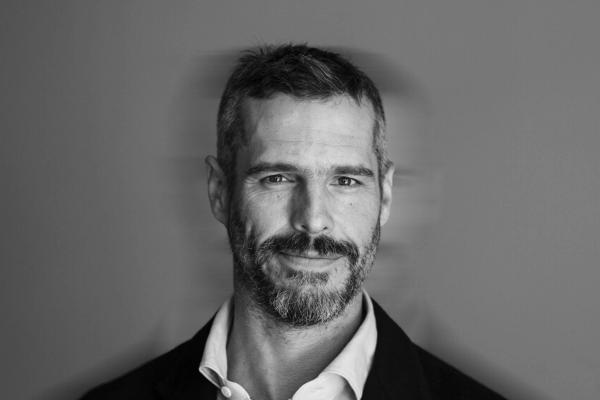
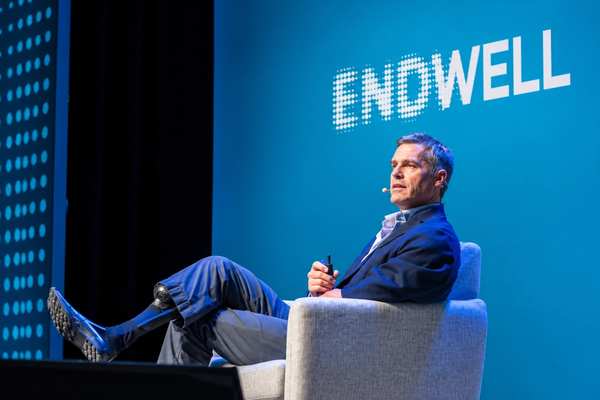
BJ Miller, MD reminds us to consider the fullest view of what it means to be human - from the messy, uncomfortable issues that arise around dying to the delight of being alive in our bodies - as a path to understanding the possibilities available to open to design for the end of life experience.

December 7, 2017
Transcript
All right, so my job really is to kind of get us going. You’re going to hear from a lot of very interesting people who have a lot of ideas, and I’m sure you guys are filled with them too.
So I was trying to think of how to set us out. What might be underneath? What could gird all that’s among us?
We’ll just do this sort of tour and ask ourselves a basic question. This is probably the best one. My favorite is: Why?
Why are we here? Why are we here on the planet? Why do we do what we do in the healthcare setting?
Of course, this is the question we don’t ask nearly enough. We do interventions. We do things just because we can. We make assumptions, or whatever it is, but we don’t stop and ask why.
For my money, if we just asked that one alone, it could do a heck of a lot of good. But for all of us, I think it pays to reflect here.
One of the awesome things about this subject, and Jethro and I were talking about this this morning, is that we call it a subject, but it’s a gazillion subjects. It’s all subjects, in a way. So you can approach it from multiple angles.
There’s the personal imperative.
Well, I’m mortal. I suffer. I love. Hopefully, I am loved. So I’ve got my own life to live and something about ending well.
You see in hospice settings, you can see it in hospitals too, a life that could be so hard and so unlucky. It’s amazing how much can go wrong in a life. And if somehow the end comes together well, it’s as though it makes sense of an otherwise miserable life.
I’ve seen folks who had final days and weeks that finally felt good, where they finally felt seen and whole, and it’s like it made the whole life worth it after years and years of being misunderstood or unseen or alone.
Anyway, there’s certainly a personal imperative for all of us. We’re all invested in this subject professionally and personally. I don’t know how many things you can say that about.
Then there’s the social imperative. We’re social critters, right? We’re animals and we need each other. I’ll talk a little bit more about that in a bit, but there’s certainly a social reason to do what we’re doing because we care about others.
And then, of course, there’s financial. You could be the most bean-counter-y of the bean counters and be in this room and care about this subject.
What’s so fascinating is that more and more of these imperatives start heading you in a similar direction. There’s an access point for everybody. Ethical, for sure. Practical, for sure. Policy and politics, for sure, as well. And on and on.
So I name a few here also to get your minds going about why you are here. What’s your imperative? What’s driving you?
This slide from the California HealthCare Foundation, thank you very much, I think it’s from 2011. You don’t need to spend a lot of time on the content. It’s just to point out that if we’re serious about patient-centered care or human-centered care instead of the normal disease-centered care, well, what do people care about?
Here’s some data for us.
The thing to notice is how few of these things have anything to do with medicine.
Medicine is huge and beautiful, and I will be very critical of medicine, but I also love medicine. I’m alive because of medicine. I have a job because of medicine. There’s so much to love in this healthcare system, mostly the people.
But it has its limitations. I think that’s part of the reckoning that we’re all here for.
And that’s okay, because this subject is way bigger than medicine. Medicine doesn’t have to have all the answers. That’s perfectly fine. I think we expect too much out of it sometimes.
I also want to point out this word “burden.” It comes up a couple times. Financial burden. Decision-making burden.
This one’s a big one for me.
Since the aid-in-dying legislation came online here in California, this is a refrain I often hear clinically when folks are approaching us to help hasten their death. You’ll often hear these words: “I don’t want to be a burden.”
I have to say, as a patient, I’ve understood this very well personally. I have my own experience with this, and it took a long time for me to kind of figure it out for myself and with my friends.
Part of what got figured out was that I felt really bad for just being on the receiving end all the time, as a patient or as a dependent.
The truth of the matter is, and we all probably know this in this room, we give love. We care. It’s not tit for tat.
Ten years out, I finally talked to my friends about this. I felt like I had stolen their college experience. And they just smacked me: “That’s idiotic. We weren’t kind to you because you would then owe us. It wasn’t to incur a debt. We weren’t trying to prove anything. We gained too. We learned too. We grew thanks to this experience.”
It was so beautiful.
Anyone who works in the hospice field, particularly at a place like Zen Hospice Project, knows there’s explicitly a giving-and-receiving reciprocity. There’s a loop. It’s not linear, one or the other.
So that’s one point about this idea of being a burden.
But I also hear this as an indictment of society, personally. It makes me very sad that any of us would be made to feel like a burden for things beyond our control.
I’m going to pause there for a second.
As we refashion this future together, I would question: Do we need an enemy?
In healthcare, we go to war a lot. There’s a rationale for that, and it can feel right sometimes, but there’s a lot of fallout from going to war.
So I guess one challenge I would put out to you guys is: Do we need an enemy?
Suffering itself? We gain from suffering. I wouldn’t even wish a lack of suffering on my worst enemy. There would be no way to learn.
So if I have to have an enemy, I suppose it’s shame. Being made to feel ashamed for things we can’t control.
We do it to each other a lot. We send all sorts of aberrant signals. Those of us in the disabled community know this one.
But the truth is, in a normal life there are asymmetries. There are times when we need more than we can give, and there are times when we can give more than we need.
That’s just part of the deal.
Being a physician or a clinician or a caregiver, oftentimes the clinician-patient is just the worst. They can’t be loved. They think they’re sort of a one-way-street giving machine.
That’s what we’re trained to do. We’re going to give, give, give, care, care, care.
And it doesn’t really work very well for very long, especially because, for those on the receiving end, when you’re in a bed looking up and everyone is caring at you, it’s overwhelming. It’s belittling.
So that’s a piece to shove back on.
Again, I think that’s up to all of us. There are going to be times where you’re just going to need more than you can give, and that’s part of the deal.
This is also, for me, a call to learn how to be loved, which, honestly, I think is one of the hardest things around. And I think that’s part of this mix for us.
The last thing I’ll say about this burden question, which is a call to action here, is purpose.
It kind of relates to not having a purpose. I think we all could get a lot better at repurposing ourselves.
Right now, when you’re not maximally productive, we kind of put you in a corner and glide on past, and you make room for the next producer.
That’s a shame.
Helping each other find new purpose is really important. I’ll talk in a moment about the joy of purposelessness, too.
Anyway, that’s a little bit of a howl. Again, that’s really an invitation for you guys to think about why you’re here. Those are some thoughts from me.
Okay. How are we going to do this?
This is also a really good one because it really comes down to how. The style of how we do things really matters.
In the end, if we’re not going to change the fact that we die, which I don’t see happening anytime soon, and I’m not sure we want to, it’s all about how you get there and how we function.
That’s also an invitation to style and to do it your own way.
For me, this also brings up the idea of an ethos.
I think one thing that maybe we can all say is that we’re part of some movement together.
By the way, I want to harp on a word Shoshana said. We are activists.
Do you guys know that? Do you feel that?
Awesome.
I think it’s a really great thing to call out because there’s a power in it. There’s a drive in it. And, at least for me, it helps me at the end of a day where I feel like maybe I’ve gone a couple steps backwards. I realize that we’re doing hard work.
So amen to that. I’m really proud to be part of this activism with you guys.
Back to this ethos.
An ethos of activism means change is in the mix. We’re here, in a way, because we’re trying to change something.
There’s a supposition that the way we’ve been dying is not so hot, or it could be so much better. And, even truer still, the way we live until we die could be better.
One thing to call out in this ethos, from where I sit, would be something I’ve kind of highlighted a little bit already.
I wish someone had taught me at a younger age that independence is a myth.
Have you ever known anyone who’s independent? Who needs no one? Has there ever been such a person?
I don’t think so.
Again, that poor soul, really. It would be so isolating.
But we use this, especially in the States. We throw this word around like it’s obviously the goal to be independent.
Well, it changes when it becomes clear that that’s not possible.
So one thing is to get comfortable thinking along spectrums.
There’s a spectrum of totally dependent to totally independent. We’re all somewhere in the mix.
That’s something really important to call out because of this ethos of working together. We’re working on ourselves, and there should be no shame in being somewhat dependent, unless you want to make everyone in the world feel ashamed.
This is a really key one for me to call out, and it was a lesson I was very glad to learn.
Back to an ethos.
We can draw from medicine. Medicine has a bioethics worldview, which I’ll just throw out here. A lot of you guys know it. It doesn’t have to be this. It’s just somewhere to start.
These are the four pillars of bioethics that are held in tension.
We’ll run through them real quick.
One is, as we’ve all heard, do no harm.
Sounds reasonable. Try not to hurt each other. That sounds good.
And of course, we can do better than just not hurt each other. We can actually do well by each other.
I think we’ve been decent-ish on the “do no harm.” At least we talk a good game around that, and healthcare certainly really tries not to hurt people.
But we haven’t done so well leaning forward into the positive side of the whole deal, where we can make life better and we can do well by each other.
That’s a beautiful notion. Underappreciated.
Then there’s a third pillar that a lot of us know about, which is autonomy.
Again, autonomy sort of implies independence. It implies whatever I’m saying just doesn’t exist. So this would be a sort of idealized status that’s again in tension.
In medicine, we swung wildly from paternalism to autonomy.
And now sometimes I meet young doctors who will gladly just walk you off the side of a bridge if that’s what you ask them to do. “Well, my patient wanted it.”
There’s a problem with that because there is no independence. We as providers are also part of the decision-making process.
Rachel Naomi Remen and Alex Smith and others have called for, yes, person-centered care, yes, human-centered care, but perhaps the nut is really relationship-centered care.
I like that thought.
So autonomy, there’s still something to it. I’m all for relative independence.
And then finally, this is the most ignored of the four medical bioethics pillars: justice.
Because that smells like rationing, and we don’t like that. So we just never touch it. We don’t really look at this justice piece.
For my money, I like this setup. Again, these are meant to be held in tension in any one situation, and I think it’s a very useful framework.
We can build on it or dispatch with it, whatever you want to do. But it’s here for us.
For my money, I would love us to lean into the beneficence and the justice pieces.
Okay, so what?
What are we going to do?
It’s wide open.
This is where all these problems become really great opportunities.
The good news is that we’ve been so closeted on this subject, it’s so underdeveloped in a contemporary way, that we’ve got a wide playing field.
And thanks to our demographic shifts, the need for the things that we care about is only going to balloon and balloon and balloon.
So it’s kind of thrilling, really.
Again, I think we can delight in this low bar, frankly.
It’s kind of funny. In palliative care, sometimes I love this. It really is true: You’ll get treated in the hospital, as a palliative care clinician, like a Christ figure for introducing yourself or for actually taking a chair at the bedside.
That is, like, the most amazing thing that’s ever happened.
It’s stunning.
Meanwhile, I’ll take it. That’s great. Love me because I sat down. That’s cool.
But this is where we get to unchain ourselves and our imagination.
We can’t change so much of what we have to deal with, but we can change how we see it, what we do with it, how we play with it, et cetera.
I always slide this slide in here because it’s like a public service announcement.
Palliative care is a piece of this puzzle. It’s where I’m coming from, so I throw it up here because I also think it’s a great mission statement.
This is how the Centers for Medicare and Medicaid Services define palliative care.
I just want to point out a couple of things. Bear with me. I know most or all of you know this.
There’s a lot to say here, so we won’t say too much.
I just want to point out how novel it is that there’s a field that is totally devoted to addressing suffering.
That’s usually the stuff of contemplative and religious traditions and cultural traditions, not a healthcare tradition.
I think it’s a wonderful idea.
One of the reasons I think it’s so damn wonderful is everyone suffers. One hundred percent. Everyone, everyone, everyone.
So this is a radically inclusive endeavor.
And then the best part about it is suffering is totally subjective.
I, the doctor, don’t get to tell you, the patient, whether you’re suffering or not.
Has anyone here had their pain questioned or second-guessed by someone?
You want to see me violent? That’s the closest I get to violence.
That’s a real wrong.
And this is, I think, why our subject is so uncomfortable in healthcare, because it requires a power shift.
The patients have to tell us their suffering.
That’s really beautiful. It changes the dynamic entirely.
The last thing I’ll say here is just to remind ourselves that palliative care has no mention of death. There’s no mention of time.
You don’t have to be dying anytime soon to get palliative care.
I hope that we as a field don’t run away from the end of life and play into that old problem. I hope we continue to include it in our sphere.
But let’s all remind ourselves, the next time someone needs palliative care, that you could be years away from death.
Too many people are afraid of palliative care because it implies that they must be dying soon, and so they’re kept from the thing that’s going to help them.
The last thing I’ll say is: Wouldn’t it be cool if you just crossed out “palliative care” and put in the word “healthcare”?
I love that idea, that this specialty gets to go away someday.
Wouldn’t it be cool if this was no longer needed to be a subspecialty of medicine?
Shouldn’t this be medicine? Shouldn’t this be our mission statement?
We’ll see. I don’t know if we’re going to get there, but that’s a day I’m shooting for: designing our own obsolescence.
Some other things to call out here.
We can reframe what we’re doing.
I would suggest that we take healing as our goal rather than curing.
I think, for obvious reasons to most of you, curing is great when it’s possible.
The problem is it’s not always possible, and then we leave people. We abandon them.
That’s a problem.
Healing is much more internally driven, always possible.
You can die well. You can die whole. You can be completely messed up and be well.
It’s a better goal, and it also gives we, the patients, more power.
This is a big one: the clock.
We do acute care very well. Trauma and ER work, it’s amazing.
But as a patient, you really do kind of need to lie still and be passive, and experts come and do things to you. You really are upending Mother Nature in these settings.
There’s just no two ways about it.
That’s one reason hospitals are such foreign and strange environments.
Acute care, I’m all for it. In no way would the message be, “Let’s get rid of acute care.”
The message here is: Let’s ramp up chronic care.
The ability to care for each other when there’s nothing curable or fixable anymore, and the ability to care for each other over time.
I think our attention spans are good, and I was watching our response to the Sonoma County and Napa County fires, myself included. There was this beautiful blush of support, and then it just sort of falls away and it’s on to the next thing.
That’s a current example.
And I see the way I am with patients sometimes.
So building this muscle to be with each other over time is really, really key, and I hope that’s one of the things that we’ll take on.
Another thing is my favorite, really my favorite, favorite subject, which is the world of the senses.
What dies?
The body.
I think you can start even piercing holes in that definition. Our bodies become hosts for other things. Our bodies go into other things. You can witness that. It’s empirical.
But we can agree that this body, as it is, dies.
I don’t know about the spirit or soul thing. I don’t know.
But the body dies.
So I want to go there. I want to delight in my body while I have it.
For me, so much of that delight is through the senses.
One reason to believe in and delight in the aesthetic realm, which, by the way, just means the sensory realm, it doesn’t necessarily even mean beauty, is that it just means feeling.
I want to feel things while I can.
That’s why I like having a body. So I’m going to honor that.
I want to uptick that.
In the healthcare system, very often numbness would be your goal. Anesthesia.
Let’s uptick this piece.
The other reason to really focus on the sensual realm, the sensory realm, is that it’s direct.
For those of us, and most of us are going to age with some amount of dementia, as our intellects fail, our frontal lobes go, just because we can’t think doesn’t mean we can’t be.
We can still feel.
It’s a direct experience. It’s not on behalf of something else. It’s for its own sake, which is a very beautiful thing.
Yes, we have function and purpose and can work on behalf of other things, but there’s something magical about being at all.
I think that’s a very good bottom line for us.
Again, it’s direct experience. It does not require time. It does not require thought.
Mystery.
This one’s for mystery.
This one’s a shout-out to not knowing stuff.
That’s a really potent force. It can be a comforting force. It can be a scary force. But at least it drives us with curiosity if we let it.
Mystery is not ignorance. Not knowing isn’t the same thing as ignorance.
But it’s interesting, right?
These days, what a weird time. We pretend to not know things that are fact, and we pretend to know things that we don’t.
Everything’s upside down.
So I’m all for knowledge. Let’s acquire it. Let’s share it. Amen, brothers and sisters.
But also, there’s stuff we just don’t know.
And that’s fine and cool and beautiful and wonderful.
Someday maybe we’ll know it all, and then we can do away with mystery. But meanwhile, can we please delight in it?
How many folks here would identify as a patient? How many of us are living with a disability or a chronic illness of some kind?
Thank you.
We know, and most of us can guess, that the cool thing about disability is it actually can spark some of the most creative thinking and being.
Every designer in the audience knows that there’s no design without limitation.
You need something to bounce against. You need something in tension.
A blank sheet of paper, architecture with no gravity, I don’t know what that would look like.
You need a force to rally against, to work with. Something, in other words, beyond your control.
That’s where creativity gets going.
So this is not all about control. It’s about working with what we have.
Those of us who are chronically sick are really, really natively good at this.
That’s one of the gazillion reasons we should be leaning more on our patients than we do, because they’re sitting on all sorts of really cool skills.
I think we should begin to see how illness can spark creativity in us, and we can roll with that. We can delight in it. It can be part of our identity.
Okay.
This is an easy one.
As I said, this subject affects everyone. Everyone should be invited.
So as we’re casting this day together and as we’re casting something of a movement, let’s be really careful to stay radically inclusive.
I think that’s really key.
No one should be left out of this work.
Final slide.
A lot of you guys have seen this one, and I apologize, but I just love it. It makes a point for me.
It’s a painting by Nicolas Poussin called Et in Arcadia Ego, which is Latin for “I too am in paradise.”
That is the inscription on this tomb.
You’ve got these wandering, happy hikers and some goddess figure in paradise, and they come across a tomb.
You can see they’re looking at the inscription and looking at the goddess, trying to figure out, what the heck is a sarcophagus doing in paradise?
This is paradise. No death in paradise. Isn’t paradise sort of the opposite of death?
For me, anyway, this painting makes the point.
I learned this in art history class. I didn’t make it up.
The way the inscription is written, the “I” is active. It’s not like, “I was here,” like this dead guy was alive.
It’s “I am here.”
And the “I” is thought to mean death.
So the challenge for us, here’s the thing, well, maybe heaven’s on Earth.
Maybe death is a part of paradise.
And I think there’s something to that because we’re so relatively wired.
I don’t think we would know what the hell paradise looked or felt or smelled like if we didn’t know the obnoxious cousins of those things.
If we didn’t suffer, I don’t think we’d really know what passionate joy felt like.
If we didn’t know pain, I don’t think we’d know comfort.
If we didn’t know hell, we wouldn’t know heaven.
And so on and so on.
So I don’t think, in ending well, that we have to be a bunch of folks who just love death.
Not at all. That might be a little creepy.
But I think the point is going to be made over and over again.
Death helps us love life.
I’ll just end by saying, if we had a target or an enemy, I would say again, I think it’s shame. Being made to feel ashamed for things you can’t control.
And if I have a goal, at least personally, my goal in life is to appreciate what I have while I still have it.
That’s the trick.
Most of us are really good at appreciating something when we’ve lost it.
That’s poignant and gorgeous and fine.
But wouldn’t it be great if we appreciated it before we lost it, while we still had it?
Whether it’s a body or a relationship or a thought or an identity or whatever it is.
So I just want to end with that appreciation of what death, annoying as it is, offers us too.
Any fuller view of the subject matter, I think, has to include that.
Anyway, that’s all I have, guys.
I’m really glad to see everyone. Thanks again for being here. Thanks for all the work you’re about to do and have done.
Thrilling to be a part of all this.
RELATED