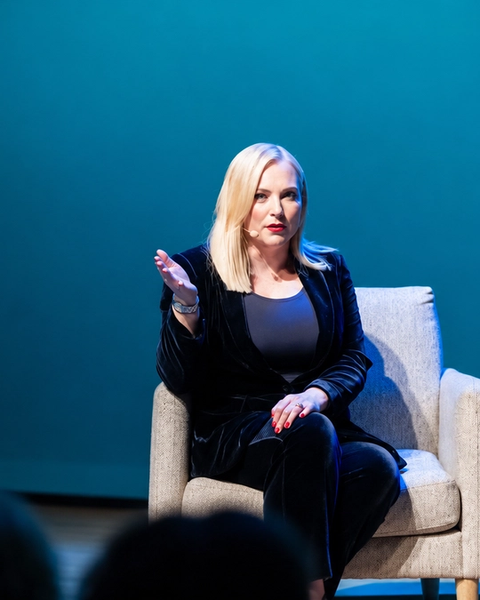
Superhero: What My Dying Son Taught Me About Bravery
Having mothered a child through his dying, J.J. Duncan is now focused on helping our culture “grow up” about death. The showrunner for The Gentle Art of Swedish Death Cleaning, she knows that the stories the media presents are powerful agents for change. J.J. believes that each of us has a story to tell that can help those around us learn from the deaths we’ve witnessed, the pain we’ve borne and the lessons we’ve learned along the way.

November 16, 2023
Transcript
0:07
hi
0:08
y'all oh it's so good to be here um my
0:12
name is JJ and I'm going to talk about
0:14
storytelling because you know we humans
0:17
are natural born
0:20
storytellers it's how we teach it's how
0:23
we record our history it's how we
0:27
entertain I love thinking about stories
0:30
because I'm a professional Storyteller
0:32
I'm a TV producer and part of my
0:36
experience when I was producing this
0:38
series The Gentle art of Swedish death
0:40
cleaning was witnessing how terrified
0:45
people are to tell their stories around
0:48
death and
0:50
grief which struck me as odd after a
0:52
while I mean how did it become so
0:56
taboo I've come to learn that evidently
0:58
we did used to be better about about
1:00
telling our death stories because back
1:01
in the day we died at home and at the
1:04
very least we had to tell each other
1:05
what to
1:06
do but then the Industrial Revolution
1:09
happened as did science and hospitals
1:12
and we pushed death out of our parlors
1:15
in into more sterile
1:18
environments the whole process became
1:20
colder and less human so naturally we
1:23
decided not to talk about
1:25
it well I am here to suggest that maybe
1:29
we should
1:31
I want to encourage us to tell our death
1:34
stories for two reasons number one
1:37
telling our death stories helps us
1:40
process our own emotions our own grief
1:44
and number two telling our death stories
1:46
helps others by giving them a framework
1:50
so they know what the heck to do when
1:53
they are faced with death either their
1:56
own or a loved
1:58
ones now you do see see quite a bit of
2:00
death in the movies and on TV it's just
2:03
often not that realistic
2:06
right even still seeing these stories on
2:09
the screen helps us form a narrative
2:11
around how things must
2:14
work I mean for example how many scenes
2:16
have there been about the moment someone
2:18
finds out they have a terrible
2:21
disease countless right so many dramatic
2:24
interpretations of what it must feel
2:26
like to hear the words you have
2:28
cancer I think that's why when we
2:32
actually experience something like that
2:34
we say things like it was so weird I
2:37
felt like I was in a movie
2:40
right I know that's what we said the
2:43
night we found out my son Mason had
2:46
cancer that night was
2:49
surreal my wife Stacy and I were LED
2:53
down along hallway in the ER and into a
2:57
tiny room filled with people in white
2:59
coat coats and we sat there gripping
3:02
each other as we learned that our
3:03
9-year-old had
3:06
leukemia that doctor actually looked me
3:08
in the eye and said I'm so sorry but
3:09
your life just
3:12
changed everything slowed down you tell
3:15
yourself this can't be happening to us
3:17
this happens to other people not us it
3:19
feels like I'm in a
3:22
movie Our Lives did change uh we became
3:26
a cancer
3:27
family and Stacy and our youngest meline
3:30
and I watched in horror as Mason lost
3:33
his hair and his ability to walk and his
3:37
normal
3:39
childhood while in treatment for cancer
3:42
Mason would have his 10th birthday and
3:45
then his 11th and then there was another
3:49
impossible
3:51
conversation in the Autumn of
3:53
2020 doctors sat Mason and Stacy and I
3:56
down to tell us that there was nothing
3:58
more to be done to SA save his
4:03
life that day did not feel like a
4:06
movie it did not feel
4:09
surreal more like very very
4:14
real I don't know if that's because we
4:16
had become accustomed to terrible
4:19
news or because it wasn't really a
4:24
surprise or because I've never seen that
4:27
dramatized it was a cold floor
4:31
fluorescent lit room with my 11-year-old
4:34
looking at me with pleading eyes as he
4:36
started to cry saying Mama I'm not ready
4:38
to die
4:39
yet it was actual
4:43
hell so how did we get through it how
4:46
did we get through that
4:48
time well by hearing stories of
4:51
death stories that gave us handrails so
4:54
that we knew how to help him while he
4:58
died I'll tell you the story that helped
5:01
Mason okay let me tell you a little bit
5:02
about him first uh I'm his mom I'm
5:05
totally biased I get it um but I can
5:08
actually report he was an incredible kid
5:11
um there are multiple accounts for
5:13
example of him stopping down bullies and
5:15
he was the kind of kid that could do
5:16
that and then walk away with all parties
5:18
respecting
5:19
him in photographs he tended to hold his
5:23
arms out wide there's actually a group
5:27
classroom on a field trip photograph and
5:30
Mason's the one standing there like this
5:32
one
5:34
kid before he was diagnosed when he was
5:37
in the third grade uh there was a bunch
5:39
of kids over at our house doing sidewalk
5:41
chalk art you know they're doing stick
5:42
figures and stars and what have you and
5:45
Mason wrote in big chalk letters learn
5:49
to
5:50
love as a
5:52
9-year-old now he also wrote fart but
5:55
that was in a different
5:57
section um I mean he was a real kid I
6:01
don't mean to put him on too much of a
6:02
pedestal he I mean picture me is like um
6:05
a lesbian Homer Simpson if you will why
6:07
you little you
6:11
know he and I can go at it
6:15
but he he was just what I mean to say is
6:18
he was also very much a normal little
6:20
boy he loved superheroes for example uh
6:23
really he loved uh Marvel's The Avengers
6:26
we had backpacks and action figures and
6:29
lunch foxes and you name it Avenger
6:31
stuff all over the house and one of our
6:34
family's beloved uh Marvel actors was
6:37
Chadwick Boseman also known as the Black
6:41
Panther and uh a few months before Mason
6:43
died we were coming home from yet
6:46
another extended Hospital stay and we
6:49
were getting him set up in his favorite
6:51
place in the whole wide world the mom's
6:55
bed and as we were doing it uh I was
6:58
getting him set up and I glanced at my
7:00
phone and I gasped and I said oh my God
7:02
Chadwick Boseman
7:04
died Mason lifted his head what my eyes
7:08
quickly darted over the article to land
7:10
on the word cancer I did not want to
7:13
read this howd he die mama I put my
7:17
phone in my pocket I started to shuffle
7:18
around the room neatening Medical Supply
7:20
Stacks I didn't look him in the eye oh
7:22
honey he was he was sick sick with what
7:28
cancer I built a cross between fear and
7:31
anger and
7:33
nausea I glanced back at my phone for
7:36
the details ready to move past this
7:38
topic uh colon cancer very different
7:41
cancer than you have I don't want you to
7:43
be
7:43
worried Mason was not as flustered as I
7:46
clearly was well read it
7:49
Mama I did not want to read it nothing
7:52
in me wanted to discuss this matter with
7:55
my cancer filled little
7:56
boy Mama read it
8:00
fine I pulled my phone back up and I
8:03
read Chadwick Boseman who played Black
8:07
American icons Jackie Robinson and James
8:09
Brown with searing intensity before
8:12
inspiring audiences worldwide as the
8:14
Regal Black Panther in Marvel's
8:16
Blockbuster movie franchise died Friday
8:19
of colon cancer he was 43 Boseman died
8:23
at his home in the Los Angeles area with
8:25
his wife and family by his side his
8:28
publicist Nikki furer vonte told the
8:30
Associated Press and the article went on
8:32
and on to T Chadwick's really incredible
8:35
life and accomplishments but all I could
8:37
hear was the ringing in my ear of a
8:39
cancer
8:41
death I finished reading and I launched
8:44
into this Speedy slip slide reassurance
8:47
baby I know it is so sad that Chadwick
8:49
Boseman died but honey that's a very
8:51
different disease than you have that's
8:53
colon cancer you have leukemia I don't
8:54
want this to scare you Mason was quiet
8:59
and there was a long pause and finally
9:02
he said you can do
9:05
that do what I said you can die at
9:12
home I I moved closer to him honey what
9:15
do you mean and he looked at me with his
9:18
little Avenger fan eyes and he said I
9:21
mean it said that he died at home they
9:23
let you do that they let you die at
9:26
home it was in that moment
9:29
that I recognized how all powerful he
9:32
thought medicine was he saw sickness and
9:36
death from it as a medical permission of
9:38
sorts to move to the next stage I saw
9:41
the childhood innocence of how and why
9:44
and what it is when someone dies how to
9:47
explain
9:49
this yes honey sometimes people die at
9:53
home Mason was brimming with curiosity
9:56
well how why why wouldn't you be in the
9:58
hospital hospital if you're that
10:00
sick okay so there was no escaping the
10:03
conversation I curled up in bed next to
10:06
him and I got to him into him and I said
10:07
okay baby sometimes when someone's
10:10
really sick and there's no more medicine
10:13
that works they can choose to go on
10:16
something called hospice care and they
10:18
can go home or to a homelike environment
10:22
and have a nurse help them with like
10:24
pain meds and anything to keep them
10:27
comfortable and they can just
10:34
die Mason's eyes were
10:38
wide he just nodded I could tell that he
10:42
had gripped this idea no more
10:43
conversation was
10:46
needed so a few months later we
10:49
were coming home from that terrible
10:52
doctor's appointment and none of us
10:54
really knowing what to say in the car
10:56
ride home and we got him back to the
10:57
house and set him up in the mom 's
10:59
bed and I sat down and I looked at him
11:02
for any sign of what to do
11:04
next when he looked at me and he said
11:08
Mama I want to die like Chadwick
11:11
Boseman I said what he said I want to do
11:15
it like Chadwick did I want to be at
11:18
home with you and mommy and meline I
11:21
don't want to go back to the
11:24
hospital and that is how Mason made it
11:27
clear that his intention was to have a
11:28
home home
11:30
death he died about a about a week later
11:34
in the mom's bed with Stacy and me
11:37
holding him telling him we loved him and
11:40
we were proud of him and it was okay to
11:42
go he had a beautiful
11:45
death thanks to Chad with
11:51
Boseman it took the story of the death
11:54
of a superhero to give my boy the
11:56
framework to Define his wishes
12:00
there was also a story that helped me
12:02
know how to parent my child through his
12:05
death well before I was willing to admit
12:09
it was inevitable we were at the
12:10
hospital on yet another extended
12:12
Hospital stay and I was scrolling
12:15
through my phone an article popped up
12:18
entitled three magical phrases to
12:21
comfort a dying
12:27
person I
12:30
paused and then I clicked on
12:35
it I could tell immediately it was
12:38
written by a parent of a child with
12:40
cancer
12:41
leukemia my heart was in my
12:44
throat it was from a Blog written by a
12:48
mother named Jenny Harrington who was
12:51
telling the story of the death of her
12:52
8-year-old boy Yuan from
12:55
leukemia and in that story she laid out
13:00
plainly and beautifully how she
13:02
navigated Yan's fear of his own death by
13:06
using three
13:08
phrases number one you will not be
13:12
alone number two you will not feel
13:17
pain and number three we will be
13:22
okay Harrington repeated those three
13:25
phrases to her son for the last two
13:27
weeks of his life over and over again
13:30
bringing him
13:32
comfort with those three phrases
13:35
Harrington became a super
13:37
mom not just to youan but to
13:42
me because sure enough the day would
13:44
come that I needed those phrases with
13:46
Mason and I used
13:48
them and when I did it opened up the
13:52
most incredible
13:55
dialogue he and I were able to discuss
13:58
things like
13:59
whether he wanted to be buried or
14:03
cremated what he wanted to do with his
14:06
stuff and I was able to answer his
14:08
questions like well what do you guys do
14:10
on my
14:11
birthday well we're going to light a
14:13
candle and put it in a piece of
14:14
cheesecake and sing to you of
14:17
course he liked that
14:26
answer it was the hardest convers of my
14:32
life it was also the most
14:35
beautiful I am so grateful that we had
14:39
it and I am so grateful to that mother
14:43
Jenny Harrington who told her story of
14:45
death in a
14:49
blog there are so many ways to tell your
14:52
death story tell it to a willing family
14:55
member tell it to a close friend tell it
14:59
to a therapist tell it to a grief group
15:01
write it in a blog privately write it in
15:04
your own journal and reread it 10,000
15:07
times if you have to just to understand
15:09
it tell your death story as often as you
15:14
need but here's where we need to
15:17
start let's learn to
15:21
listen we must first build our skills as
15:24
an open and willing audience to such
15:27
stories let's be brave enough to hear
15:30
the
15:31
story let's make it safe for them to
15:33
tell it you don't have to offer up some
15:37
way out of the pain for them you don't
15:40
have to tell your own story just to show
15:42
that you get it just listen it will help
15:47
them and then when you are faced with
15:49
death either your own or a loved
15:53
ones you will be fortified by
15:56
it thank you from the bottom of my heart
15:58
for hearing
16:06
mine
RELATED