Who Am I Writing For?
After the diagnosis and loss of her nine-year-old son Mason to cancer, Duncan turned to writing as a lifeline—first to steady her family and community, and later, to survive the storm of grief herself.


November 20, 2025
J.J. Duncan is a lifelong storyteller whose career spans Hollywood and beyond, most recently as Executive Producer and Showrunner of The Gentle Art of Swedish Death Cleaning. Her most profound storytelling emerged not on screen, but in the wake of personal tragedy. After the diagnosis and loss of her nine-year-old son Mason to cancer, Duncan turned to writing as a lifeline—first to steady her family and community, and later, to survive the storm of grief herself. Here, she reflects on the evolution of her writing in the face of loss, asking the most human of questions: Who is this story really for?
Two days after my nine-year-old son was diagnosed with cancer, I remember thinking, “I have to let people know what is happening.” Sure, my wife and I had already called our respective parents, siblings, and those closest to us. But the next layer of friends and co-workers in our lives had to be alerted, for practicality’s sake. We were going to be unavailable for things like appointments, coffee dates, and work. There was much more to it, of course. There was no disguising this news of childhood cancer as a mere let’s re-schedule state of affairs. No matter how I delivered the news that Mason had leukemia, it would alert everyone in my orbit to the fact that we had entered a danger zone. That our family’s life had just been altered in a way that would forever change who we were. This was not a light message.
I wrote it in an email. I sent that same message in several different emails, to different groups of acquaintances, and friends. I must say, it was a well-crafted, polished memo. After a warm greeting, and apology for my having been “out of pocket” the last couple of days, I briefly explained what was going on with our eldest child. I gave factual, solid information, with medical terminology, prognosis, and the logistical circumstances of our hospital duties. I also made sure to keep a sense of humor, in order to settle everyone’s fears, and let them know that we were going to be just fine, thank you very much. No one panic. I’m not panicked. See? We do not need to panic.
Looking back on it, I cannot help but ask myself: for whom did I write that email? Did I really write it for the practical, logistical, and calendar needs of others? Or did I write it for myself? To try and add structure and optimism in the form of clever words to my mom-brain that was desperately clutching onto anything possible in order to not panic? Please, please. Do not panic.
As Mason’s illness progressed, many people wanted updates, and I discovered the website, “Caring Bridge.” Using this site as a tool, I did not have to repeat the story again and again. I could put an entry into our online journal, and whoever had the link could keep tabs on our family’s well-being. In each piece, I maintained my clear, articulate narratives, and never wavered on my angle of “don’t panic, we are going to be fine.” In fact, I pointedly inserted humor each time, hoping to take the edge off the heavy news of a child with cancer. Again, I ask myself, why did I feel the need to have such assuredness? For them? Whatever my intended audience, folks near and far became invested in Mason’s story. The more people came to care about his story, the better I felt. As if their energy of hope would somehow pass through the ethers and further fuel that chemotherapy drip going into the port in my child’s chest.
Two-and-a-half weeks after Mason died, I wrote one more post on that website. It was heartbreaking. It was effective. It was structured perfectly. And it rang out the overtone of, “Don’t panic. We are going to be okay.”
Who did I write that for?
And then… deep grief took over. I was not okay. There were absolutely moments that panic overtook me, as I began to have actual panic attacks.
I no longer felt drawn to express words of positivity. I had none to offer. However, I found the need to express myself in writing remained. Trying desperately, at all hours of the days and night, to anchor my wildly broken heart, I wrote and I wrote and I wrote. There was no message of “I am going to be okay.” Rather, my smashed soul oozed onto the page, starkly and honestly. I shared a few essays, but kept most of them private.
I have been a story-teller my entire life. No one in my family has ever been the least bit surprised that I wound up moving to Hollywood in my twenties, and sought to tell stories in bigger and bolder ways. In midlife, when I found myself in the throes of a living nightmare—digesting the fact that my child was dead—I believe that my need to sit at a keyboard was perhaps the only life-ring I knew to grab. Who was I writing for now? The answer was clear: myself. Undeniably. There was only me. I felt there was, perhaps, too much me for anyone else to digest. I was inherently aware that death was a taboo topic. Surely no one wanted to hear my dark ramblings about such matters.
And then my long-time career as a story-teller came to my rescue in the form of a job. I was hired as Showrunner of the television series, The Gentle Art of Swedish Death Cleaning. It was to be a cleaning show, based on the book of the same, admittedly odd, name. I learned that the Swedes were more pragmatic than Americans when it came to talking about death. This show was going straight to the heart of the matter and not only talk about death—but put it right there in the title. I was ELATED to contribute.
For that show, we were working with different families, with assorted stories, all in varying stages of life. Each of them had the common theme that they needed to organize, and clean out the average disarray that collects in a home over the years, so as to not leave a mess to clean up after they eventually die. Interestingly, many of these folks were already holding on to the clutter of a loved one whom had already died. What to do with those things? There was the conundrum of grief, combined with the business of needing to get their own lives on track. Boy, could I relate.
While filming that show, I recognized that our cast members were beginning to heal as we helped them authentically express their stories. The act of putting their grief and their thoughts around death into a narrative form caused them to get lighter, and make healthier choices. They had ah-ha’s, and they re-framed some prior thinking that had been keeping them stuck.
When the show was released, audiences also reacted with a clear need to hear these tales. I began to receive messages from folks all over the country, expressing their anecdotes of loss. I was shocked. It was plain to me that telling our candid stories of death and grief was a healing act. It was not some weird dark catharsis, only to be practiced in private. We need to make sense of these experiences, and by reporting them to others, we give ourselves a structure and a pathway to find meaning.
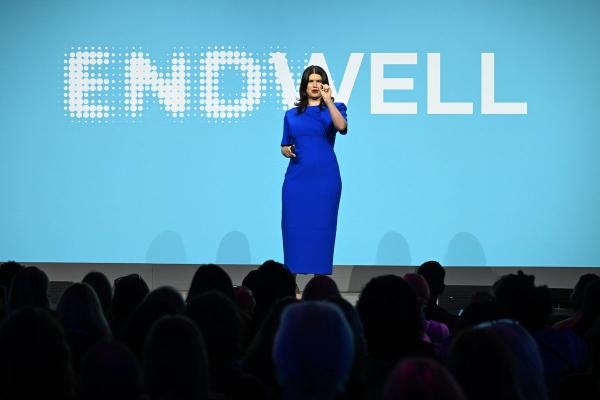
The lessons I learned from The Gentle Art of Swedish Death Cleaning gave me permission to begin honestly telling my story of life as a bereaved parent. People wanted me to speak on stages, in forums, and on podcasts about the show, and I would inevitably share my personal experience with grief, and with my own death-cleaning. Every time I opened up about my story, I was met with overwhelming gratitude from someone who would tell me how much I helped them. Here I was, finally feeling the relief of being able to talk openly about my boy, my broken heart, and my reckoning with grief, and I felt no need to stress the message not to panic.
I have continued to write my story, and Mason’s story. Who am I writing for? Myself. Putting my pain into a narrative helps me make sense of it. It puts grief into a tangible form that gives my body the ability to process it. I am also writing for Mason. So that I can say his name. So that people will know this incredible boy who I am astonishingly lucky to have had in my life. And I write for anyone else who needs to hear that sometimes we are scared. Sometimes we panic. Sometimes things work out, and sometimes our worst fear comes true. I have lived it all, and I am here to tell the tale. If my telling the stories helps others, that helps me. Maybe the pain has become worth something. A cyclical gift. Ebbing and flowing, the best stories give and give and give. To the listener. To the teller. This is how we hold one another up through the plights of Life. This is how we heal.