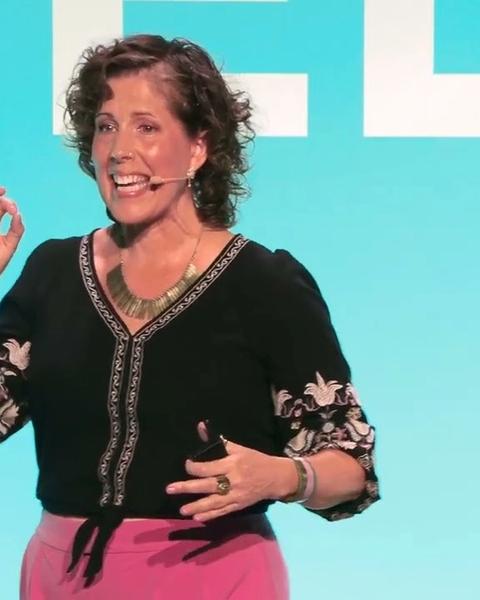
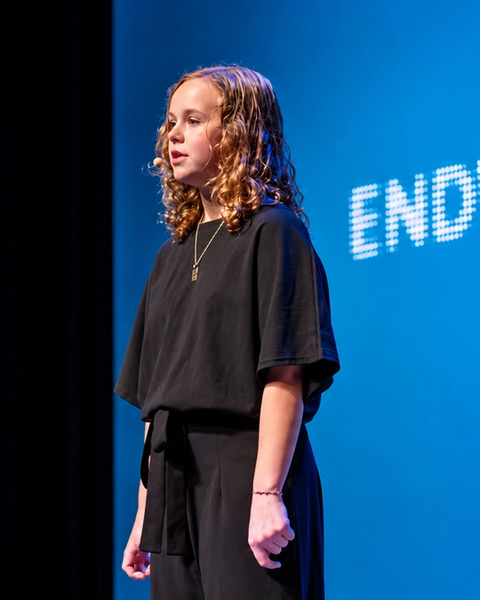
Maria Shriver and Claire Bidwell Smith on Coping with Loss
When you look at the person standing in front of you in line do you ever think they might be grieving? Chances are they are, and that you are as well. Coming from places of profound personal loss, Maria Shriver and Claire Bidwell Smith reflect on the complexities of grief—whether for a person, animal or the life you thought you were going to have—and how it can be met through kindness, compassion and grace.
Take 10 is an experience focused on finding solace, building solidarity and sharing solutions when it comes to serious illness, caregiving and end of life. If there’s one thing we hope you take away from this experience, it's the invitation to create the narrative of your life through to its end. May you find comfort and joy in the process of digging into what it means to embrace the good, the bad, and the messy about the gift of being alive!


January 15, 2021
Transcript
Claire Bidwell Smith: Maria, thank you so much for being here with us this year. Everyone at End Well is honored that you’re joining us.
You and I met while working on a grief project, but we both came to this work from deeply personal places. I lost both of my parents in adolescence, and you come from a family that has experienced a great deal of loss.
I’d love for you to begin by telling us about your personal experience with grief.
Maria Shriver: I’m interested in what you said about both of us coming to grief in a personal way. I think everyone comes to grief in a personal way.
What I’ve learned throughout my life is that everybody is grieving something. They may be grieving big, public losses. My family experienced highly public grief, and people often came up to us to talk about it.
But I’ve also learned that people grieve very privately. Nobody talks to them about their grief, and they don’t talk about it themselves.
I noticed that in my own family. The whole world was talking about our losses, but we weren’t talking about them with one another. We were simply carrying on.
I think that when you carry on without grieving, you can get into trouble down the road.
I wrote a book called What’s Heaven? to help me talk to my children about grief. In many ways, we are all carrying that small child within us.
That led me to write about grief, talk about grief, and interview people about their grief. Every human being is struggling with grief in some way, whether they know it or not.
Claire: You once said that we are a grief-illiterate nation. I think that builds on what you were just saying about how your family dealt with grief and how many people put their grief away.
Do you think that is changing? Is it still true? What needs to happen?
Maria: I think we’ve made some progress since I made that statement, but we still have a long way to go.
We don’t have signals or touchpoints that tell us when the person in front of us is struggling or grieving. We also don’t have a culture that allows people enough time.
We say, “I’m so sorry. Are you coming back to work tomorrow?”
We use our own metrics to judge someone else’s grief. We say, “It was only a dog. Get over it,” or, “You hadn’t seen that sibling in a long time. Is it really that big of a deal?”
The more intimate conversations we have, the more willing we become to listen and truly explore someone else’s experience. We need to hold people as they share that experience and understand that their grief may keep coming up. It may keep returning.
We have to be patient with people’s grief journeys. For some, the journey may be short. For others, it may last years or decades.
Claire: Absolutely. There are so many types of grief and so many things that we grieve.
How can we help people feel that permission? How can we help them honor the grief they feel over unemployment, canceled summer plans, or their children not being in school?
Maria: By showing up in someone’s life and being willing to hold space for them.
When people tiptoe around their grief and finally begin to let it out, they need someone to listen and assure them that they’re going to be okay, or simply that it is okay.
Maybe it isn’t okay today.
So many people feel alone, not only in their grief, but in general. The pandemic has kept people in their homes, isolated and separated from one another. They are alone with their thoughts and experiences.
They’ve lost jobs. They’ve lost dreams, as you said. People are overwhelmed and grieving throughout the day, and they don’t have an outlet for it.
Being a good friend means listening and asking, “How are you, really?”
Sometimes people ask how you are and simply hope you’ll say, “Fine,” so they can move along. We need to be willing to hold the real answer and continue checking in.
Claire, I haven’t spoken to anyone who isn’t struggling right now, across the economic, gender, and age spectrums. Everyone is asking, “What is going on?”
Claire: It’s true.
One of the things I’ve observed, and personally found to be a significant part of grief, is that feeling of loneliness.
When my mother died when I was 18, I felt like I was the only person in the world who had experienced a loss like that. Obviously, I wasn’t.
This moment feels different because we are all grieving at the same time. I’m glad to hear you say that you think everyone is grieving, because many people may think, “Everybody is just angry.”
But when you lift the lid on anger, underneath it is almost always sadness or fear. Those are aspects of grief as well.
If you told someone, “I think you’re grieving,” they might respond, “No, I’m not. I’m just mad at my boss because they laid me off,” or, “I’m mad at my friend because they haven’t kept in touch.”
Maria: As I always say to my children, let’s talk about the thing below the thing below the thing.
Educating people about how all of these feelings are connected is part of the work of grief therapists like you.
Claire: Maria, another interesting phrase that has come up this year is “grief shaming.” Have you heard of that?
Maria: I have, and I think we are a shaming culture in so many ways. There is grief shaming, success shaming, body shaming, and financial shaming. We’re shaming all over the place.
Whenever someone is doing that to another person, what they’re doing to themselves is usually 10 times worse.
I think people shame others because they are afraid or because they want to feel better about their own experience.
Who are we to judge someone else’s relationship? Who are we to judge their experience?
We cannot impose our experience or timetable on another person. Understanding should be the goal for all of us.
Claire: The world is in upheaval, so perhaps this is the best time to talk about personal upheaval alongside public upheaval.
Do you think it is possible to rush into healing or try to find meaning in something too quickly?
Maria: Yes. We are inundated with messages telling us to find the silver lining or the lesson.
When we don’t take the necessary time, the universe has a way of teaching us the lesson again and again until we learn it.
As you said earlier, everybody has their own timeline with grief.
Claire: What would you say to someone going through a significant loss for the first time?
Maria: When I see or hear that someone is going through something, I always try to reach out.
I often say, “I don’t have the right words,” or, “Perhaps words don’t work here.”
I tell my children to simply say they don’t know what to say, but to always reach out and send a note. I have yet to meet anyone who didn’t appreciate that someone reached out or at least tried.
Claire: Absolutely.
I always advise people to continue reaching out beyond the first few months. There is often so much activity at the beginning. Everyone arrives with casseroles and offers of help. Then that support drops off, which is often when the deepest grief begins to emerge.
Maria: That’s true.
There are all the firsts during that first year: the first anniversary, birthday, Christmas, and other holidays.
Both of my parents died within the last decade. Thanksgiving still triggers the thought, “I used to always go home.”
We need to be especially gentle with people during the holidays. Many people find themselves alone, and their grief bubbles up.
I have found the holidays challenging for many people. I often find them challenging myself.
Claire: Absolutely. How do you stay connected to the people you’ve lost?
Maria: Through prayer.
I was raised Catholic and have a deep faith. I believe I am here for a specific reason.
I think about the people I’ve lost and imagine them being together. That is comforting to me.
Everybody has to find their own way.
Claire: That’s beautiful.
In terms of reaching the other side of this place we are all in, what is giving you strength and hope right now?
Maria: Every day, I wake up and say, “I’m grateful for this day. I’m grateful that my feet touched the floor. I’m going to do something with this day.”
Connecting every day with my children and the people I work with gives me hope. Staying committed to my mission gives me hope.
Claire: Maria, I want to talk about children and grief.
I have three young children at home. You have adult children, but our children are grieving just as much as we are right now. They may not have the same capacity to understand it.
How can we help children think about grief and address their own grief?
Maria: So many children miss their friends, schools, routines, playdates, soccer teams, and whatever else they were involved in. All of that has been stripped away from them.
This becomes one more thing parents need to teach them about.
I have so much empathy for parents who are trying to parent, teach, work, and provide care for aging parents. It is overwhelming. It is so much.
But this is one more thing we have to talk about. We can ask, “Are you sad that you can’t see your friends? How does that make you feel?”
We need to talk about feelings and be able to hold our children’s feelings.
Saying, “Everybody is in the same boat. We all have to get over it,” diminishes their feelings. It makes them believe they cannot talk about what they are experiencing.
Claire: I’m working from home with three little children during a pandemic, and it is so hard.
How do I get through this? What do I hold on to?
Maria: You hold on to yourself. You hold on to the family you have created. You hold on to the belief that you will get through this.
Is it hard? Absolutely.
As I say to my children, everything is hard. Everything is hard, and you get through it.
You will look back and say, “That is why I got through it. That is why I led that way. I was made for this.”
We are made for this moment and for every moment we encounter. We have to believe that we are made for this moment and that we already have everything we need within us.
Claire: Thank you, Maria.
Maria: Thank you, Claire. Thank you for having me, and thank you for all the work you have done for The Sunday Paper over the years.
You have used your voice to educate us about grief in such a loving and compassionate way.
Claire: Thank you. Likewise, we have to keep talking about grief.
I’m grateful to you for all the work you do in this space and in so many others as well.
Maria: Thank you so much.
RELATED