Carrying Trauma from Encounters with Healthcare
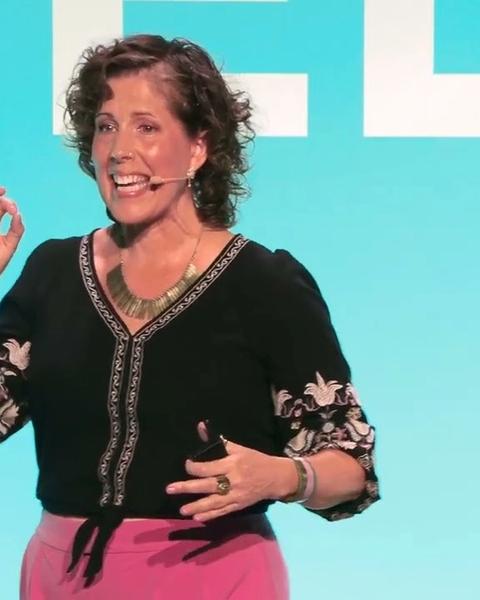
Grief is hard enough but when family and friends feel the healthcare system has let them down, they can suffer more depression, anxiety and other mental health challenges. Hear from grief therapist and grieving daughter, Claire Bidwell Smith, about what she thinks healthcare can do better when it comes to caring for the dying and those who love them.

November 16, 2023
Transcript
I wasn’t there the night my mother died.
That is a sentence that has defined my life for 27 years, and it didn’t have to be this way.
The night my mother died, I was a college freshman attending a small liberal arts school in Vermont. My mom had been sick for five years. In fact, both of my parents got cancer at the same time when I was in the eighth grade.
My dad found out first. He had prostate cancer. Within months of his diagnosis, my mother learned that she had stage four colon cancer.
I’m an only child, and this experience rocked my whole little family. We tried not to talk about it much. We tried to pretend everything was going to be okay. I used a lot of distractions to keep up that ruse. My love of cute boys and creative writing were my go-to methods.
So there I was, chasing cute boys in my creative writing classes in college, when my father called one afternoon.
My mom had been in and out of the hospital ever since they dropped me off at my dorm room a few months earlier. My dad said they were trying some potentially lifesaving alternative treatments and that I should carry on with school for now.
But that afternoon, when he called me, there was something different in his voice. He sounded tired. Resigned.
“She’s not going to make it,” he said. “Kiddo, we talked about it, and we think you should stay at school for now.”
I remember the air thinning inside the little phone booth where I sat. I remember the sound of kids laughing in the common room nearby.
He continued, “You’re 18 now, kiddo. The choice is up to you.”
I hung up the phone, threw a few things in a bag, and set out to drive the seven hours to the hospital where my mother lay dying.
It was midwinter. I left in the late afternoon, and the roads were icy. Scared and stressed, I stopped halfway to see a friend who happened to be a cute boy.
My dad said, “Why don’t you stay the night and continue on in the morning?”
You can probably guess what happened next.
At 3:00 a.m., my father called me at the boy’s house. My mother was dead.
That moment, in that boy’s house at 3:00 in the morning, became a dividing line in my life. There was no going back to who I had been before.
Who I was becoming was someone who would carry a very complicated grief forward with me, a grief infused with guilt, pain, anger, and confusion about how my mother had reached the end of her life without any of us quite realizing it was coming.
My mother died in 1997. Since then, many studies have outlined the disparity between what Americans believe they want at the end of life and the care they actually receive.
We know that 80 percent of older patients living with incurable cancer wish to avoid hospitalization and high-intensity treatments at the end of life. We know that missed opportunities for end-of-life discussions are far too common.
A 2022 study in the Journal of the American Medical Association found that more than 41 percent of patients living with incurable cancer believed they had more than five years to live, while only 10 percent of their oncologists agreed with those estimates. Nearly 60 percent of patients with terminal cancer believed their cancer could go away and never return.
Based on a 2014 Stanford survey of doctors, we know that physicians are overwhelmingly likely to choose nonaggressive care at the end of their own lives. Up to one-third of oncologists would not accept the chemotherapy they prescribe to others. The same survey found that 80 percent of physicians would likely choose do-not-resuscitate orders for themselves.
These are all things we know. Most of you in this room know them. Thankfully, they have been discussed frequently over the past decade.
Here is what hasn’t been discussed enough: the disparity between what people want at the end of life and what they receive is resulting in prolonged and complicated grief for the families mourning those patients.
Families like mine.
After my mom died, I dropped out of school for a while. I even gave up writing for a time. Although I eventually returned to college, I came back with crippling anxiety and complicated grief.
We didn’t have as many of the amazing grief resources then that we have today. Whenever I talked about my struggles with my mother’s death, people told me I would be fine. I was an adult now. I should just carry on.
By the time I graduated from college, my father’s cancer had returned. While my friends were trying out new apartments, cities, careers, and relationships, I was driving my dad to radiation treatments, caring for him at home, and grappling with the realization that I might lose my only remaining parent.
My father’s treatment was brutal. Radiation to his hips left him unable to walk. Radiation to his mouth, where the cancer had spread, left him unable to eat.
Still, the doctors tried to usher us toward various alternative treatments. I encouraged my dad to listen to them. I wanted so badly to prolong his life.
After a while, my father said no. No more treatments.
He wanted to go home. He wanted to live the rest of his life with as much dignity and presence as possible, and he wanted me to help him do it.
I cared for him at home with the help of a hospice team. During the final weeks of his life, we were able to have the conversations we really needed to have. We were able to say goodbye.
My father died at 7:00 p.m. on a Tuesday evening in August, in his bedroom, six years after my mother. I was holding his hand.
It was the last great gift he ever gave me.
Because of these experiences, I became a grief therapist. That is not what I thought I would be when I was growing up.
I’m still a writer too. My fifth book is coming out in a few months. My parents would be proud. I’m married now, with a family of my own.
I became a grief therapist because, after my father died, I went on to work in hospice. What I saw there were so many missed opportunities around end-of-life care and conversations.
It is well known that hospice is available to people with less than six months to live, but research shows that the median length of a hospice stay is only 18 days.
Many debilitating symptoms, including pain, nausea, and depression, decrease substantially once hospice begins. This leaves us wondering how many patients are suffering needlessly for potentially months at the end of their lives.
What the studies aren’t showing is the impact this needless suffering and lack of awareness around the end of life have on the families mourning these patients.
Day in and day out as a grief therapist, I listen to stories of distressing encounters within the medical system.
My clients tell me that no one informed them their loved one was so close to death. They ruminate on the choices they were encouraged to make around treatments that might have saved their person, but didn’t.
I bear witness to the immense guilt they grapple with because they lacked information. They tell me again and again that they would have done things differently if they had known how little time their person had.
They sit in anguish over the missed opportunities to help their loved ones close out their lives with agency and dignity. They mourn the missed opportunities to say goodbye.
Last year, prolonged grief disorder was added to the Diagnostic and Statistical Manual of Mental Disorders. Some of its symptoms include identity disruption, marked disbelief that the person is gone, a feeling that life is meaningless, and acute emotions characterized by anger, guilt, denial, and blame.
Every client I meet who experienced these missed opportunities around the end of life, every client who didn’t get to say goodbye, who didn’t understand how close their person was to death, or whose loved one did not understand how close they were to death, meets the symptom criteria for prolonged grief disorder.
In fact, one known risk factor for prolonged grief disorder is the experience of losing a loved one in a hospital.
People experiencing prolonged grief disorder describe feeling stuck in time or frozen in their grief. They feel alone and isolated. Their relationships with loved ones suffer, as does their own health.
When we lose a loved one the way I lost my mother, the way so many people are losing those they love, we are being robbed of the kind of grief we deserve.
I believe the ability to grieve is inherent in all of us. I believe grief can be beautiful. It can be a way to honor the people we love. It can help us examine what truly matters and enable us to live more meaningful lives.
That kind of grief is not available to those of us who must first sort through the anguish, guilt, and blame that come with losing a loved one under circumstances filled with missed opportunities.
Where have we gone wrong?
Where? Let me count the ways.
The chasm between what we believe about end-of-life care and what our families face in reality is immense. We are at a crossroads. Our collective consciousness needs a transformative shift.
The issue lies within the very foundation of the healthcare system. There is an implicit bias that favors action over conversation and procedures over emotional understanding. It also reflects how society perceives the role of healthcare.
Isn’t it ironic that doctors, the very people trained to sustain life, so often grapple with facing its inevitable end?
Death is not a failure. It is not the opposite of life. It is part of life.
It is time for medical schools to place as much emphasis on communication, empathy, and open, honest conversations about the end of life as they do on pharmacology and procedures.
Whether you are a healthcare professional or not, it is time to demand better. It is time for society to advocate for a system that respects our wishes at the end of life, one that provides the comfort, care, and dignity we all deserve.
Each of us has the power to be an agent of change within our families, our communities, and beyond.
As I stand here with my heart laid bare, here is my plea: let us confront our discomfort with mortality. Let us prioritize open, honest conversations about the end of life.
For every story I have heard and every tear that has been shed, I have felt a burning need to champion this cause. Each story reaffirms a truth I can no longer deny: the inadequacies of our current system are leaving far too many grieving souls in their wake.
You, me, all of us, we deserve better. We owe it to future generations to make sure better is what we get.
I can’t sit by any longer. I can’t listen to story after story about a death that didn’t have to happen the way it did without making a promise each time to try to make a difference.
Here are five ways you can begin making a difference today.
First, embrace self-awareness. Explore literature, courses, and seminars about death and dying. Understand your personal beliefs about mortality. This is the first step toward meaningful conversations.
Second, foster open conversations. Whether it is at a dinner party or a community gathering, initiate dialogue about the end of life.
Third, advocate for better medical training. Lobby for curricula that focus as much on emotional understanding as they do on procedures. Our doctors should be equipped to handle every facet of life, including its end.
Fourth, prepare personally. Draft a will or an advance healthcare directive and share it with the people you love. Set an example for others to follow.
Fifth, engage with your community. Host a meeting, start a workshop, volunteer in hospice, or find another way to involve your community in these issues.
A few days before he died, my father turned to me and said, “Kiddo, if there were no death, we’d never know how sweet life really is.”
It was the last thing he said to me.
It’s true.
Death is not the problem. The missed opportunities to face it are.
Thank you.
RELATED