Love in Motion
Caregiving is an act of love. It's also isolating, exhausting, and full of guilt that nobody warned you about.
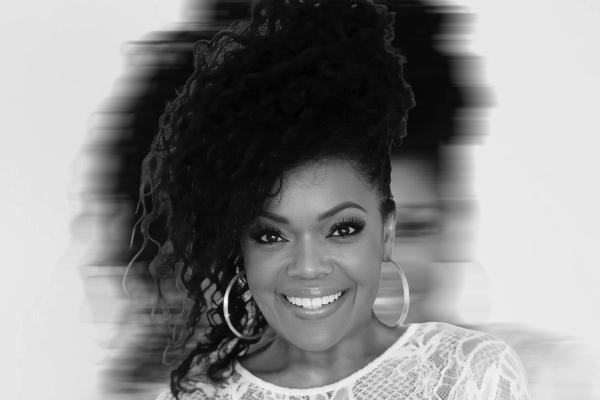
At End Well 2025, Emma Heming Willis and Yvette Nicole Brown sat down for one of the most honest conversations about the caregiver experience we've ever had on this stage. Emma opened up about life with Bruce after his frontotemporal dementia diagnosis, the hard decisions she's made for her family, and learning to ask for help before the bottom fell out. Yvette brought her decade-plus of caring for her father, the moment she had to choose between being his nursemaid and being his daughter, and the guilt of showing up somewhere other than his side.


November 20, 2025
Transcript
Yvette Nicole Brown: Hi, everybody. I’m glad these are here.
Emma Heming Willis: I know. We were backstage and they asked, “Do you want tissues?” Absolutely.
Yvette: Hi, baby. How are you?
Emma: Good. It’s nice to see you.
Yvette: It’s nice to see you, too.
Today we’re going to talk about courage. The courage it takes to love someone through change.
What I’ve found about dementia, and you can share what you’ve found, is that it’s the person you know and love, just a little different.
Emma: Different. Just a little different.
Yvette: It’s important to share our stories because it breaks the stigma.
Before you come out as a caregiver, you’re often in your silo, doing the difficult work and feeling alone. As soon as you open up and tell people what’s happening, you find your village. But you also open yourself up to judgment and opinions: “I would have done it differently.”
I experienced this myself. Some of you know that I left Community to care for my dad. At first, because I wanted to protect his story and felt it was his private business, I didn’t tell anyone why I left.
Some of the comments I received from fans of the show were a little mean. “How dare you? How could you?”
The saddest part was that even after I explained why I left, some people still asked, “Why can’t you just put him somewhere?”
This is real.
I learned in that moment that we have to honor what we know is best for our families. We have to be caregivers who show that love to them and to ourselves.
Caregiving, at its core, is love. It’s love in motion. It is loving someone sacrificially. It isn’t about fixing what is broken.
Emma: No.
Yvette: It’s about staying present with all that remains.
How are you feeling today, right now?
Emma: Right now, in front of everyone? Nervous. Scared out of my mind.
But today, I feel more grounded within myself.
In the early days, when we received our diagnosis, and I say “our” because dementia is a family disease, I wasn’t doing so well. It was a very dark, sad, lonely place.
No one ever told me that, in time, I would find my footing. I would find hope, purpose, and joy. I might actually laugh again. No one told me that, and I wish someone had.
In the early days, I probably wouldn’t have wanted to hear it. I would have said, “You’re crazy. This is terrible.”
But I think it’s important for new caregivers and people who are on this journey to know that you will get there. Your joy and laughter might look different, but they will surface again.
You will learn how to find a balance between your grief and sadness and make room for some joy, because our people would want that for us.
Yvette: We had an amazing conversation upstairs before we came down.
There is a lot of guilt involved in being a caregiver. I told Emma that I’m here because this is important. I wanted to meet her, talk with her, and see all of you. But I’m not with my dad.
Whenever I’m not with him, it feels like I’m taking time away from him.
I hope anyone here who is dealing with caregiver guilt remembers this: If your person could tell you what they wanted for you, they would want you to live a full, rich life.
We need to remind ourselves of that and tell one another when we forget. When you’re in the silo, getting everyone up, making dinner, and doing all the work, you forget there is a world outside of it.
Emma: If he could tell you, he would say, “Do whatever you need to do to find connection, heal, and laugh.”
We have two young children. When Bruce was diagnosed, our daughters were eight and ten. They are now eleven and thirteen.
If he knew I was spending all my time sad and crying, refusing to participate in life, and not giving our daughters the life he would want them to have, he would say, “What in the Lord are you doing?”
He would co-sign this. He would absolutely want me to get out, have fun, and laugh.
Yvette: I want to go back to the beginning.
Can you explain frontotemporal dementia? There are many different forms of dementia, including Alzheimer’s. FTD is the form you’re living with. What is it?
Emma: I have learned that there are around 120 different forms of dementia. Someone recently told me there may actually be 400, and I thought, “What in the world?”
Alzheimer’s is the most common form. Frontotemporal dementia, or degeneration, is the most common form of dementia among people under 60.
It can affect a person in three primary ways: behavior, communication and processing, or movement.
Bruce was diagnosed with FTD and primary progressive aphasia, or PPA, which affects language. FTD affects the frontal and temporal lobes of the brain.
One question I’m frequently asked is whether Bruce remembers me. I say that he does. He has FTD, not Alzheimer’s, and the brain does so much more than hold memory.
Yvette: Were there any early warning signs that things were changing, or did this come out of nowhere?
Emma: When Bruce was younger, he had a severe stutter. Over time, he was able to get a handle on it, although he was always a person with a stutter.
I began noticing that his stutter was returning. I didn’t think much of it because, in my wildest dreams, I never would have imagined that it was a symptom of young-onset dementia.
Those were some of the early signs. There was also a lot of miscommunication. Things simply felt a little off.
Yvette: How did you find your footing when you knew something was wrong but he had not yet been diagnosed?
Emma: It was difficult because I didn’t know who to talk to, what to say, or whom I could trust.
In those early days, I didn’t do much except begin isolating and protecting our family while I tried to figure things out.
Eventually, I realized that something was not right. I took a leap of faith and contacted his doctor.
When you see something happening with your person, remember that you know them better than anyone else. You have to trust your instincts. That’s what I did, and I’m so thankful I contacted his primary care doctor.
Yvette: Choosing to share this publicly is a big decision because Bruce is so greatly loved.
I felt similarly with my dad. I didn’t want to share because it was his private business.
What made you decide that this story needed to be told publicly? How did Bruce feel about that decision? Did he say, “We should do this,” or was it something you decided because you felt it was important?
You have written a book that is going to help many people. Was part of the decision thinking, “If I share this, maybe other people won’t find themselves in the same quagmire”?
Emma: We wanted to help the next family.
There is so much stigma surrounding dementia. For a while, keeping the diagnosis quiet was no longer serving our family.
I wasn’t able to bring in the experts, specialists, and support we needed because I was so afraid the diagnosis would become public before we were ready.
I also never wanted our two young daughters to feel that we needed to discuss their father’s diagnosis in hushed tones.
I knew there would be a moment when we released a family statement. Our daughters would see the global reach their father has, how beloved he is, and how his diagnosis could help change the way frontotemporal dementia is perceived.
Yvette: What advice do you have for caregivers who are doing this work in their silos, quietly plugging away and perhaps feeling judged or unseen?
Emma: Ask for help, and do it sooner rather than later.
I subscribed to an idea that I think many women do: You show up for your spouse, perform your duty, never ask for help, and take everything on yourself. Asking for help feels like failure.
I would love to see that narrative change.
Caregivers need to know early on that caregiving is not a solo mission. We should never believe it has to be.
The experts and specialists I brought into my book repeatedly said that caregivers wait too long to ask for help. By the time they do, the bottom has completely fallen out.
We were close to that point.
Bruce’s neurologist finally woke me up by telling me about the number of caregivers who die before the people they care for. I was shocked.
As a caregiver, you are suddenly thrust into this role. I did not realize how damaging caregiving could be to your health.
I needed permission and education from Bruce’s neurologist. She told me, “You are burning the candle at both ends. You are caring for your husband, who has a progressive disease and is not coming back from this, while also trying to raise your two young daughters. It is time to bring in support.”
I was so grateful she gave me that permission. Honestly, had she not done so, I would probably still be trying to do everything myself. I would be missing my doctor’s appointments. I wouldn’t be the mother I want to be or the wife I want to be.
My book is designed to care for the caregiver. It brings together experts and specialists who give caregivers permission to ask for help.
Yvette: This is a point of personal privilege, and it isn’t meant to be self-serving, even though it may sound that way.
I have a podcast called Squeezed. It is for and about caregivers, and it offers resources and information.
One of the most important reasons I created the podcast was to help people know they aren’t alone. I also wanted caregivers to have something they could play while they were in the middle of caregiving, so it would feel as though a friend were talking with them about their day.
When you hear other people doing difficult things, it gives you permission to be strong and work through difficult things yourself.
Listen to a couple of episodes when you can. I promise someone will be talking about something that can help you through what you’re facing.
We do so much caregiving by ourselves that we begin to feel as though we are alone.
Emma: Yes.
Yvette: And we aren’t.
I want to talk about judgment.
You finally share your story to help people understand what Bruce is experiencing and what you are going through. Some people open their arms and offer support. But others have opinions about the choices you have made for your family.
How do you feel about that?
I just met Emma today, but when I heard about the house situation, I wanted to throw elbows for you.
What people who aren’t caregivers often fail to understand is that every caregiving situation is different, especially when you are dealing with dementia or Alzheimer’s. It is unpredictable.
I don’t know what my dad will say or do from one moment to the next, much less one day to the next. We are all doing our best and making the best decisions for our families.
When people came for you, I wanted to come for them.
I remember when I had to change my dad’s care plan. I had cared for him for eleven and a half years. Then he fell and could no longer walk.
I was ready to leave entertainment and become a registered nurse. I thought, “This is what I’m going to do.”
A wonderful social worker said to me, “We know no one will ever love your father as much as you do. But is it possible that someone else could care for him better than you can? Beyond that, would your father rather have you as his nursemaid or as his daughter?”
Emma: Yes.
Yvette: At that point, I had been doing it for eleven years, and I was good at being the nursemaid.
But I knew he would rather have me be his daughter.
The social worker said, “Why don’t you take all the energy you want to put into going to medical school and use it to find the best place and the best caregiver for your dad?”
I was able to do that.
When you made your decision, I understood. You didn’t want to do it, but it was what was best.
Emma: These are hard decisions. They feel impossible.
This is not how I envisioned our life.
I had to make the best and safest decision for our family. I knew that being honest and open about it would invite judgment.
What is interesting is that the judgment came from outside our family. It did not come from within it.
We have a beautiful blended family. Bruce’s mother is in her nineties. He has a brother, a sister, and cousins. They have all been loving, supportive, and nonjudgmental.
I knew that when I discussed our arrangement, I would face criticism. I did a lot of therapy to prepare myself.
It was still interesting to see the extent of the judgment: that I was a terrible person, that people couldn’t believe I had done this, and on and on.
But here is what I say: Unless you are on the front lines inside that person’s home, day in and day out, 24 hours a day, 365 days a year, you do not get a say or a vote.
This was the best and safest decision for our family. In many ways, our family is now thriving.
People do not realize how many needs can go unmet behind closed doors.
Our children’s needs are now being met. They live in a home where they can have playdates and sleepovers, things we might otherwise take for granted. Their world has opened up, and so has my husband’s.
This was the right decision for our family. It might not be right for anyone else’s family, and that is okay.
We are all on our own journeys. We each have our own care plans, and those plans may change.
Dementia is messy. Caregiving is messy. You have to move with the waves of it.
Everything people said to me, I had already said to myself. As caregivers, we are constantly judging and criticizing ourselves. We think terrible things about ourselves.
There was little anyone could say that I had not already said to myself, and I knew what was coming.
But I thought it was important to share. I hoped someone else who had to make a similar decision would feel seen and validated.
Many people have to make these impossible decisions while facing criticism and judgment. Unfortunately, it is often part of the experience.
I wanted to be open and transparent. Sharing has felt like a weight being lifted because it has allowed me to connect with people who understand.
Yvette: There are no Caregiving Olympics. There is no gold medal for doing it perfectly.
Emma: I know.
Yvette: I hate that.
I would love a medal, but there isn’t one.
When I had to decide that my dad could no longer remain under my direct care, I remember wondering what people would think. I had cared for him for so long, and I didn’t want anyone to think I had given up or had simply become tired of caring for him.
That fear can be especially strong when you are a public-facing person who has spoken openly about your caregiving journey.
How are you caring for yourself?
I have a joke that when someone asks me, “How is your self-care?” I respond, “What’s that?”
Do you know how to care for yourself and replenish what you are giving?
Emma: Early in the journey, people ask, “How are you caring for yourself? What does self-care look like?”
And you think, “I don’t have time to care for myself.”
I have never really loved the term “self-care” because I no longer know what it means. It feels as though the beauty industry has taken it over and turned it into getting your hair or nails done.
Now I think about it as making time. What do I want to make time for? That feels actionable to me.
It might be a ten-minute phone call with a friend. It might be going into my garden, killing the plants, and then replanting them. I find joy in that.
Yvette: Killing plants, Emma?
Emma: I know.
It is about identifying the things that feed my soul. That is how I try to look after myself.
Do I do a great job of it? No. But I try.
Today is feeding my soul. Connection is so important to me. It has been a lifeline.
I was isolated for such a long time, and community has become everything. Sharing does not make the burden disappear, but it lightens the load a little.
We spend so much of our lives disconnected. We move from meeting to meeting, stay on our phones, and go about our days without truly connecting.
One of the beautiful reframes of the caregiving journey is that it invites us to connect and have deeply meaningful moments with other people.
I don’t know what could be better than that.
Yvette: There is light within the darkness.
It has been an honor to meet you, talk with you, and introduce you to my friends.
Emma: It’s a wonderful crowd.
Yvette: We come together like this every year because we want to share in the community that Shoshana and Tracy have created for us.
It has truly been an honor to meet you.
Emma: Thank you.
Yvette: Thank you for sharing your journey. We love you all.
Emma: Thank you so much
RELATED