Episode 18 | 11.20.25
Alexandra Breckenridge Shares her Grief
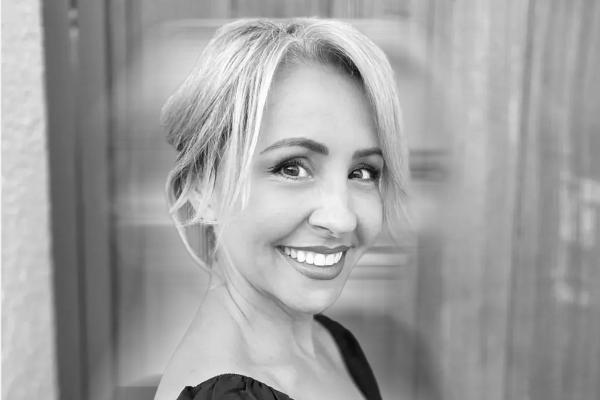
In the final episode of Season 2, Shoshana sits down with her friend Alexandra Breckenridge — known to many as Mel Monroe from the hit Netflix series Virgin River.


In the final episode of Season 2, Shoshana sits down with her friend Alexandra Breckenridge — known to many as Mel Monroe from the hit Netflix series Virgin River. Alex has experienced many losses, on and off the screen, and she shares her experience as a way of letting others know that they’re not alone in their grief.
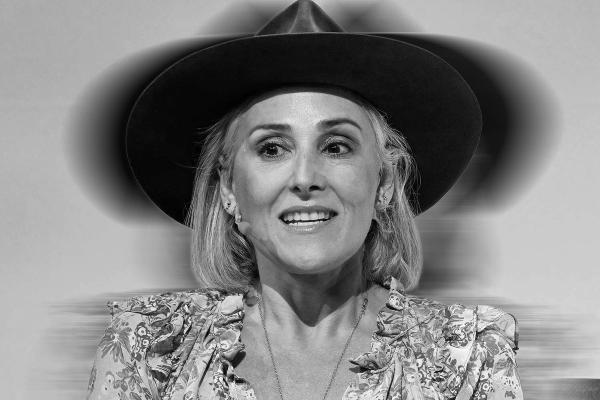
Shoshana also speaks with Dr. Wendy Lichtenthal, a clinical psychologist who specializes in helping people navigate loss. Wendy doesn’t view grief as something you “move past,” but as something you learn to live alongside — something that shifts, reshapes, and evolves as you do.
Transcript
Cold Open
I want to tell you about the first time my friend Alex told me about what happened to her son. I had known her husband for years, but Alex and I had just met.
Shoshana Chat: It was at this fancy restaurant and we were sitting next to each other at the table. She knew I was a, a doctor. I shared that my area of interest was serious illness and end of life, and she immediately kind of paused. Her eyes were welling up with tears. She sort of said, I, I don't really like to talk about this. But, you know, my son, when he was around age one almost died.
Shoshana Chat: I think what stuck with me was, was sort of her honesty, about the situation and just how raw it still was for her even many years later.
Alex told me that story again when we sat down to record this episode.
Alex: I've talked about the fact that he was sick and he almost died multiple times. But I haven't actually said what happened.
If that voice is familiar to you, that's because “Alex” is actor Alexandra Breckenridge. She currently stars in the Netflix hit series, Virgin River.
Alex: So my son was sick. He didn't have typical things like fevers, constant fevers or, or different things that you might think for leukemia.
So by the time doctors figured out what was wrong, Alex's son, Jack, was already very sick.
Alex: Finally, this pediatrician ordered a blood test, and at that point his white cell count was so high. And he, he was severely anemic. They called us at, you know, 8:00 PM and they said immediately drive to a, uh, emergency room and wouldn't tell us that they had seen what they had seen in the blood test. And when he was admitted, I was told, your son has cancer.
That first night was very difficult.
Alex: You can't give the baby a bottle. You can't do anything because he might have to have surgery the next day. We might have to put in a central line because this, that and the other thing. And you know, it's midnight and I, throughout those first days, I thought he was gonna die I was like, he's not gonna make it. And I kept asking the doctors, what percentage does he have of living? What am I looking at here? What do I need to know? How much do I hold on? Or how much do I prepare myself?
Alex had already experienced so much loss in her life, grief almost felt normal. And her mind started to trick itself into believing that her son was definitely going to die.
Alex: Because it was almost better to prepare myself for the fact that it could happen than saying it's gonna be okay and he's gonna be okay. Then when he actually was, okay, I still, my body and it lives in me somehow that there was a death of my child. I mean, he's very strong. I mean, he's, he's the healthiest one in our family. He rarely ever gets sick. And I mean, it's shocking the amount of antibiotics that this kid was on and the chemotherapy and the, you know,
Shoshana: He's now how old?
Alex: He'll be nine next month.
Shoshana: Oh, and he's amazing and, and beautiful and you know, and an incredible kid.
Alex: Very tall, very smart, very creative, very, you know, I mean, he’s - he's an exceptional human, and I'm so grateful and lucky and thankful that he stayed and I get to experience him as a person.
Shoshana: Do, do you still feel that loss that didn't happen, like to this day?
Alex: It – I mean it, yeah, it hurts.
This might seem like a strong reaction. To grieve a child who lives. But people who study grief say that there's not one right way to do it. And grief around cancer can be especially tricky.
Wendy: We always say grief, you know, in the cancer sphere begins for most people at the moment, you get that diagnosis.
That's Wendy Lichtenthal. She's a clinical psychologist who specializes in grief.
Wendy: So to hear that she was going there makes absolute sense. And it's a dance. So I'm being careful with, I don't wanna assume what her dance was with the – I'm gonna go there, and then I'm gonna hope. I'm gonna kind of lean into a version of this where it goes differently.
Wendy: People are doing that dance all the time and it's gonna be based on the last story they heard about another child with leukemia, a movie they saw, what the doctor said, what they're seeing before them, what she was seeing in her son in real time, her beliefs about the universe. And it's like going all the way around.
Wendy: What I hear there is that she knows the pain. She went there, she went to the, I'm getting emotional, like the darkest places, and, you know, stared at the sun and, and it was excruciating. In the realist of ways. Not going all the way there, but I've been in the darkness. I mean, I can't imagine there weren't losses along the way. So it's like an intimacy with grief.
And this is why I wanted to talk to Alex for this show. Because loss isn't distributed evenly in life. Some people carry so much. And Alex is one of those people who teaches the rest of us how to keep going in the midst of it all.
Alex: I know people that have not experienced loss and there's a lightness to them that I just wish I had. You know, that that term, time heals all wounds. Is that the term.
Shoshana: That's what they say.
Alex: It's cute. It's a great idea. I love it. I don't know that it's accurate.
I’m Dr. Shoshana Ungerleider and this is Before We Go. This season, we’re in conversation with people from all walks of life, exploring how we live alongside mortality.
Today's episode: Alexandra Breckenridge Shares her Grief
Act 1
Shoshana Chats: So I was a Virgin River fan from, like, day one. I love, schmaltzy television. Sorry, Alex.
Virgin River: What? Sorry. We don't tend to get a lot of visitors in here. Certainly not as beautiful as you. I'm sorry. Does that line really work well? You'd be surprised.
In the show, Alex plays Mel Monroe, a nurse who moves to a small town in Northern California to escape the tragedies in her personal life. And there are a lot of them. Mel lost her mom when she was young, lost her husband in a car crash and gave birth to a stillborn baby after multiple miscarriages and IVF. And grief is a huge theme for the entire show. Especially the first season.
Virgin River: I lost my baby. Like it was days before I could even sit upright. I was just sad all the time. Something as simple as brushing my teeth would send me into hysterics.
Alex: So when I took this part on, it was about a year after my son had gotten. Out of the hospital, he was okay and we were broke and we had no money and I had to take this job. And I looked at the script and I thought, I could do that. 'cause I literally, so just, I'm just going through it right now. So, you know, I made the choice to take on this part that was incredibly emotional and I just let it all come out.
Alex: When I'm working and my character is going through things that are about loss or, you know, she's gone through things that are that mirror things that have happened to myself. So reliving these moments, they don't have to be exact because the similarities are so close that it's – I knew, like I, I knew what this character was going through because I had lived a lot of it.
Alex was one of the first people to agree to join me for Season 2 of this podcast. But she's actually the last person to record her interview. Part of that is because she was busy filming Season 6 of Virgin River. But it's also because she knew the conversation would be difficult for her, and she wanted to make sure she had enough time to prepare.
Alex: I choose not to think about it obviously. I mean, we choose not to sit and dwell in these places. For a reason. I think if you, once you do it becomes sort of overwhelming and it's hard to move through and past.
Usually, in interviews, Alex just says that she's, quote, "dealt with a lot of loss in her life." That's easier than giving details.
Alex: So it's actually so many people that I almost thought about making a list, and then I thought, wow, that's kind of .. I had a hard time putting pen to paper to do that.
Shoshana: Yeah.
The earliest loss that sticks out for Alex was the first time someone her own age died.
Alex: My first crush hung himself in the school gym. So we went to school together and we were in the sort of like special ed program 'cause I had dyslexia. We rode the short bus to school. So it was me, him, and couple other kids, couple other kids in wheelchairs, but we all rode to school together and we're of course subsequently all bullied together. And so, you know, we bonded, trauma bonded in the third through fifth grade.
After fifth grade, Alex and her mom moved to California. So she hadn't seen her first crush in years. But a few years later, when she was 24 years old, Alex lost someone who was much closer to her. Her live-in boyfriend.
Alex: He became sick. He went into the hospital. He was in there for maybe two months, and then they finally determined he needed a heart transplant because he had an enlarged heart. And then a couple days later, he went into cardiac arrest and, and died. and, um, He was 30.
Shoshana: And were – you were there?
Alex: I was there in the ICU when that happened. Yeah. And so that was very, very traumatic.
Alex and her boyfriend had a large group of friends, and they really leaned on each other in that moment of deep grief. And Alex stayed close to her boyfriend's family, and especially his sister, who really struggled.
Alex: She did talk about suicidal thoughts after her brother died. She said she wouldn't, she wouldn't kill herself because she didn't wanna hurt her parents. Which is, uh, I mean, you know.
But heart problems ran in the family, and two years after Alex's boyfriend died, his mother also died of a heart condition.
Alex: And it was like every time you felt like you got your feet on the ground again, somebody else would go. You become really, really aware of your own mortality when you’ve experienced so much loss and so much death. I started having panic attacks and was really horribly terrified of dying. It felt like it came every two years. He died in 2006. His mother died in 2008. My mother died in 2010.
Alex had a difficult relationship with her mother, Nan.
Alex: I didn't talk to her for five years because she was, I believe she was, bipolar. And a very heavy drinker. But she was emotionally verbally abusive. And I got to a point where I had to just say, I can't, you know, I, I can't talk to you.
And it was only after her death that Alex was able to recognize that her mother's behavior might have been caused by a mental illness.
Alex: It's hard when you're dealing with somebody that is an addict to decipher whether or not mental illness is the cause of it. It's like, well, I didn't know. But then when I looked back as an adult, after she passed, I really was like, I think something was really wrong.
Alex: So, she had been an alcoholic since I was, I don't know, maybe eight or nine. I'm not sure. And she was a single parent. She had me at 19. She would go through these bouts of depression. There would be piles of laundry in the house. I wouldn't have clean clothes. There wouldn't be toilet paper. So I'd have to use a sock or underwear, and then throw it away. Uh, 'cause there wasn't anything to wipe with in the bathroom. Moldy dishes in the sink, I can't imagine what I smelled like when I went to school. I have no idea.
Alex and her mom moved to California, but Nan’s alcoholism only got worse. Alex tried to run away when she was 16. She got on a bus headed towards Connecticut, where her father still lived. But she only made it as far as Colorado.
Alex: Decided I would never become an actress if I lived in Connecticut. Moved back in with my mother, and then moved out at 17 years old because the drinking had gotten worse and worse to the point where I just thought it was alcohol abuse and I mean, she was just so nasty when she would drink. It was, yeah, I won't reiterate the things that she said to me, but it was, very verbally abusive.
And that's when Alex cut off all communication with her mom.
Alex: A lot of people don't understand that because it's your parent. And so they say, well, how could you possibly not talk to your parent? Which is completely understandable for someone who's never dealt with that kind of trauma and that kind of abuse.
Alex had a lot of really complicated feelings to sort through after the death of her mom.
Alex: I resented her and was angry with her for a very long time. Since I was a child, very long time. And when she died, I realized I had to forgive her in order to be able to, not just move on, but I - I needed to have that kind of closure and understanding with her. And what I realized was I had to see her as an individual person, not just my mother. Because when you're viewing a parent who has been abusive, or they're an addict, or they have mental health issues, I think a lot of us that deal with that, we are mad at them because they're your parent and they're supposed to be there for you. And I mean, you know, that is their job.
Alex: And I realized what I needed to do was just look at her. Who is she? Who was she? Why was she the way that she was? And how can I understand that and give empathy to who she was as a person. And so I was able to detach myself from being her daughter and just look at her as Nan. And say this person had an extraordinarily abusive childhood. She was molested, raped, kicked out when she got pregnant with me. There was so much for her to deal with that of course, she melted, of course she was isolated and, you know, so I just, I felt sad for her, and I think that that understanding was so helpful for me
Shoshana: And I imagine so hard to do though, given what you'd experienced. Right?
Alex: Do you remember the Bodhi Tree Bookstore in Los Angeles? Do you know what that is?
Shoshana: No.
Alex: It's like this super hippie dippy, like new age bookstore. I don't think that's what the kids are calling it these these days, but, or if that's even still a thing, a word in any kind of vocabulary, anybody's vocabulary. But, my mother loved new age bookstores, so when we moved to Los Angeles when I was 11, of course, she immediately found this bookstore, the Bodhi Tree Bookstore. And when my mom died, I walked into this bookstore and I said, I'm, I'm just gonna walk and I'm gonna find something in here that's gonna help me. And I walked directly to this section with these books. One of them was called Cutting the Ties That Bind, and I don't think I read the whole book. I just, I, I flipped through it and immediately found what I needed how to help yourself disconnect.
Shoshana: That's how you did it?
Alex: I’m not a hippie dippy person, but it was a very profound thing that I found.
Shoshana: It wasn't through therapy. You just found this book that, that…
Alex: No, no, no. It was, I was, I was self therapizing. I do a lot of that and I talked to myself a lot and I try to understand what I'm going through and, okay, we've. I just was reactive to this and why was I reactive to this? You know, how, how can we follow this thread back to something? Because I don't think you were reacting because of the thing that just happened. It has to do with something else. I've been a big believer in that theory for a long time. So, um. That's sort of a constant, thought process that I go through. But yeah, so at the time I read some of that and then, um, yeah, just really talked to myself a lot.
I told Wendy Lichtenthal about how Alex had developed a fear of death after losing her boyfriend, her boyfriend's mother and her own mother in quick succession. Wendy wasn't surprised to hear that at all.
Wendy: When I'm working with people and they're surprised by the intensity of what they're feeling or they're surprised by these new fears, I was never someone who thought this before. What is this? I always say most people walking around outside right now are not thinking about this. We operate with defenses so that we can operate with the assumption that the floor is below us and the, you know, nothing's gonna fall down on our head because if we didn't operate with that assumption, we'd crawl up in the corner and not be able to function. So these, you know, we could call them defenses, but they build up and they're data driven. They're driven by another day when I open the door and the ground was there. So they're, they're data driven. And now you have a new data point. Now you have a new data point that like bad things can happen and people do die.
Wendy: But it doesn't have to be like that forever because then we get more data points again, where things are, are, I'm put in quotes. Okay. I'm air quotes there. When you have multiple losses, it's harder to do that.
<piano version of the theme goes here>
What strikes me with Alex's story is just how much courage it takes to live with that much grief, and then to talk about it so openly. I think by naming it and sharing it like, like she does, Alex gives us all permission to be honest about our own pain. And for some people I think that honesty can be a lifeline. It's a way of saying to someone else out there who's grieving, you're not alone.
You're listening to Before We Go. We'll be right back.
Act 2
To understand the next part of the story, I need to introduce you to Alex's instagram page.
Alex IG: Ladies and gentlemen. I give you a very high-speed video of me making a chicken dinner. (fade under and slowly fade out)
Shoshana Chat: You know, Alex's Instagram is like a window into her actual life, right? It's, it's, she's not somebody that do es this perfect curation of this fake life. It's slices of motherhood. It's her family, her work, her cleaning up her kitchen. She's really funny.
Alex IG: So I did a crazy thing over the weekend
Shoshana Chat: She loves to like, fix her hair in the camera and be like, oh, I, I look crazy today. Or, you know, she's out gardening, trying to kill the snails that are eating her plants.
Alex IG: I just caught a bunch of them trying to escape, so I smashed them.
And sometimes, Alex shares moments of real vulnerability on her feed. Like last May, when she decided to share yet another loss.
Alex IG: I just found out that I lost one of my closest friends. She was like my sister for a really long time. She was, she was my sister.
This was the woman Alex mentioned earlier. The sister of the boyfriend who died of heart failure when Alex was 24. Alex had talked to her just a few months before her death.
Alex: I always sort of thought that she would end up. You know, getting cancer. 'cause she was a very heavy smoker. I thought she would get sick and then it would be, there would be an illness that I would be helping her with. But, um, she committed suicide.
Shoshana: Why, why did you decide to share the loss publicly?
Alex: Gosh, I don't know. I think what I really wanted to talk about at that time, I really wanted to talk about mental health and talk to the people that are, feeling alone and feeling isolated and feeling suicidal. I mean, I do get messages from people who experience these feelings and, and wanna share that with me at times. And so I guess, yeah, what I really wanted to say was this is something I just experienced and. You're not alone. I don't know. I often wanna tell people that they're not alone in their big feelings in life because life can be overwhelming and loss is overwhelming.
And this is why I decided to call Wendy Lichtenthal in the first place. Because there's a lot to consider when it comes to Alex's "big feelings" and how she shares them with her followers and fans.
But before we get into all that, I wanted to learn more about Wendy and the work that she does. Like a lot of us who work in this field, she had a personal experience that brought her here.
Wendy: I lost my dad when I was 13, going on 14. You know, that's the age we're figuring out who we are. And, for me, dealing with and being with grief became part of my identity, but also the drive to do something about it, the search for meaning. All of that became very much a part of, my why and it's in me, because it like that core shaping who I am. I have a, I feel like a never ending. Well, to think about it, talk about it, wanna do better with it.
And sometimes that means using her own grief to help her better connect
and understand the people she's working with.
Wendy: We just lost our dog not long ago, and I'm like (I’m sorry.) thank you. It's, it's excruciating and I am using it and I'm observing it, and I'm like, what am I learning and what is the stuff that I said to that person now sound like BS because uhuh, that's not what it really feels like, or at least not right now.
Wendy works with people to help them find meaning in grief. So, for many, that might be answering the "why" of a loss. Why did this happen?
Wendy: Whenever we face adversity, trauma loss, anything like that. We have a drive to understand the why, because we want the world to be predictable and make sense and, feel safe. So it is natural for us to kind of figure out, well, how did we get here? So that's one way of meaning making. And then there's meaning in life. There's the other kind of meaning, and that's more existential meaning. And we know that our sense of selves, what feels meaningful in the world, the way that we share experiences with someone, the way that we know life to be fulfilling is often in relation to someone who matters. And so when that person is no longer physically here, that sense of mission, purpose, meaning gets disrupted and challenged. And so helping people to figure that part of meaning making out is also something we address.
Shoshana: How do you talk about that without minimizing the pain that people are in?
Wendy: Oh my goodness. Such an important point. That is one of the first things we say as soon as we bring up that word meaning. Or things like attitude, or any words that suggest that there is a “should” in finding a silver lining in the most profoundly painful experience.
Wendy: So first, it is never about, a directive to find that. So we talk about it in a couple ways. One is we talk about free will. And we talk about choice, and a lot of this is derived from Viktor Frankl's work. He writes about man's search for meaning. So, you know, the notion that Frankl talks about is that when all has been taken from you, when your freedom has been taken from you in these out of control circumstances, the last vestige of human freedom, and the thing that we always have control over is our ability to choose. Our attitude in the face of suffering.
Wendy: Attitude again, gets tricky, but what is meant by that is your response, your stance. Here this is before me, how am I going to choose to be with it? And that can be a behavioral response. I'm gonna get outta bed. Or it can be a perspective you hold and it's that part of growth, that meta process of recognizing that when we are trying to do all that meaning making and make sense of it and trying to find that narrative. Expressing it to someone, hearing them reflect it back, hearing ourselves, just hearing it out loud, that expressive process, with someone else who can hear us and be a witness to it, can facilitate that meaning making.
Wendy: What else? Validation. Validation. Validation. Because grief is so crazy making, it can make you feel like something is wrong with you. To have someone say back This is that hard, you're not crazy, it's excruciating. Offering that kind of, I hear you and I see it, and so importantly when it's people who can hear the nuances, when that person can recognize the magnitude of the loss, the nuances of the relationship that you had, to really get that and to feel seen in that way can be so, so gratifying.
But Wendy's work in meaning making isn't the only reason I called her. Wendy also studies grief and parasocial relationships.
Wendy: So parasocial relationships, if we just wanna define, you know, what those are, we can think of them as one way in some regard. One way, relationships, meaning that. You have all of this information, kind of pulled together from the various ways you've gotten to know this public figure, and they don't likely have that on you. So it's one way in that regard. Their presence and what we learn about them in the public sphere. It is influential, impactful, and meaningful, and we become attached to it. It's, it's doing something for us. It's meeting a need
So when Alex shares her favorite chicken recipe on Instagram, or when she tells her followers about her struggle with the snails in her garden, she's strengthening those parasocial relationships. And when she shares about grief and the losses in her life and all her "big feelings," she’s doing something really important.
Wendy: It's, it's grief education, right? So it's this amazing opportunity to build grief literacy. So from my point of view, the idea that this is happening more and more with people who we can connect with, we respect, is a wonderful, wonderful thing when the messages are aligned with kind of what contemporary, experts think about grief. So there, there is a little rub here because there are so many myths about grief, or socialized beliefs. But by and large, the idea that we're talking about grief, that is amazing. That is amazing.
Everyone’s experience with grief is different. But there’s a lot that we can learn from Alex’s grief story, partly because she’s experienced so many different types of grief. She’s felt the grief of suicide loss. Grief that’s complicated by estrangement. And the anticipatory grief she felt when her son was diagnosed with leukemia.
Wendy: So when you've had those kinds of life challenges and you take them on, you integrate them, you make meaning of them, you lean into them, you own them, you choose to, to keep them. That's I think also what I hear there and I, I think, um, yeah, that is a powerful choice to make.
Wendy says that people like Alex, who have experienced multiple losses, sometimes experience something called bereavement overload.
Wendy: How do people learn to coexist with their grief? They find ways to adapt. They find these approaches that are unique to them to learn, to coexist with their grief. And it takes time to do that. It's not that time itself is doing it. It takes time to have that adaptation process unfold. But if your process gets totally interrupted by yet another loss, that's what we mean by bereavement overload. Is I haven't yet figured out how to get my footing. How do I reorient in the world and find space and transform my relationship to whomever was lost or whatever was lost? How do I do all that when now I have another loss? That process getting disrupted is part of it.
But there's something else going on.
Wendy: Part of meaning making, of making sense of the world, and how does this fit in my understanding of the world. That gets shaped by our life experiences, and if your worldview started with. Life is good. The sky's the limit. Now those beliefs get challenged because it's not fitting, it's not fitting that worldview. Or it's, it's creating a new worldview. You know, I can't catch a break. What is going on here? Life doesn't feel fair. Those new ways of meaning making can happen with those multiple experience. Not for everyone, but certainly it puts people at risk of that. Now people make meaning in different ways. So it could be that the person who has lost after loss develops a view that's like, this is what life's about. We have losses. And I've learned that, you know, you can find your way through anything that could be a belief that comes from multiple losses as well. But let's also acknowledge that if you ever hear someone landing in a space like that or expressing a sentiment like that, they didn't just land there like that. There's a process, right? So, uh, always just wanna, when someone hears someone kind of landing in this space that feels helpful and is working for them, it was a journey to get there usually.
Grief can present in so many different ways. And so, when public figures like Alex share their grief responsibly, modeling all the different ways that it can present itself, and all the different ways, through time and effort, that they've been able to make meaning in their own lives, it can be helpful.
Wendy: It's like you're seeing someone where, you see your story in them, and so it can feel validating. It can help you with your own meaning making. Maybe they say something that helped them get through or coexist with their grief or cope in a certain way. And you like, ooh, that works for me. I'm gonna, I'm gonna use that. And they have this new lens that they have. So, so many ways that public sharing, can be powerful. But there's always a flip side, right? So we just wanna be, it's all about being careful with the languaging, honoring the individuality, and not being prescriptive, but also welcoming things like, you know, pain is pain and that sometimes you don't know what someone's going through. Those kinds of bigger messages that can be, liberating.
When we reached out to Wendy, she had never watched the show, Virgin River. But when she heard that we had spoken to Alex, she decided to give the show a try.
Wendy: I leaned into Virgin River a little bit myself. And I wept watching it, and I let that do what it needed to do. 'Cause I, I mentioned before, I'm, I'm, you know, going through more acutely like, it's right there for me right now, that grief, I have old grief, but the grief that feels more proximal right now. Doing a lot of dancing myself with it. And it opened me, it touched me. And that ventilation expression moment, I think, it can be so helpful when you see it raw, 'cause you know it and you can like let it come out.
Wendy: You know, our adaptation process goes between being with it and then reorienting and reconfiguring in the world without whatever, whomever, was physically there. Right. So we're doing both. But we need to kind of go there and touch down and there are lots of reasons we don't wanna do that. And it's really hard. So when you see it on the screen and it touches you and then it comes out, you have a moment to be there, to go there That can be part of your processing part. And then again, it's the messaging of it's okay to express it, it's okay to be with it. I see the trajectory of it, which means what grief does is it surges and then that intensity remits. It, it diminishes. We don't stay in an acute state of pain eternally. So when you see someone on tv go to the depths of that pain and then exhale like that, modeling as well can be really powerful.
Wendy: Do I ever critique things? Hell yeah. Like I, I mean, if there's messaging that is unhelpful, that is saying things that – okay I'll I'll put one out there which is the stage model of grief, right. So is a highly popularized way of conceptualizing how grief unfolds in these stages but it goes against everything we just said because it does – it's not organized it's messy it's nonlinear. The danger of publicly promoting ideas like that is that then this griever watching on their couch is like, wait, I don't think I'm doing it like that.
Shoshana: Or I'm doing it wrong.
Wendy: I'm doing it wrong. you know something's wrong with me. And then we go to the feeling badly about feeling badly. I love when we see it well done. And then we wanna be responsible about it.
And this can be difficult. Because public figures and TV show writers aren't experts in grief. And even those of us who do consider ourselves experts can make mistakes from time to time.
Wendy: I'll say something. You said before, and I was going to comment on it, you said the word heal.
Shoshana: Hmm.
Wendy: A lot of people use the word heal. A lot of grievers use the word heal. I'm not knocking it. I don't use it because it implies being done and grief doesn't end, right. It's ongoing. So I stopped using it. And I've stopped using a lot of words that over time, you know, I notice how they're being taken up differently. So I'll find things I wrote a long time ago and be like. You know, because we, we, we learn from how something landed with someone, often also, right? But words like recovery, grief resolution, healing, anything that implies an end, I've discontinued using.
Wendy doesn't see grief as something that you get over . It's something that you live with every day. And it's always evolving and changing.
Talking to me from her office in her home in Georgia, Alex feels that deeply.
Alex: Sometimes I'm fine. I have a picture of my mom and here, my, my friend and sometimes I - I look and I'm okay, and then sometimes I just wanna cry and that's okay. You know, what? I think the best advice is your grief is your own and you'll move through it, how you move through it.
Alex: I deal with that with my character a lot and they talk about it a lot. And I can't tell you what happens in season seven because we just filmed it. But it was like at the end of it, I said to them, you know, there was a series of events that happened having to do with babies. And I was like, you guys are putting me in this position where, I said it's triggering for me.
Shoshana: I mean, Alex, you gotta, can you just get on like a comedy show? Maybe
Alex: I want to. Yes, please.
Shoshana: Take a break.
Alex: I'm ready.
—
That's it for this season of Before We Go. But the conversations will continue. We'd love to hear your story of living alongside mortality. You can reach us on instagram at BeforeWeGoPodcast.