Sister Is Not A Care Plan.
Saturday Night Live recently aired a sketch called "Sister” that quickly struck a nerve on social media.
November 18, 2026
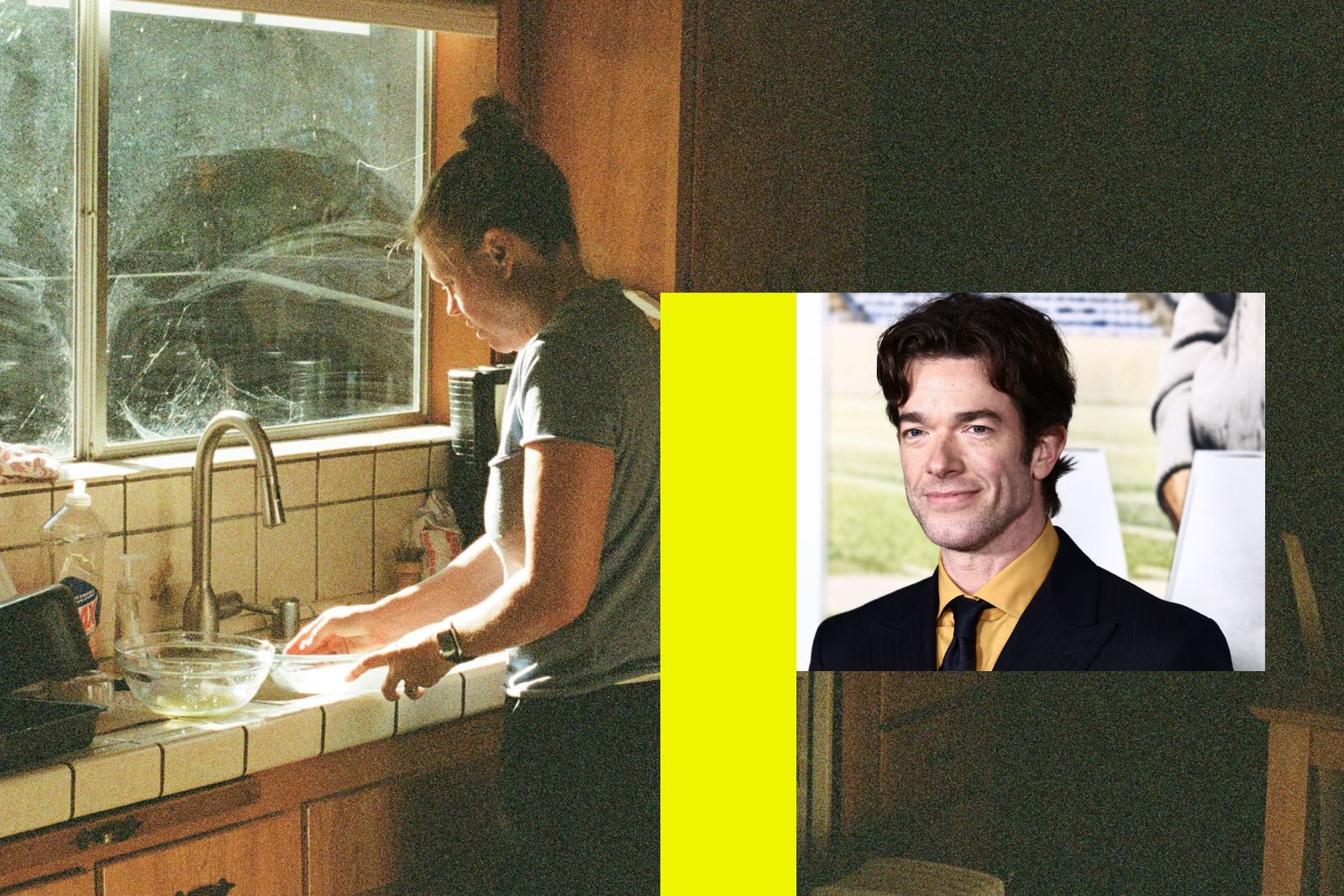
John Mulaney plays a man in a mock TV commercial whose father needs care. He says he wants the best for Dad, but a nursing home feels wrong and a private aide costs thousands of dollars a week. Then he discovers Sister: a live-in, 24/7 elder care provider that is completely free. The best part? She's easily activated.
One ominous text about Dad, and “Sister” will quit her job, break her lease, and move across the country to take care of him. Problem solved. Mulaney’s character goes back to living his life.
Making the invisible visible
Comedy is very good at one thing that policy often struggles with: making an invisible arrangement visible in under three minutes.
End Well's founder, Dr. Shoshana Ungerleider, has long argued that how we talk about these things matters: "The way that we talk about illness, about aging, about caregiving, about death and grief shapes how we experience these things and ultimately how we care for each other."
The timing was uncanny.
At End Well in Los Angeles we had just hosted a candid conversation about caregiving because we knew that America's long-term care system has a gap the size of a full-time job, and it fills that gap with family, friends, and anyone else who shows up.
AARP and the National Alliance for Caregiving count 63 million family caregivers in the U.S. today, a 45 percent jump in a decade. Nearly one in four of them provides 40 or more hours of care a week. One in five reports fair or poor health that they attribute directly to caregiving.
We've had these numbers for years. What we haven't had is a response that matches the scale of the need. And when we talk to caregivers, clinicians, and patients, many tell us that things feel like they're getting harder, not easier.
The sketch showed the brother and father bonding by judging the sister. That’s a part of caregiving we don't talk about enough. The work isn't just hard. It can also be taken for granted, criticized, or simply overlooked by the very people who depend on it.
A system that runs on “Sister”, by design
The sharpest thing about the sketch is its format. “Sister” is presented as a product, a solution, a line item that can be checked off.
Dr. Justin Baker, who leads Stanford's Division of Quality of Life and Pediatric Palliative Care, described what this looks like from inside the hospital. When clinicians recommend a tracheostomy or a feeding tube, he said, the conversation usually ends with "we can teach you how to do this," without anyone visiting the home or asking what it will cost the family.”
"There just is an expectation that people should basically be able to run micro ICUs in their home." — Justin Baker, MD
Dr. Vivek Murthy, the 19th and 21st U.S. Surgeon General, described watching his mother care for his grandmother through years of dementia at home, caught in an exhausting cycle of burnout, frustration, and guilt.
"That weight is real. It's invisible. It's underestimated and often just frankly ignored by the system." — Vivek Murthy, MD
What the sketch didn’t show
Satire works by flattening. Sister has to be a punchline so that we notice the brother's freedom. We don't see the sister's love. Just her obligation.
But so much of our conversation at End Well revolves around how two things can be true at once. The weight and the love. The lack of sleep and the quiet time when your person shares their deepest hopes and fears.
Writer Courtney E. Martin, whose father died of dementia, described the question that got her through caring for him. When he no longer recognized her, she asked: what's left? He still loved the Beatles, so they listened together.
NIH nurse scientist Paule Joseph found the first sign of her mother-in-law's frontotemporal dementia in her cooking: she kept oversalting the beans, and everyone teased her about it, until Paule tested her sense of smell. These are the moments that rarely make it into conversations about the costs of caregiving. They're also part of what makes the experience so deeply human.
Name it, then change it
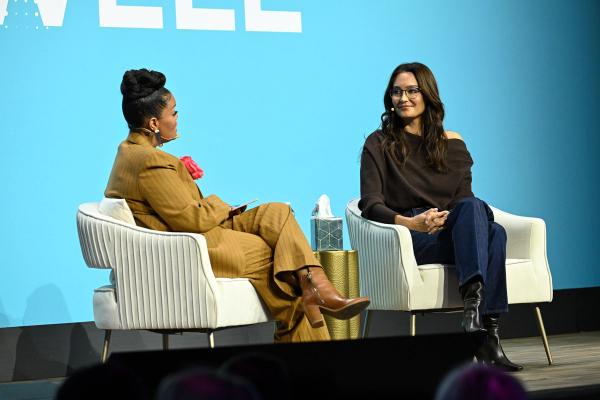
The "Sister" sketch did something that is genuinely hard: it took an arrangement millions of people live inside and made it visible enough to laugh at. As our host Yvette Nicole Brown, herself a caregiver for her father, said from our stage, caregivers need places "where we can tell the truth about what's hard and still find reasons to laugh."
Dr. Vivek Murthy ended his conversation by calling love "an organizing principle" for how we build our lives and our country. Choosing it, he said, makes us "more likely to fight for support for caregivers even though we may not be a caregiver yet because we know people who are."
When was asked what she would protect about care no matter what else changed, Jessica Guthrie, who has cared for her mother since she was 26, answered:
"Sometimes you just wanna be the daughter." — Jessica Guthrie
If our systems truly showed up for caregivers, she said, "you could just be that person's child for however long you have."Caregiving will always involve love, sacrifice, and difficult moments. But it shouldn't require someone to put their entire life on hold, or to carry the weight alone.
That's the sequel we want to see.