Counting Up: Measuring What it Means to Grow Closer to Death
Measuring What it Means to Grow Closer to Death


October 17, 2019
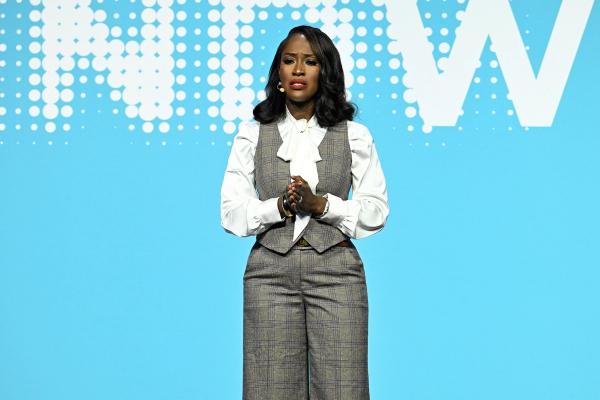
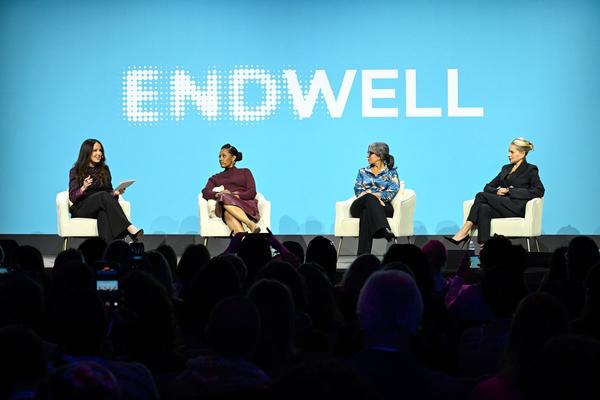
I was fortunate enough to attend a recent discussion hosted by End Well Founder Shoshana Ungerleider, MD, featuring Shoshana Berger and BJ Miller, MD, authors of the new book A Beginner’s Guide to the End: Practical Advice for Living Life and Facing Death.

I watched the attendees file in: doctors with their hospital badges still attached to their skirts and blazers; couples in their senior years, dressed to the nines in bright, warm colors; sleek, silk-adorned women in their thirties removing their headphones to greet each other.
The attendees gathered in the vast event space on the top floor of Salesforce East, filled with tropical perennials encased in wooden planter boxes that blended quite seamlessly into the sloped wood floor. Each took a book, then a seat, gazing through the floor-to-ceiling windows at near-360-degree views of San Francisco.
This was the perfect place to sit for an hour and learn about how to die.
Last year, Leilani shared her patient story with us. Click here to learn more about her transplant experience.
Many of the attendees worked in the field, from death doulas and hospice nurses to palliative care doctors and ethics lawyers. Some of those gathered embodied the heart of the subject, self-identifying as living with terminal cancer. The others were good-death enthusiasts: people who believe in the power of designing and embracing death as readily as society embraces birth.

While you might expect the atmosphere surrounding such a dark and sorrowful subject to be somber, the room was instead jovial. Old friends hugged each other tightly, their laughter echoing around the vast glass room. Many remarked on how lucky they felt to be there and to see people who had influenced them speak in such an intimate setting.
A question-and-answer session followed the conversation. The room maintained its warmth but lost some of its humor. The vulnerability was palpable, as was the fear that arose from each question asked by the audience.
“How do I give this book to a friend who has just been diagnosed with a terminal illness?”
“How do I talk to my children about death and choosing what they would want for themselves?”
Then one half of a couple in their later years stood up.
“I read everything I can about death. I have studied it. I try to face the reality of it, as I know that the older I get, I may be closer to it. And I don’t think I am afraid of death itself. But I love my life, and I am so afraid of losing it.”
The room audibly hummed and sighed in agreement, acknowledging a common feeling among those gathered, including both self-made and academic researchers at the top of their fields.
I felt my eyes glaze over as my mind drifted on the question, a familiar feeling for me at events like these. For as much as I have studied death, experienced death and even come back from death myself, I, too, am afraid of losing my life.
It is quite a strange feeling to sit in a room talking about death with many older adults, knowing full well that I likely will not live to see those years. I have survived many brushes with death: four cardiac arrests, several bradycardic episodes, severe cardiac tamponade, ECMO and a code in the ICU, to name a few.
I am not afraid to die. I would rather it not be prolonged or painful. I would prefer that it happen peacefully, outside the hospital and at an old age. But we can’t always get what we want. Sometimes, realizing that earlier gives us a better chance of accepting what we cannot have.
The average survival for transplanted hearts is 12 years. I know many people who have lived beyond that average, some with the same transplanted heart. I know others whose donated hearts have not survived past one year.
The problem with knowing these statistics is that they make living until old age a relatively impossible concept. Even if we add 12, and 12, and 12 again, triple heart transplants are very rare but increasing, from the time of my transplant at age 24, I only get to be 60. That is about 15 years fewer than the woman who asked the question.
The blessing is that I know this.
And yes, I have heard many times that “technology will continue to improve!” or “you may never even need a second transplant.” Perhaps that is where “impossible” can be adjusted to “improbable” inside my head.
I appreciate the human instinct to comfort, instill hope or even self-soothe when I discuss my mortality so bluntly with an unsuspecting audience. I understand personally what it is like to try to forget or ignore your own mortality.
But the truth is, my life could have ended at diagnosis, during my first cardiac arrest. It didn’t. I had 10 bonus years with my heart and, thus far, I have had three bonus years with a borrowed one.
The woman’s question is no less valid, scary or painful to me. In many ways, it is a combination of all those things because I know I probably will not be alive to experience those feelings at her age.
Yet perhaps a small remedy for the fear this brave woman voiced, the fear we all face, exists within the way we conceptualize and quantify time.
Instead of counting down to the end of our lives, perhaps we should be counting up.