Bridging the Divide Between Medicine and Humanity
A pediatric ICU nurse reflects on professional grief, honest conversations about death and the unexpected beauty of drawing closer to life’s end.


October 2, 2023
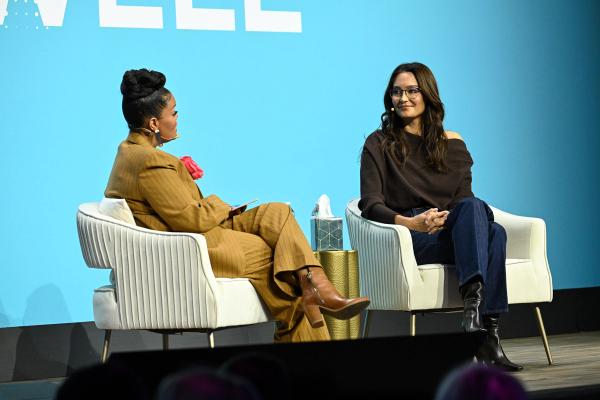
EW: How does your work intersect with conversations about the end of life and grief? What will you be discussing on the End Well stage?
Hui-wen Sato: I have been a pediatric ICU nurse for the past 13 years. During that time, I have cared for countless children at the end of their lives and grieved alongside them and the people who love them.
I have also wrestled with professional grief, both in myself and among my colleagues. We develop our own affection for our patients while working day after day in a space filled with loss and death.
I have thought a great deal about how difficult it can be to cross the “great divide” between places like a pediatric hospital, where we regularly witness children dying, and the world outside the hospital, where few people want to talk about death or know how to begin.
On the End Well stage, I will share my personal story of learning to cross that divide, including some particularly unexpected adventures from the past year.
EW: Cultures around the world have different practices and beliefs surrounding death. How has your cultural background influenced your perspective on the end of life and grief?
Hui-wen Sato: I am Taiwanese, but my family moved to the United States when I was one year old.
I did not grow up with a strong religious or spiritual background, and my family generally did not talk about the end of life or grief. I would describe my parents as agnostic and practical, but they were not especially expressive about what was happening emotionally.
Because of this, I was developing a culture of my own as I grew up within an immigrant family.
I became a Christian in junior high. Over time, particularly during my 13 years as a second-career nurse, I have had to reconsider much of what Western Christianity taught me about the end of life and grief.
Being a Christian does not exempt anyone from the emotional impact of loss, death or grief, though I think many people within Western Christian culture assume that it does.
I believe deeply in hope at the end of life. I also believe it is tremendously important to speak honestly about death and grief, even for people with profound spiritual convictions.
EW: What societal norm or belief about death and dying most needs to be challenged or redefined?
Hui-wen Sato: I think the most significant belief that needs to be challenged is the idea that people who work with death and dying should be pitied because they are operating only on the losing end of things.
There is significant grief in this work, and we cannot and should not ignore it. There is also a richness and beauty specifically reserved for those willing to draw closer to experiences involving death and the end of life.
I would never wish loss or grief upon anyone. But death is a reality for all of us, and I wish we could approach it with greater courage and openness to what we might learn by thinking more intentionally about the end of life.
EW: How can different professions and disciplines work together to create a more human-centered approach to end-of-life care?
Hui-wen Sato: Nearly every profession and discipline now relies heavily on technology and a desire for human advancement.
I hope we remember that the best purpose of technology in end-of-life care is to honor our humanity rather than overshadow it.
Technology is neutral and impersonal. Used without care, it can rob us of some of the most meaningful aspects of human existence. Only people can bring dignity and human connection into the way technology is used.
I hope professionals across every discipline continually examine their reasons for using technology and consider whether it is truly serving patients and families at the end of life.