A Journey of Care, Culture, and Compassion
Ai-jen Poo argues that dignity in aging begins with making care visible and building systems that support it.


October 3, 2023
Ai-jen Poo is president of the National Domestic Workers Alliance, executive director of Caring Across Generations, senior advisor to Care in Action, co-founder of Supermajority, and a trustee of the Ford Foundation.
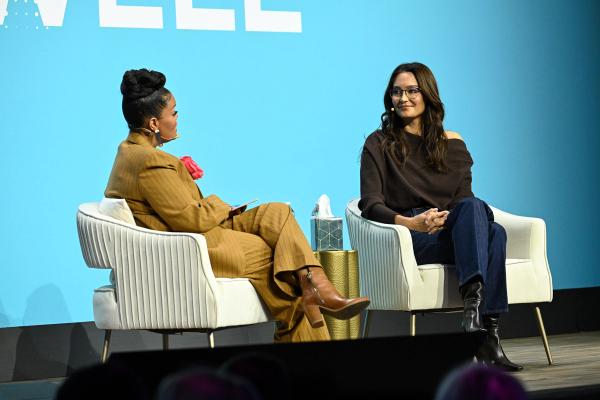
We spoke with Ai-jen ahead of her appearance at the End Well Symposium on November 16, 2023, in Los Angeles.
“Aging and illness are universal experiences, yet more than 53 million unpaid family caregivers across the country, along with millions of disabled people and aging adults, report feeling isolated, unseen, and unprepared to navigate care crises.”
EW: Death is often considered taboo. Was there a defining moment that inspired you to discuss and address end-of-life experiences openly?
Ai-jen Poo: I was raised in an intergenerational immigrant family, and my grandparents played a significant role in raising me. They cared for my sister and me, taught us our values, and became important models in our lives.
When they began to age and need more assistance, our entire family became involved.
On my mother’s side, my grandfather had a stroke and became paralyzed. My grandmother and a series of care workers enabled him to remain at home. After he died, my grandmother was also able to stay in her home with support from care workers and her children.
On my father’s side, my grandfather cared for my grandmother at home in Taiwan for many years after she had a stroke. After she died, he lived with my father and received support from care workers until he lost his vision and needed more assistance than we could provide at home. Both of my grandfathers spent time in nursing homes before they died.
Although each experience was different, they shared common themes. We often felt as though we had no agency, that aging and dying simply happened to us. We had to endure a world of uncertainty and impossible choices.
It never felt as though we could do enough, and finding the right support was never easy. We had no clear vision for how we wanted these experiences to unfold, or even conversations about what that might look like.
Some of this is an inevitable part of being human. We will all experience loss and grief, have our hearts broken, and eventually die.
Yet so much of the suffering related to aging and dying feels unnecessary: the isolation, the difficulty of finding support at home, the financial burden, and the strain placed on overstretched and underpaid care workers.
Much of what made these experiences difficult seemed avoidable if we, as a society, made different choices. It made me want to help us make those choices.
EW: How does your work intersect with conversations about the end of life and grief? What will you be discussing on the End Well stage?
Ai-jen Poo: My work focuses on changing our culture and policies so that caregiving families, older adults, and people with disabilities receive better support.
In the United States, we do not have the infrastructure needed to care for the people we love, including those who raised us and the children we are raising.
Instead, we rely heavily on overworked and undervalued caregivers, both family members and professional care workers. They are too often isolated, invisible, and unsupported. Those in the paid workforce are also shockingly underpaid.
The people we rely on to care for us and our loved ones often cannot support themselves or their own families through this work. I believe that, at the root of this problem, is a deep fear of aging, disability, and dying.
Our ability to build the care systems we need, improve jobs for care workers, and value caregivers culturally is directly connected to our willingness to embrace these realities.
We must design systems that support quality of life during aging, disability, and the end of life rather than continuing to avoid them.
“So much of the suffering related to aging and dying seems unnecessary: how isolated everyone feels, how difficult it is to find the right support at home, how costly it all is, and how overstretched and underpaid our direct care workers are.”
EW: What societal norm or belief about death and dying most needs to be challenged or redefined?
Ai-jen Poo: Aging and illness are universal experiences, yet more than 53 million unpaid family caregivers, roughly one in five Americans, report feeling isolated, unseen, and unprepared to navigate care crises. Millions of disabled people and aging adults report the same.
Care work in the United States remains largely invisible and unsupported because it takes place behind closed doors and because of its roots in slavery.
Black women were forced to serve as unpaid caregivers to white families and were later undervalued as family caregivers while also holding paying jobs.
Many people still describe care work as “help” rather than recognizing it as the highly skilled and vitally important profession it is for millions of workers.
EW: How can different professions and disciplines work together to create a more human-centered approach to end-of-life care?
Ai-jen Poo: A national care infrastructure that is universally accessible, reliable, and valued would allow everyone to live, work, and age with dignity.
Public policies that increase care worker wages and expand access to paid leave, disability support, and aging care are essential.
Changing how we value care in this country is equally important. We need to speak more openly about our care stories on social media, with elected leaders, in our workplaces, and through film and television.
We should also talk about how and where we hope to receive care during our lives and at the end of them.
Caring Across Generations is advancing this work by bringing together 300 leaders from business, entertainment, and philanthropy alongside caregivers and care recipients. By sharing ideas and solutions, we can make care one of the most visible and urgent issues in the United States.
EW: Fast-forward a decade. If End Well’s objectives are realized, how do you envision society’s attitudes and practices surrounding the end of life?
Ai-jen Poo: Everyone will be able to live, work, and age with dignity.
People will be able to choose where they receive care, whether in an institutional setting or within their own homes and communities. They will also be able to choose a care team that brings together loved ones and professional care workers.